
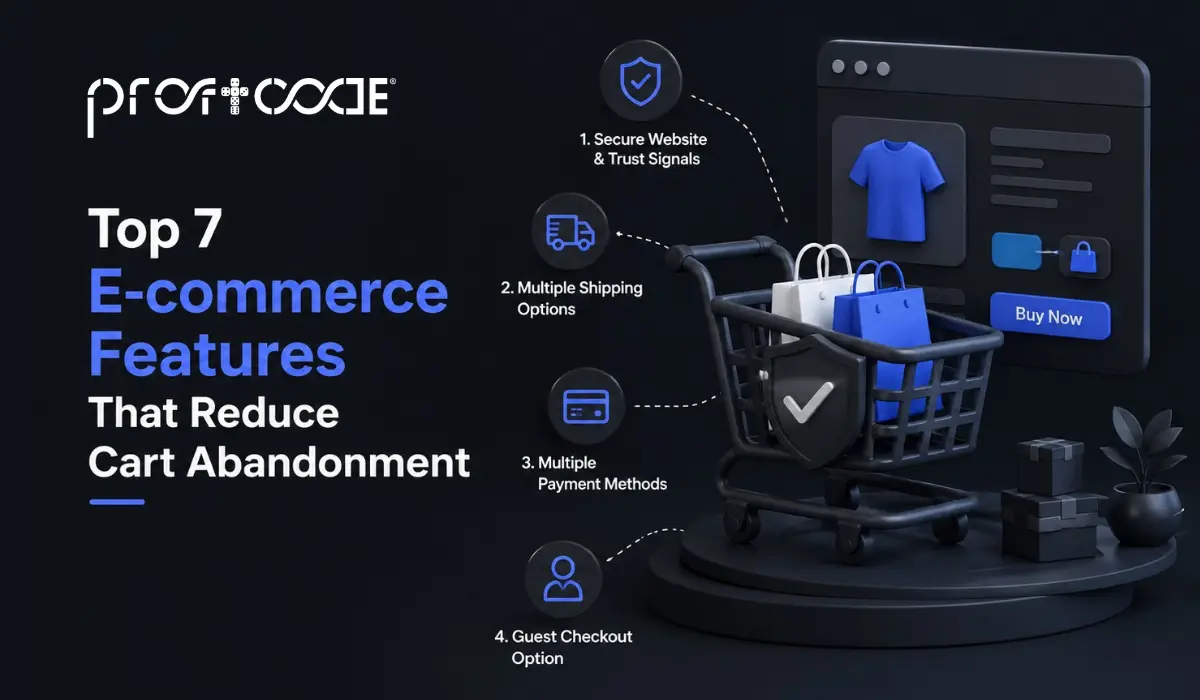
Every online store loses sales the same way. A customer browses, adds products to the cart, reaches the checkout page, and then disappears. The product was good. The price was fair. And still the cart sat there, just one click short of a sale. This is shopping cart abandonment, and in 2026, it remains one of the biggest profit leaks in e-commerce.
Cart abandonment statistics for 2026 show that nearly 70% of online shoppers leave without completing their purchase. That means for every ten people who add an item to their cart, only three actually pay. The good news is that the right e-commerce features that reduce cart abandonment can recover a large share of those lost sales. In this blog, we cover the top features every online store needs to fix checkout friction, boost conversion, and turn browsers into buyers.
Why Customers Abandon Their Shopping Carts
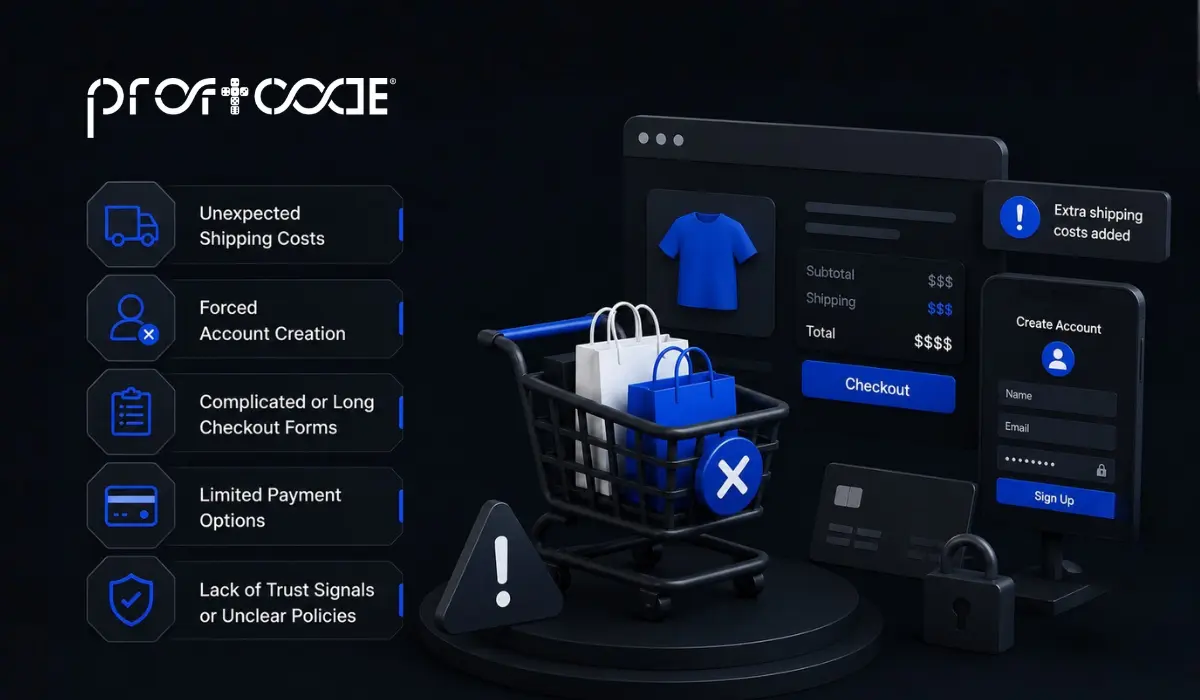
Before fixing the problem, you need to understand the reasons for cart abandonment. The most common causes include:
- Unexpected shipping costs at checkout
- Forced account creation
- Complicated or long checkout forms
- Limited payment options
- Slow page loading and poor mobile experience
- Lack of trust signals or unclear return policies
- Hidden fees are added in the final step
These are not random issues. They are friction points in your checkout flow, and each one can be removed with the right e-commerce conversion optimization strategy.
Top 7 E-commerce Features That Reduce Cart Abandonment
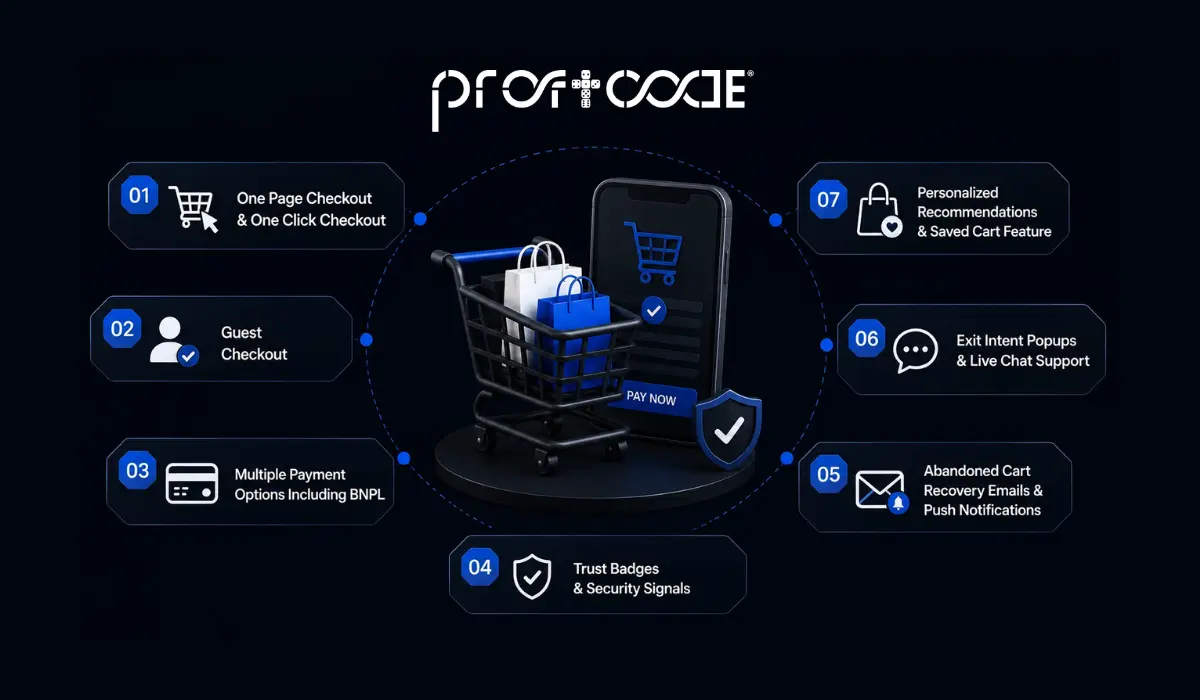
1. One Page Checkout and One-Click Checkout
The longer the checkout, the higher the drop-off. A one-page checkout puts shipping, billing, and payment details on a single screen so customers can complete the purchase without clicking through multiple pages. For returning users, one-click checkout takes it further by saving their information for instant purchases.
Brands like Amazon built their empires on this single feature. Implementing it in your store is one of the most effective cart abandonment solutions available. A clean, fast, mobile-friendly checkout flow with clear progress indicators can lift conversion rates by 20 to 35 percent. This is the single highest impact change you can make in your funnel.
2. Guest Checkout Feature
Forcing first-time visitors to create an account is one of the top reasons for cart abandonment. People want to buy quickly, not sign up. The guest checkout feature lets them complete the purchase with just an email address and shipping details.
You can still capture their information for marketing and offer optional account creation after the purchase. This small change is one of the simplest e-commerce checkout best practices and removes one of the biggest sources of friction in checkout.
3. Multiple Payment Options Including BNPL
Limited payment options drive customers away. In 2026, shoppers expect to choose from credit cards, debit cards, UPI, digital wallets, net banking, and buy now pay later (BNPL) services. Offering multiple payment options is essential for e-commerce conversion optimization.
BNPL has become particularly important. Customers, especially younger ones, prefer to split payments into smaller installments. Stores that integrate BNPL providers see noticeably higher conversion on high-ticket items. Payment gateway integration with platforms like Razorpay, Stripe, PayPal, and PayU should be a baseline for any serious online store today.
4. Trust Badges and Security Signals
Trust is invisible until it is missing. When a customer reaches the payment page and sees no SSL security indicator, no recognized payment logos, and no clear return policy, they hesitate. And hesitation kills sales.
Trust badges and security signals reassure buyers that their card details are safe. Display SSL certificates, payment provider logos, money-back guarantees, customer reviews, and a clear returns and refund policy near the checkout button. These trust signals reduce mobile cart abandonment and desktop drop-offs alike.
5. Abandoned Cart Recovery Emails and Push Notifications
Some customers will leave no matter what you do. The trick is bringing them back. Abandoned cart recovery is one of the most effective cart recovery strategies in e-commerce today.
A standard sequence includes three messages. The first email is sent within one hour, a reminder is sent after 24 hours, and a final email with a small discount is sent within 72 hours. Push notifications and SMS reminders work alongside email to recover an even larger share of lost carts. Tools like Klaviyo, Mailchimp, and built-in Shopify and WooCommerce automation make this easy to set up and one of the highest ROI cart abandonment recovery tools available.
6. Exit Intent Popups and Live Chat Support
When a shopper moves their cursor toward the close button, that is your last chance. Exit intent popups capture them with a discount, free shipping offer, or quick question. Used carefully, they recover a meaningful percentage of abandoned sessions.
Live chat for e-commerce works in the moment. Many shoppers leave because they have one unanswered question about sizing, shipping, or returns. A live chat widget or AI chatbot at the bottom of the page answers that question instantly. Together, these two tools handle customers who are still on the page but hesitating.
7. Personalised Product Recommendations and Saved Cart Feature
A personalized product recommendations engine shows the right products to the right customers based on their browsing history, preferences, and past purchases. This not only increases average order value through upsell and cross-sell, but it also gives shoppers a reason to come back if they leave.
The saved cart feature is the silent hero. When a customer adds items but does not buy, the cart stays intact across devices and sessions. They can pick up exactly where they left off on mobile, desktop, or in your app. Combined with retargeting ads and a wishlist feature, this is one of the most powerful cart abandonment recovery tools you can offer.
Bonus Tips to Increase E-commerce Conversion Rate
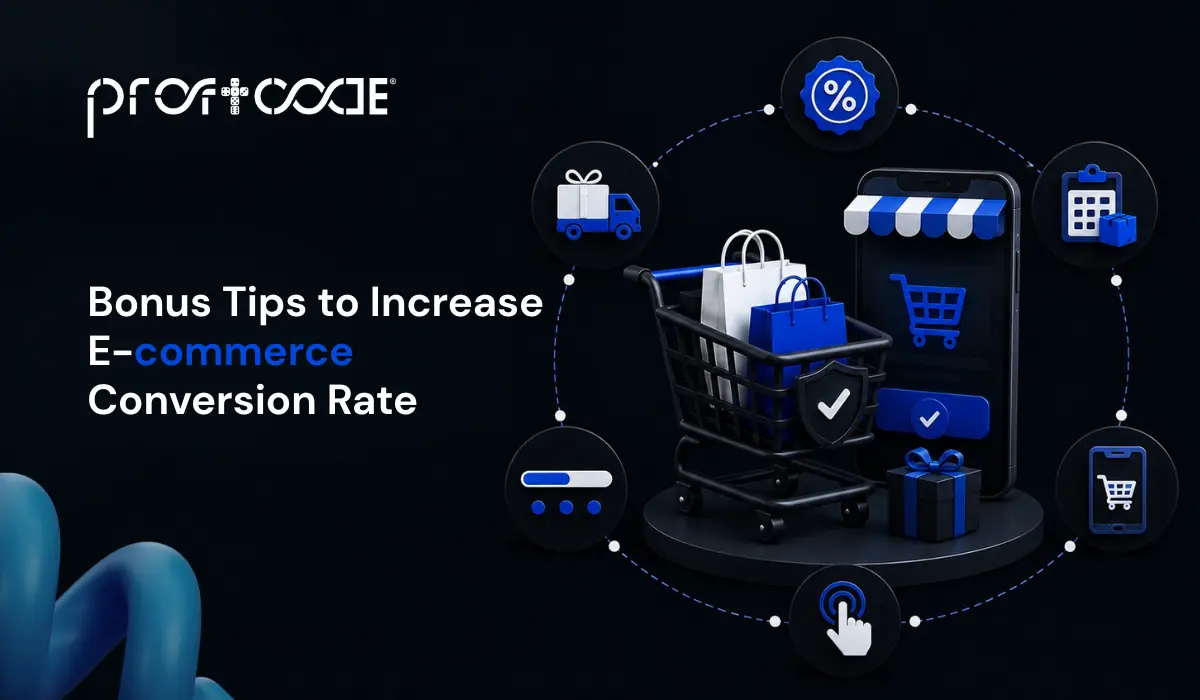
Beyond the seven features above, a few smaller tweaks add up:
- Display a free shipping threshold such as “Spend ₹500 more for free shipping.”
- Add a shipping calculator early in the cart
- Show a clear progress indicator during checkout
- Use microinteractions to confirm actions
- Optimise for mobile first, since most cart abandonment happens on phones
Each of these touches removes a small piece of friction. Together, they transform your checkout flow into a smooth path to purchase and improve your overall e-commerce funnel.
Conclusion
Cart abandonment is not a customer problem. It is a checkout problem. Every store has it, and every store can fix it. The seven e-commerce features that reduce cart abandonment covered above, from one-click checkout and guest checkout to abandoned cart recovery and personalized recommendations, are not optional in 2026. They are the foundation of every high-converting online store.
If your cart abandonment rate is above the industry average, the loss is real and recurring. The good news is that fixing it is faster and more affordable than most businesses think. At Proftcode, an experienced e-commerce development company in India and a trusted e-commerce development company in Jaipur, we build custom e-commerce solutions on Shopify, WooCommerce, and custom platforms designed to convert. “From Shopify and WooCommerce development to e-commerce app development and end-to-end UX design, our team helps transform abandoned carts into completed purchases. Get in touch with us today to get started.
Frequently Asked Questions
The global average cart abandonment rate sits between 65 and 75 percent. Anything below 60 percent is considered strong, and below 50 percent is excellent. Reducing your rate by even 5 percent can mean a significant revenue increase over a year.
There is no single fix. The most effective approach combines one-page or one-click checkout, guest checkout, multiple payment options, trust badges, and an abandoned cart recovery email sequence. Together, these features tackle the main reasons for cart abandonment and form a complete cart abandonment reduction strategy.
Yes. A well-timed abandoned cart email sequence recovers an average of 10 to 20% of lost carts. The first email, within one hour, delivers the highest open and click-through rates. Add SMS or push notifications, and the recovery rate climbs even higher.
Mobile cart abandonment is higher because of smaller screens, slower typing, weaker network connections, and clunky checkout forms. Mobile-friendly e-commerce features like autofill, large tap targets, and digital wallets such as Google Pay or Apple Pay solve most of these issues.
It depends on your scale and needs. Shopify development services and WooCommerce development cover most stores well. Larger businesses with unique workflows, complex catalogs, or international payment needs often benefit from custom e-commerce solutions tailored to their specific funnel and customer base.