
Key Takeaways
- Businesses can typically cut cloud spend by 20- 40% through optimization without hurting reliability or speed.
- Overprovisioning, idle resources, cloud sprawl, and poor pricing-model choices are the biggest cost culprits.
- Right-sizing instances and moving eligible workloads to reserved or spot pricing can save 30-90%.
- Auto-scaling and tiered storage keep you paying only for what you’re actually using.
- Serverless and containers charge only during execution, a big win for spiky or infrequent workloads.
- Cost optimization has to be continuous, not a one-time cleanup, or costs creep right back up.
Cloud computing has become the backbone of modern business operations, but for many companies, monthly cloud bills are climbing faster than expected. Whether you run a startup hosting on AWS, an enterprise spread across Azure, or a SaaS platform on Google Cloud, the same question keeps coming up. How do you reduce cloud computing costs without losing performance?
The good news is that you do not have to choose between affordable infrastructure and reliable speed. With the right cloud cost optimization strategies, smart tools, and a few disciplined habits, you can cut your cloud bill by 20 to 40% while keeping applications fast, secure, and scalable. In this blog, we break down the most effective ways to optimize cloud spending in 2026, why cloud costs spiral in the first place, and how to build a long-term cloud cost management plan that actually works.
Why Cloud Costs Spiral Out of Control
Before fixing the problem, it is helpful to understand why it occurs. Most businesses do not overspend on cloud because their workloads are heavy. They overspend because their infrastructure is inefficient.
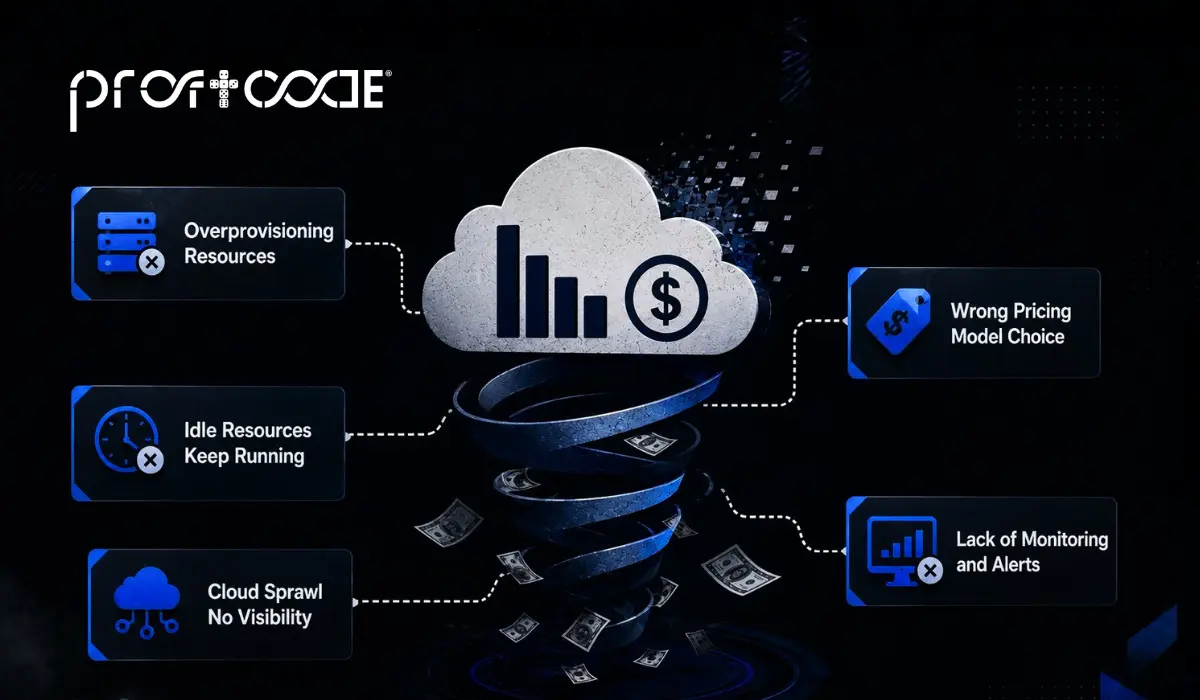
Common reasons cloud bills get out of hand include the following:
- Overprovisioning: Teams launch oversized servers and storage to be safe, then forget to scale them down.
- Idle resources: Test environments, unused volumes, old snapshots, and forgotten instances continue to run and incur billing.
- Cloud sprawl: Different departments spin up their own services, creating duplicate workloads and zero visibility into total spend.
- Wrong pricing model: Many businesses still pay full pay-as-you-go pricing for predictable workloads that could use reserved instances or savings plans.
- Lack of monitoring: Without proper cloud monitoring tools, nobody notices when costs creep up month after month.
This is exactly the kind of cloud waste reduction opportunity that smart cloud cost management can solve, and it is often the first step on any serious FinOps journey.
Key Cloud Cost Reduction Strategies That Protect Performance
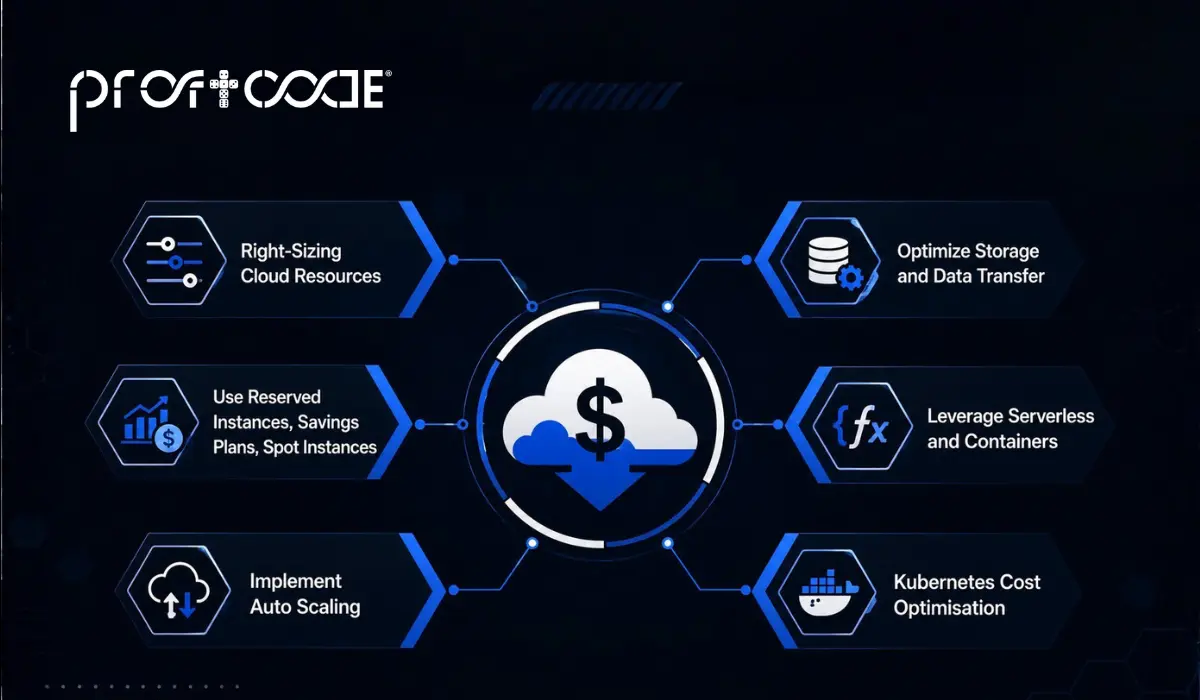
Here are the proven cloud cost reduction strategies that deliver real savings without slowing your applications down.
Right-Sizing Cloud Resources:
Right-sizing cloud resources is the single biggest win for most businesses. It means matching the size and type of your instances to actual workload demand. If a server runs at 15 percent CPU utilization on average, it is too big. Resize it, switch to a more cost-efficient instance family, and you keep the same performance at a fraction of the price.
Most cloud platforms publish utilization reports that show you exactly which resources are oversized. Acting on that data is one of the simplest forms of cloud resource optimization.
Use Reserved Instances, Savings Plans, and Spot Instances:
If you know you will use a workload for the next one to three years, do not pay on demand. Reserved instance pricing offers 30 to 70% savings compared to standard rates. Savings plans on AWS and committed use discounts on Azure and Google Cloud work similarly.
For workloads that can tolerate interruption, such as batch jobs, data processing, or CI builds, spot instance savings can cut costs by 70 to 90%. This is one of the best ways to reduce AWS bills in 2026 without touching application performance.
Implement Auto Scaling:
Auto scaling cloud resources means your infrastructure grows when traffic spikes and shrinks when it slows down. You only pay for what you actually use. This is essential cloud performance optimization, because it keeps applications fast during peak load while eliminating waste during quiet hours.
Combined with Kubernetes cost optimization for containerized workloads, auto-scaling is one of the most powerful FinOps strategies any team can adopt.
Optimize Storage and Data Transfer:
Storage and data transfer often hide the biggest cloud bill surprises. Move infrequently accessed data to cheaper tiers like S3 Glacier on AWS or cool and archive tiers on Azure. Delete old snapshots and unattached volumes. Use compression and caching to reduce data transfer fees, which can quietly eat up 10 to 20 percent of a typical cloud invoice.
Leverage Serverless and Containers:
Serverless cost optimization is another major lever. Functions like AWS Lambda, Azure Functions, and Google Cloud Functions only charge when code actually runs. For event-driven workloads, this can be far cheaper than keeping servers online around the clock.
Containers managed through Docker and Kubernetes, deployed using Infrastructure as Code tools like Terraform, give you fine-grained control over resource usage. They also make a multi-cloud cost strategy easier to manage if you operate across providers.
AWS, Azure, & Google Cloud Cost Optimization Tips
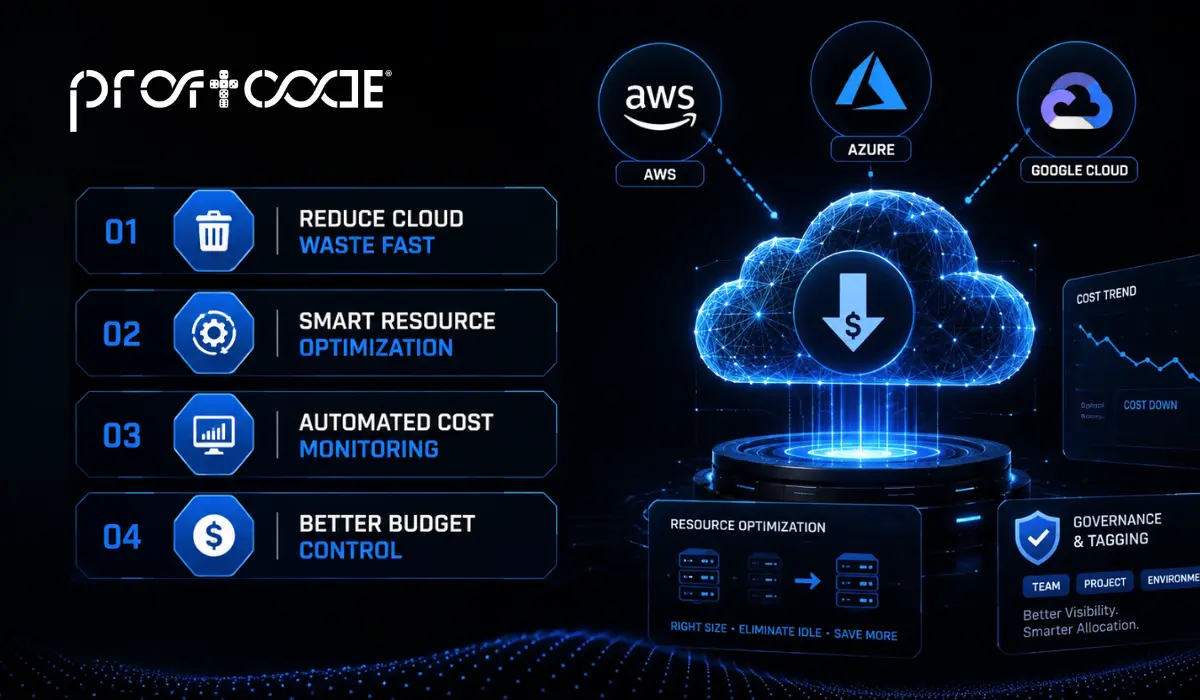
Each major cloud platform has built-in tools to help with cloud bill reduction.
- AWS cost optimization: Use AWS Cost Explorer, Trusted Advisor, and Compute Optimizer to spot waste. Apply savings plans for steady workloads and spot instances for flexible ones.
- Azure cost optimization: Azure Cost Management and Azure Advisor identify idle resources and recommend reserved instance purchases. Use Azure Hybrid Benefit if you already own Windows or SQL Server licenses.
- Google Cloud cost optimization: Google Cloud Recommender, Active Assist, and committed use discounts deliver similar savings. Sustained use discounts apply automatically for long-running workloads.
Tagging every resource by team, project, and environment makes cloud governance much easier and unlocks meaningful cost allocation across your business.
Tools & Monitoring for Cloud Cost Management
You cannot fix what you cannot see. Investing in cloud monitoring tools is essential for long-term cloud TCO reduction. Native dashboards from each cloud provider are a good start, but third-party platforms like CloudHealth, Spot.io, and Apptio Cloudability offer deeper analytics across multi-cloud environments.
Set monthly budgets, configure alerts when spending crosses thresholds, and review cloud cost analysis reports weekly. This habit alone, combined with strong cloud governance, prevents most billing surprises before they happen.
Common Cloud Cost Optimization Mistakes to Avoid
Even well-intentioned teams make these mistakes when trying to optimize cloud spending:
- Cutting capacity too aggressively and hurting application performance.
- Optimizing once and never revisiting the plan.
- Ignoring smaller services that quietly accumulate cost.
- Treating cloud cost optimization as a one-time IT project instead of an ongoing FinOps practice.
- Skipping resource tagging, which makes proper cost allocation impossible.
The goal is balance. You want a lean infrastructure that still delivers the speed and reliability your customers expect.
Final Thought
Cloud bills do not have to keep rising. With the right cloud cost reduction strategies, businesses of every size can cut spending significantly while protecting application performance. The path is straightforward. Identify waste, right-size your resources, use the correct pricing models, automate scaling, and monitor everything continuously.
Whether you are a startup looking for cloud cost optimization strategies for startups or an enterprise that needs full managed cloud services and cloud consulting services, the savings are waiting. At Proftcode, a trusted cloud computing company in India and a leading provider of cloud services in Jaipur, we help businesses audit their usage, design cost-efficient architectures, and run DevOps services that keep your infrastructure lean and fast. From cloud migration services to ongoing cloud infrastructure management, our team turns cloud cost optimization services into real, measurable savings. Talk to our team today and book a free cloud cost audit.
Frequently Asked Questions
Most businesses save 20 to 40 percent on their cloud bills within the first three months of structured cloud cost optimization. The exact figure depends on how much waste exists in your current setup and how aggressively you apply right-sizing, reserved instances, and auto-scaling cloud resources.
Start with the basics. Audit your active resources, shut down idle instances, move cold data to cheaper storage tiers, and switch predictable workloads to reserved instances or savings plans. These three steps alone usually cut a small business’s cloud bill by 25 to 35 percent without any drop in performance.
Not if you do it correctly. The goal is to remove waste, not capacity. Right-sizing, auto-scaling, and serverless cost optimization actually improve performance for many workloads because they ensure resources match real demand at every moment.
There is no universal answer. AWS, Azure, and Google Cloud all offer competitive pricing, but the cheapest option depends on your workload type, region, and existing software stack. A multi-cloud cost strategy or a single optimized platform can both be cost-effective when set up correctly.
Common culprits include unused EBS volumes, idle EC2 instances, old snapshots, expensive data transfer fees, and over-provisioned RDS databases. Running a proper AWS cost optimization review almost always reveals waste that nobody noticed for months.