What Are ERP Development Services?
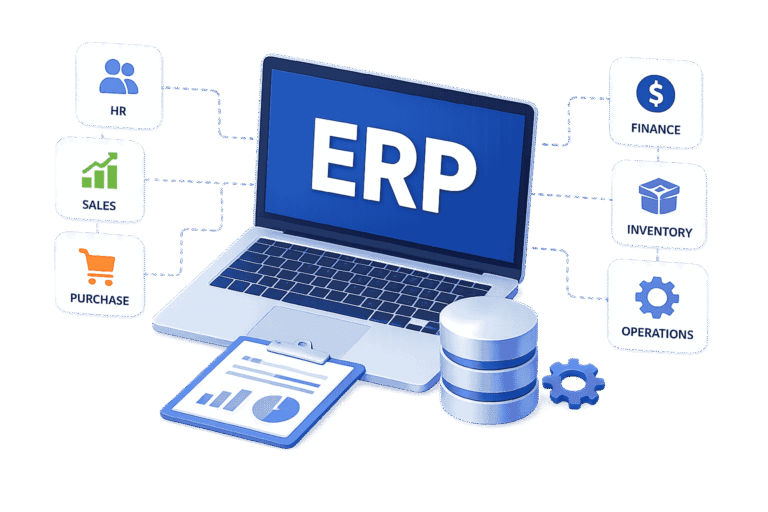
ERP (Enterprise Resource Planning) development services include designing creating, developing and implementing a central software system that combines the core business processes of a company into an integrated platform. ERP software can help organizations manage processes like human resources, finance inventory, sales, production, procurement and reporting in an seamless and automated manner.
For Indian business, ERP development services play crucial roles in improving efficiency of operations as well as ensuring compliance with regulations and facilitating scalability in a extremely competitive market.
Meaning of ERP in Simple Terms
ERP software acts as a single point of truth for your entire business. Instead of managing a variety of spreadsheets, tools or outdated software, ERP brings everything together into one smart system that delivers real-time data processing automation, as well as complete visibility into your business.
In simple words:
“ERP helps businesses work smarter, faster, and more accurately by connecting people, processes, and data.”
Meaning of ERP in Simple Terms
ERP is not just software; it is a long-term digital foundation for your business. A well-designed ERP system improves productivity, reduces operational costs, enhances data security, and supports future expansion.
That’s why businesses across India are increasingly choosing ERP development companies that offer customization, scalability, and ongoing support—not just software delivery.
Role of ERP Development Services for Indian Businesses
Indian companies have unique operational challenges, such as the management of multiple sites, GST compliance complex inventory rapid scaling as well as cost management. ERP development services help to address these issues by:
- Automating repetitive business processes
- Centralizing data across departments
- Improving decision-making with real-time reports
- Supporting GST, taxation, and compliance requirements
- Enabling scalability for growing startups and enterprises
If you’re an industrial company that manages supply chains, or a service-oriented company managing HR and finance ERP software development allows greater control and transparency across your business.
Custom ERP vs Ready-Made ERP
Ready-made ERP solutions are generic systems designed for broad use cases. While they may work for some businesses, they often force companies to adapt their workflows to the software.
Custom ERP development, on the other hand, is tailored specifically to your business processes, industry requirements, and growth plans.
At Corewave, we specialize in custom ERP software development, ensuring that the system fits your business—not the other way around.
Industry-Specific ERP Solutions by Corewave
Every industry operates with different workflows, compliance requirements, and operational challenges. An all-inclusive ERP system is often unable to meet these requirements which can lead to inefficiencies and a lack of acceptance. Corewave offers specific ERP solutions for the industry that are built around actual business processes, which helps companies across India improve control, transparency and scaling.
As a trusted ERP development company in India, Corewave builds ERP systems that are in line with industry standards, while being flexible enough to change as business needs change.
ERP for Manufacturing Companies
Manufacturing businesses require exact control over the production plan, inventory procurement and quality management. Corewave develops ERP solutions specifically for manufacturing businesses that integrate the entire production cycle into one system.
Our manufacturing ERP software helps businesses in managing raw materials track work-in-progress, improve production schedules and maintain precise cost control. Through centralizing processes and offering real-time data, manufacturers can reduce the amount of downtime, increase productivity, and make better-informed decisions that will support long-term growth.
1
ERP for Retail & E-Commerce Businesses
E-commerce and retail businesses operate in a fast-paced environment where accuracy in inventory as well as order management and the customer experience are essential. Corewave creates ERP solutions that integrate inventory and sales, finance and customer data into a single platform.
Our ERP systems for retail aid businesses in managing multi-channel sales, monitor inventory levels in real-time and ensure that orders are fulfilled seamlessly. With centralized reporting and automated retailers can increase efficiency and provide consistently good customer service across both online as well as offline channels.
2
ERP for Healthcare & Hospitals
Healthcare companies need ERP systems that can support accuracy, compliance, as well as security of data. Corewave creates ERP solutions for hospitals and healthcare facilities that simplify administrative processes while ensuring strict standards for data security.
Our healthcare ERP software supports with billing, administration of patients as well as resource management and reporting. By eliminating manual processes and enhancing the visibility of data, healthcare facilities and hospitals can focus on the patient’s care, while ensuring efficiency and compliance with the regulatory requirements.
3
ERP for Education & Institutions
Educational institutions handle complex processes like admissions and faculty management, student records financial reporting, and admissions. Corewave provides ERP solutions for colleges, schools and universities that integrate these processes onto one digital platform.
Our educational ERP systems boost efficiency in administration as well as ensure accuracy of data and help improve co-ordination between departments. With the ability to scale they can help these ERP solutions adapt to the needs of the institution as it expands their programs campuses, campuses, or students capacity.
4
ERP for Logistics & Supply Chain
Supply chain and logistics companies depend on real-time information, efficient coordination and precise tracking. Corewave creates ERP systems that provide end-to -end visibility across the supply chain.
Our ERP solutions for logistics assist businesses in managing the movement of inventory, track shipment optimizing routes, and assess the performance of their operations. By the integration of multiple touchpoints into a single system, logistics companies get more control, reduce delays, and increased satisfaction of customers.
5
ERP for Real Estate & Construction
Construction and real estate businesses need ERP systems that can manage budgets, projects resources, compliance, and projects efficiently. Corewave develops ERP solutions that help with the planning of projects and cost tracking, management of vendors, and reporting.
Our real estate ERP software assists businesses to keep their projects transparent to reduce cost overruns and ensure prompt delivery. By centralizing the project-related information stakeholders have better control and visibility throughout the lifecycle of a project.
6
ERP for Finance & Accounting Firms
Accounting and finance firms need accuracy and compliance as well as data security. Corewave offers ERP solutions that aid in the management of finances, reports as well as compliance with Indian tax laws and regulations.
Our ERP systems for finance companies can streamline the accounting process, increase the accuracy of reporting and ensure the integrity of data. By coordinating financial information and automating workflows, businesses can provide reliable services while ensuring efficiency.
7
ERP for Startups & Large Enterprises
Startups and large enterprises have different operational sizes, however they share the requirement for scalability and flexibility. Corewave develops ERP solutions that can be adapted to early-stage businesses as well as large enterprises that have complex structures.
For startups for startups, our ERP solutions provide a solid base that can support rapid growth without adding unnecessary complications. For large enterprises, we develop scalable ERP architectures that handle high data volumes, multiple departments, and advanced integrations-ensuring long-term performance and stability.
ERP Development Services Across India - Serving Delhi NCR, Mumbai, Bangalore, Hyderabad, Chennai, Pune, Ahmedabad, and More
Corewave offers full-service ERP development across India and provides secure customizable, scalable, and custom ERP solutions to companies across the region. From Delhi NCR to Mumbai, Bangalore, Hyderabad, Chennai, Pune, and Ahmedabad we provide small and medium-sized businesses as well as large corporations with a wealth of experience in ERP consultation and implementation, as well as integration and support.
Our pan-India model guarantees the development of ERP remotely for every city, while providing local and offshore support whenever needed. By combining technical knowledge specific to industry, as well as longer-term maintenance Corewave allows businesses throughout the world to streamline their operations, enhance decision-making, and expand efficiently.
No matter if your business is situated in cities in the Tier-1 category such as Bangalore and Mumbai or in emerging markets such as Ahmedabad and Pune Corewave’s ERP solutions are built to meet the local business requirements while ensuring global quality standards. We are the most trusted ERP company in India for businesses searching for AI-enabled, intelligent and future-proof ERP software.
ERP Development Cost in India - Pricing Factors Explained
The cost for ERP development in India differs based on a variety of technical and business aspects. In contrast to the generic software customized ERP systems are priced based on specific requirements complexity, complexity, and scalability requirements. Indian businesses choose custom ERP development due to its flexibility, value over time, and cost efficiency in comparison to international vendors. Understanding the main pricing factors can help organizations plan budgets in a realistic manner and select the best ERP development company.
Business Size
The size of the business directly affects ERP development costs. Small and mid-sized enterprises typically require fewer users and easier workflows, which reduces costs. Larger enterprises require complex tools, multiple departments and high scalability. This increases the effort to develop and pricing.
Industry Type
Different industries have distinct operating complexities and compliance rules. Logistics, manufacturing, healthcare as well as finance ERP systems need specific features for each industry, which can increase the overall development cost when as compared to general ERP systems.
Features & Modules
Pricing for ERP is based on the amount of modules needed including inventory, finance, HR CRM, reporting, and finance. Advanced features such as automation and analytics increase the development time and cost.
Customization Level
More customized means that there is more testing, development and optimization. Fully custom-designed ERP software is more expensive than solutions that are partially customized.
Cloud vs On-Premise
Cloud ERP is efficient due to its lower costs for infrastructure and maintenance On-premise ERP has more upfront and operational costs.
- ERP Implementation
- ERP Customization
- Cloud ERP Solutions
- ERP Integration
- ERP Support
- ERP Consulting
- ERP Migration
- ERP Analytics
Custom ERP Development
We design and build ERP systems from scratch based on your exact business requirements. No pre-built templates, no unnecessary features, no forced workflows. We map your procurement, finance, HR, inventory, production, and sales processes and build every module around them. Your team gets a system they can actually use, not one they have to work around
Business Requirement Analysis
Process Mapping and Planning
ERP Setup and Configuration
Data Migration and Go-Live Support
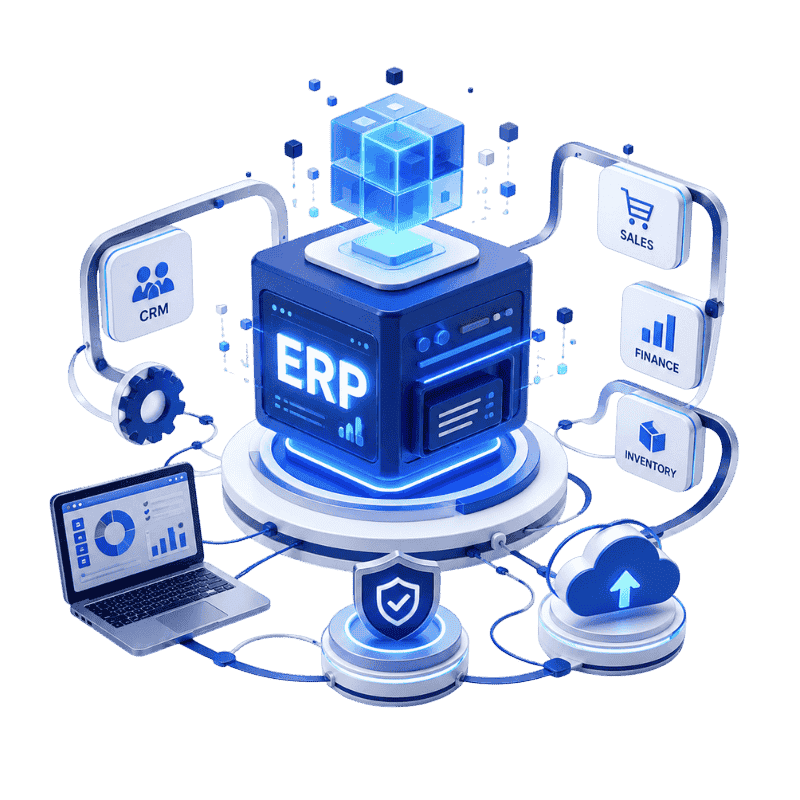
Cloud ERP Development
We build cloud-first ERP systems accessible from any device, anywhere. Your project managers can update progress from a site office, your accounts team can approve invoices from home, and your MD can check real-time financials from a phone. No servers to maintain, no VPN passwords to forget, and no downtime for hardware failures.
Custom Module Development
Workflow Automation
Custom Reports and Dashboards
Third-Party Integrations
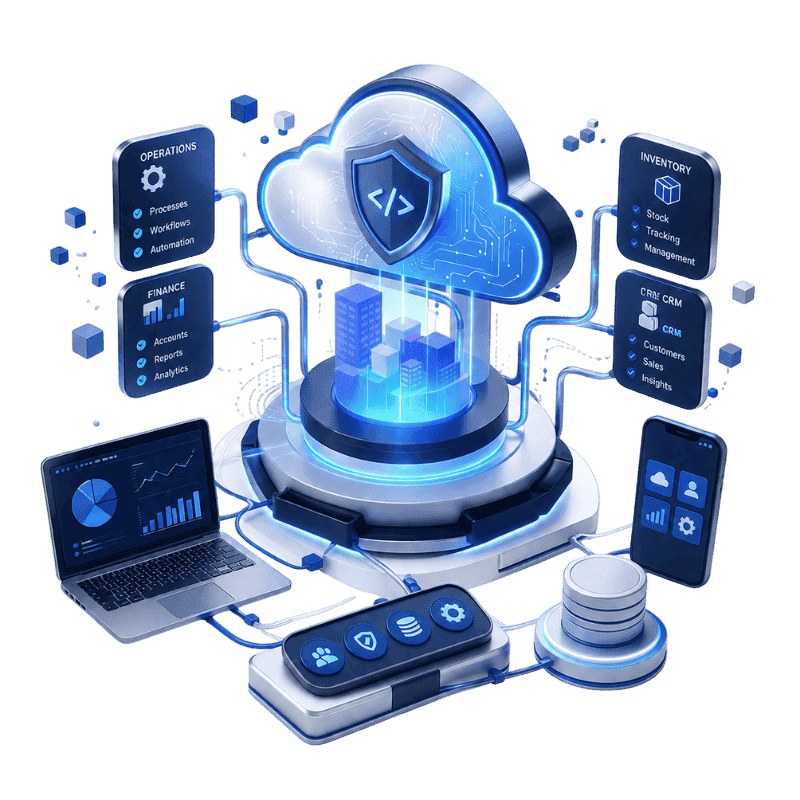
ERP Module Development
Need a specific module added to your existing system? We build standalone ERP modules including inventory management, production planning, HR and payroll, CRM, finance, procurement, warehouse management, quality control, and project tracking. Each module is built to integrate cleanly with your existing platform without disrupting what already works
Cloud Deployment and Hosting
Multi-Location Access
Automated Backup and Recovery
Enterprise Data Security
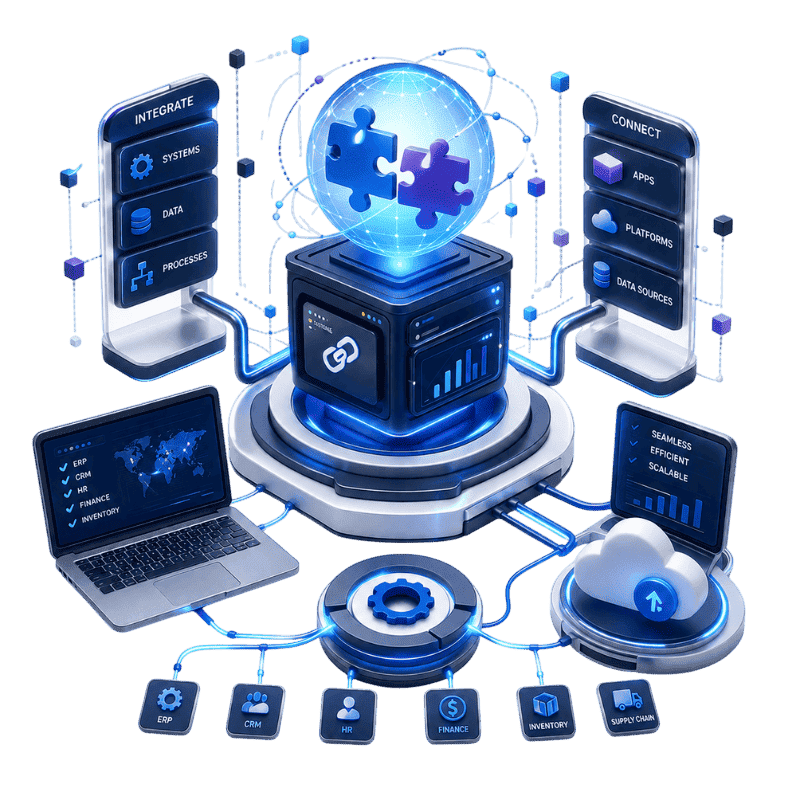
ERP Integration Services
We connect your new or existing ERP with third-party tools including Tally, Zoho, payment gateways, logistics APIs, e-commerce platforms, CRM systems, and custom databases. Data flows automatically across every system without manual re-entry, eliminating duplicate work and reducing errors
CRM Integration
HRMS Integration
Payment Gateway Integration
API Development and Integration
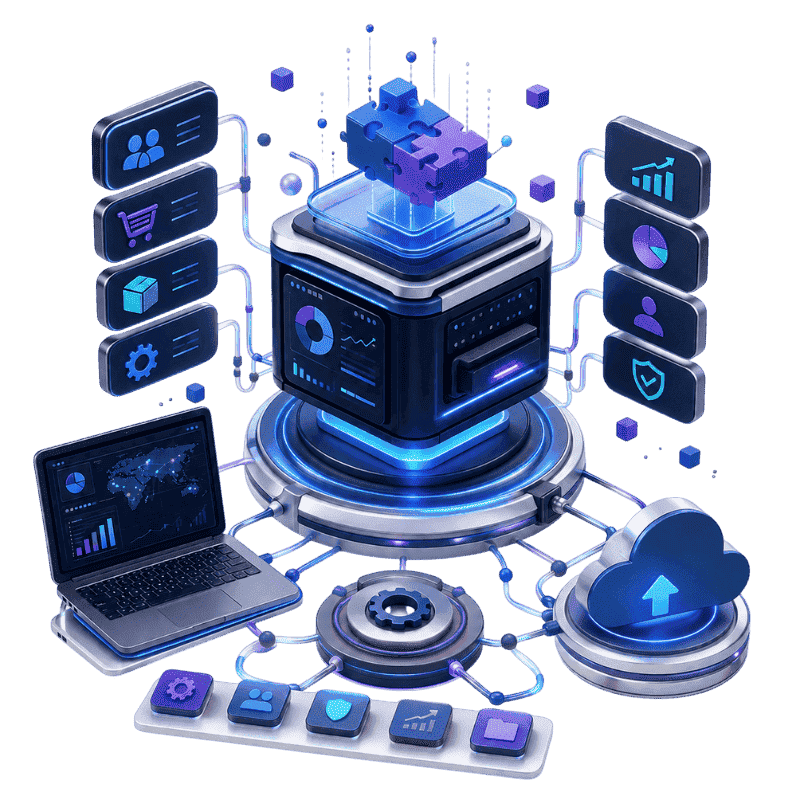
ERP Migration Services
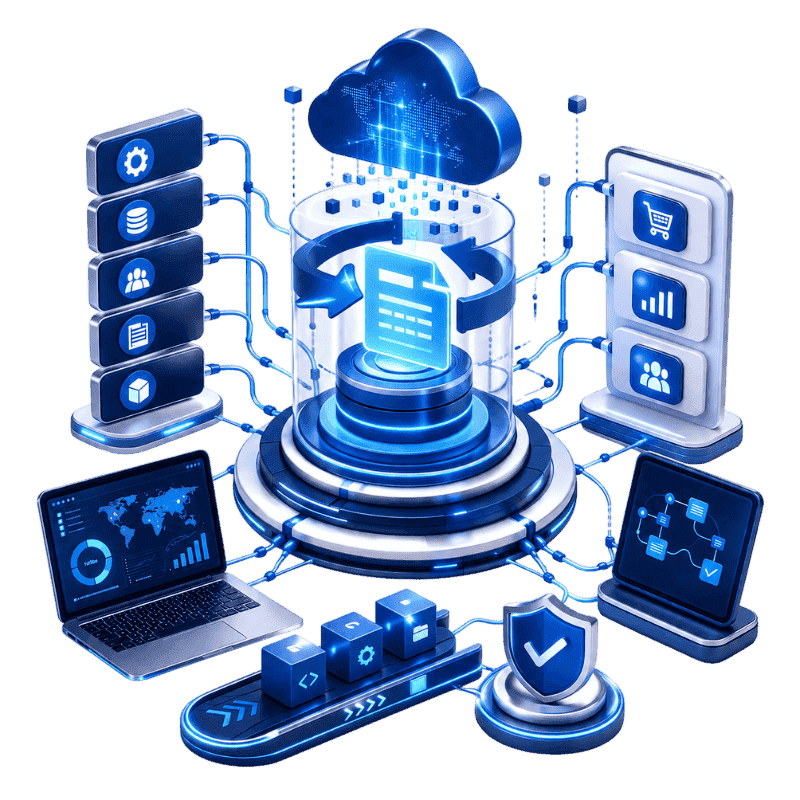
We help businesses move from outdated ERP systems, spreadsheets, or legacy platforms to modern cloud-based ERP without losing data or disrupting operations. We plan the migration in phases, validate every data record, run parallel operations during the transition, and support your team through the full go-live process
24/7 Technical Support
Performance Optimization
Security Updates and Patches
System Health Monitoring
ERP Consulting and Requirement Analysis
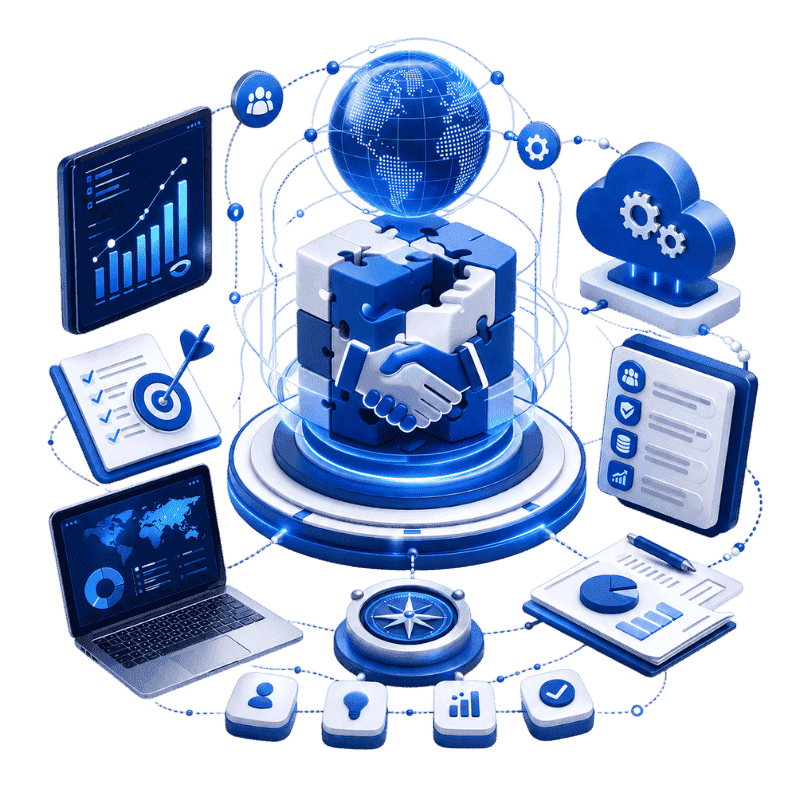
Not sure what your ERP needs to do? Our consulting team works with your leadership and department heads to map existing processes, identify bottlenecks, and define the exact system requirements before recommending or building anything. This discovery phase is what prevents costly changes during development
ERP Roadmap Planning
Workflow Automation
Custom Reports and Dashboards
Third-Party Integrations
AI-Powered ERP Features
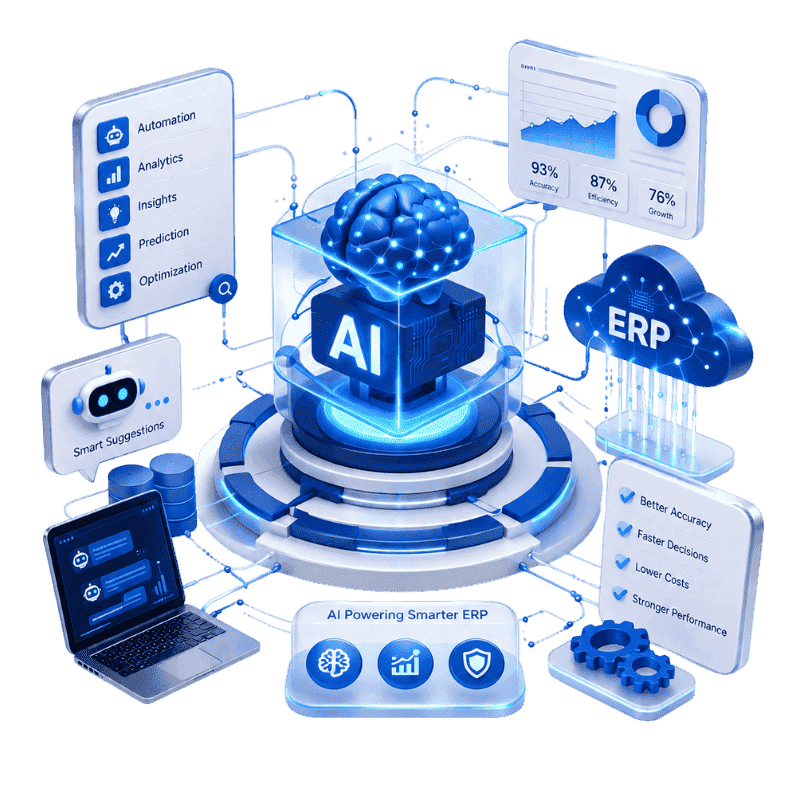
We integrate AI capabilities into custom ERP systems including demand forecasting, inventory prediction, budget variance alerts, automated approval routing, anomaly detection in financial data, and intelligent reporting dashboards. Businesses that want smarter decision-making without a separate AI tool get it built directly into their ERP
Legacy System Migration
Secure Data Transfer
Zero Data Loss Strategy
Post-Migration Support
Post-Launch Support and Maintenance
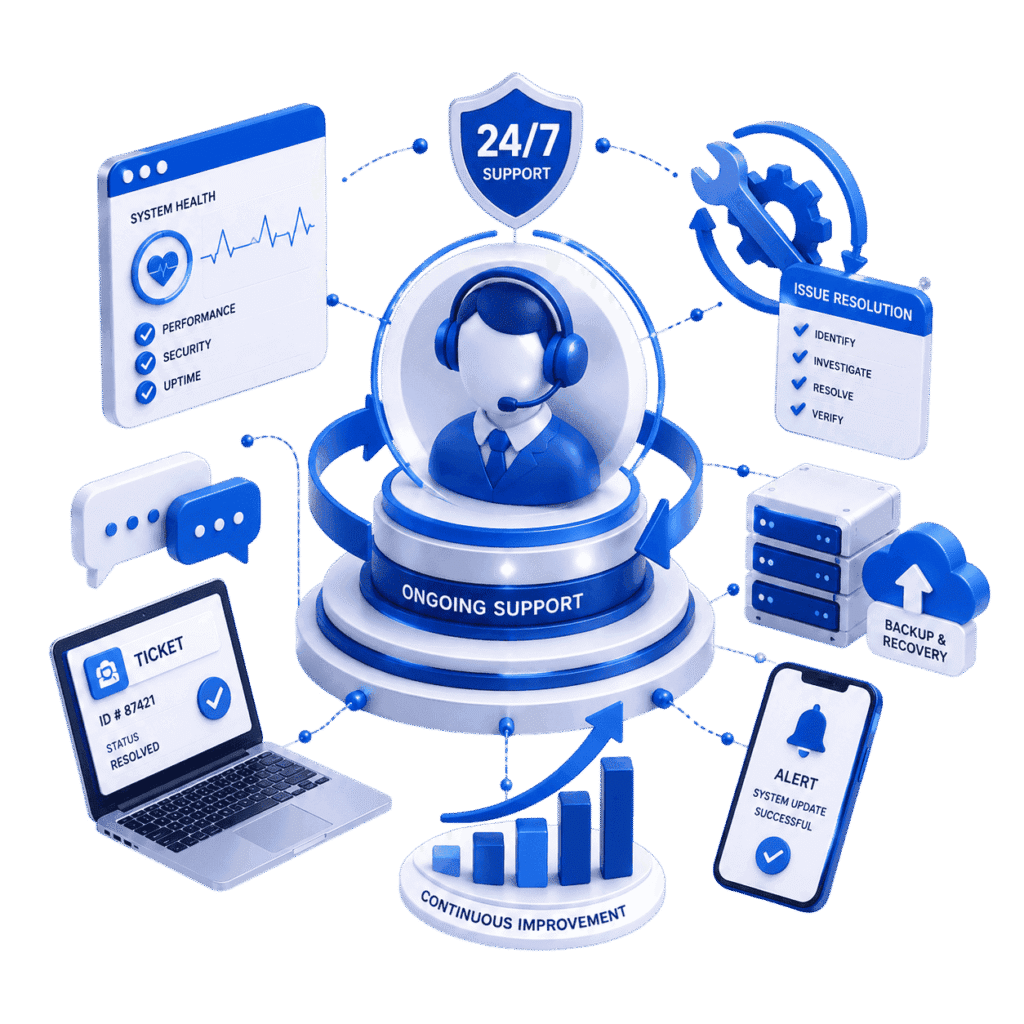
Proftcode stays with you after go-live. We offer flexible support plans covering bug fixes, user training, performance monitoring, feature additions, and scaling support. You will never be left managing a complex system without expert help available
Real-Time Dashboards
KPI Monitoring
Predictive Analytics
Executive Reports
ERP Development Cost in India - Pricing Factors Explained

The size of the business directly affects ERP development costs. Small and mid-sized enterprises typically require fewer users and easier workflows, which reduces costs. Larger enterprises require complex tools, multiple departments and high scalability. This increases the effort to develop and pricing.
The size of the business directly affects ERP development costs. Small and mid-sized enterprises typically require fewer users and easier workflows, which reduces costs. Larger enterprises require complex tools, multiple departments and high scalability. This increases the effort to develop and pricing.
01
Meaning of ERP in Simple Terms
Lorem ipsum dolor sit amet, consectetur adipiscing elit. Ut elit tellus, luctus nec ullamcorper mattis, pulvinar dapibus leo.
02
Meaning of ERP in Simple Terms

Lorem ipsum dolor sit amet, consectetur adipiscing elit. Ut elit tellus, luctus nec ullamcorper mattis, pulvinar dapibus leo.
03
Meaning of ERP in Simple Terms

Lorem ipsum dolor sit amet, consectetur adipiscing elit. Ut elit tellus, luctus nec ullamcorper mattis, pulvinar dapibus leo.
04
Meaning of ERP in Simple Terms
Custyom Erp
- List Item #1
- List Item #1
- List Item #1
- List Item #1
- List Item #1
- List Item #1

Ready-Made Erp
- List Item #1
- List Item #1
- List Item #1
- List Item #1
- List Item #1
- List Item #1

THE COMPREHENSIVE GUIDE TO PRODUCTION SYSTEMS : MRP VS MES EXPLAINED IN DETAIL
TL;DR – MRP vs MES
Understanding the distinction between an MRP and an MES is pivotal for any production facility looking to optimize its operations. A manufacturing resource planning system focuses on what to produce, when to produce it, and what materials are needed (often handling material planning). In contrast, a mes manufacturing execution system operates on the shop floor in real-time to execute those plans and manage the exact “how” of production. While navigating the complex landscape of erp vs mrp vs mes, organizations must recognize that an mrp planning system schedules the future, whereas a cloud based manufacturing execution system manages the immediate present, bridging the gap between strategic planning and physical execution. Many businesses seek a unified approach by hiring a consultant erp or a custom erp development company to seamlessly integrate these layers