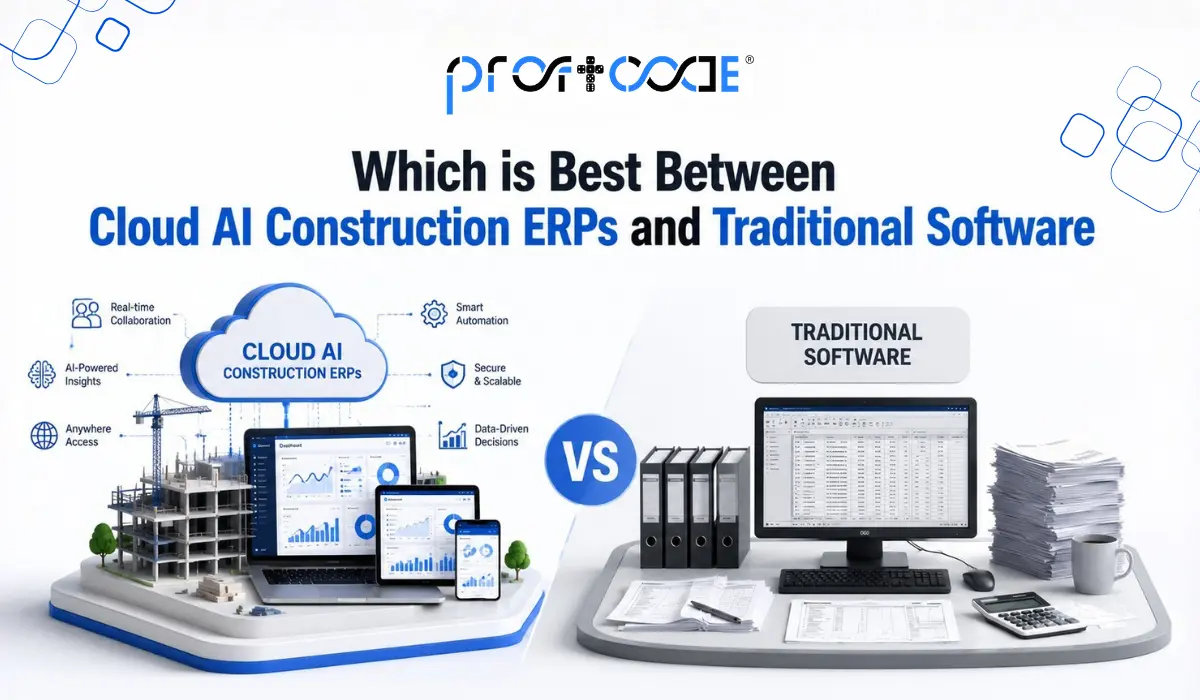
Key Takeaways
- Traditional ERP is like “a filing cabinet bolted to the wall” — reliable but useless for field teams who need real-time site updates.
- Cloud ERP lets field teams update progress from mobile devices anywhere; traditional systems tie you to the office network.
- Cloud ERP deploys in weeks; traditional implementations typically take 6+ months.
- Cloud systems scale on demand without new hardware; traditional ERP needs new servers and licenses to expand.
- AI-powered cloud ERP enables real-time budget monitoring, automated approvals, and predictive alerts for shortages or overruns — hard to retrofit onto traditional systems.
- The deciding factor isn’t cloud vs. traditional — it’s whether the system is built around how your teams actually work on site.
A construction company owner once told us something that stuck. He said his old ERP software felt like a filing cabinet bolted to the wall. Useful, sure. But you had to walk to it, open it, and dig through it every single time. Meanwhile, his site engineers were sending updates from their phones, standing in mud, waiting for approvals that took two days to reach a desktop sitting in an office 40 kilometers away.
That gap is exactly why the debate between cloud ERP and traditional ERP refuses to die down.
If you run a construction firm, a manufacturing unit, or any business with moving parts (both literally and financially), you have probably asked yourself this question at least once. Do you stick with the traditional ERP system your company has used for years? Or do you move to a cloud-based, AI-powered platform that promises speed, automation, and real-time visibility?
There is no one-line answer. But there is a clear one once you look at how each system actually behaves in the real world.
First, Let's Get the Basics Right
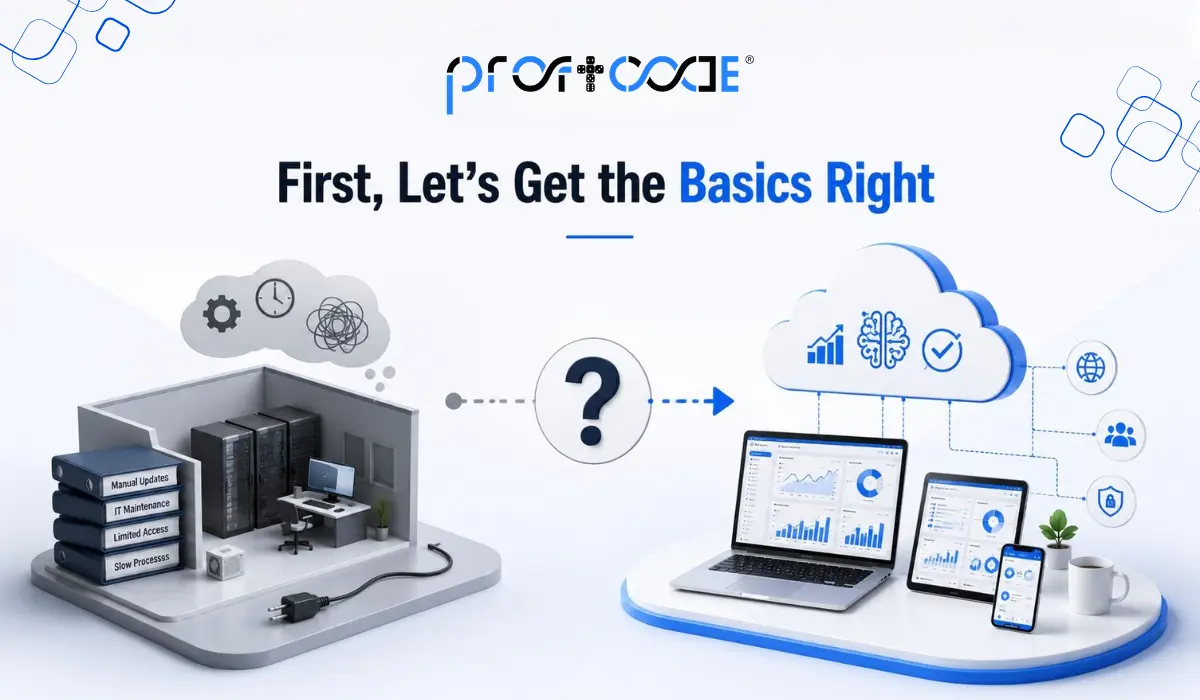
Before jumping into comparisons, it helps to know what each term really means. No jargon, just plain talk.
Traditional ERP is software installed on your own servers, physically present in your office. Your IT team manages updates, security, and maintenance. It works, but it moves slowly. Think of it like owning a landline. Reliable, yes. Flexible, not really.
Cloud ERP runs on remote servers, accessible through the internet from anywhere. Add AI capabilities to it, and you get a system that can predict material shortages, flag budget overruns before they happen, and automate approvals without someone chasing five different people over WhatsApp.
Now here’s the part most articles skip. Neither system is “better” in a vacuum. It depends on your business size, your site locations, your team’s tech comfort, and, honestly, your patience for IT headaches.
The Real Differences (Not the Textbook Ones)
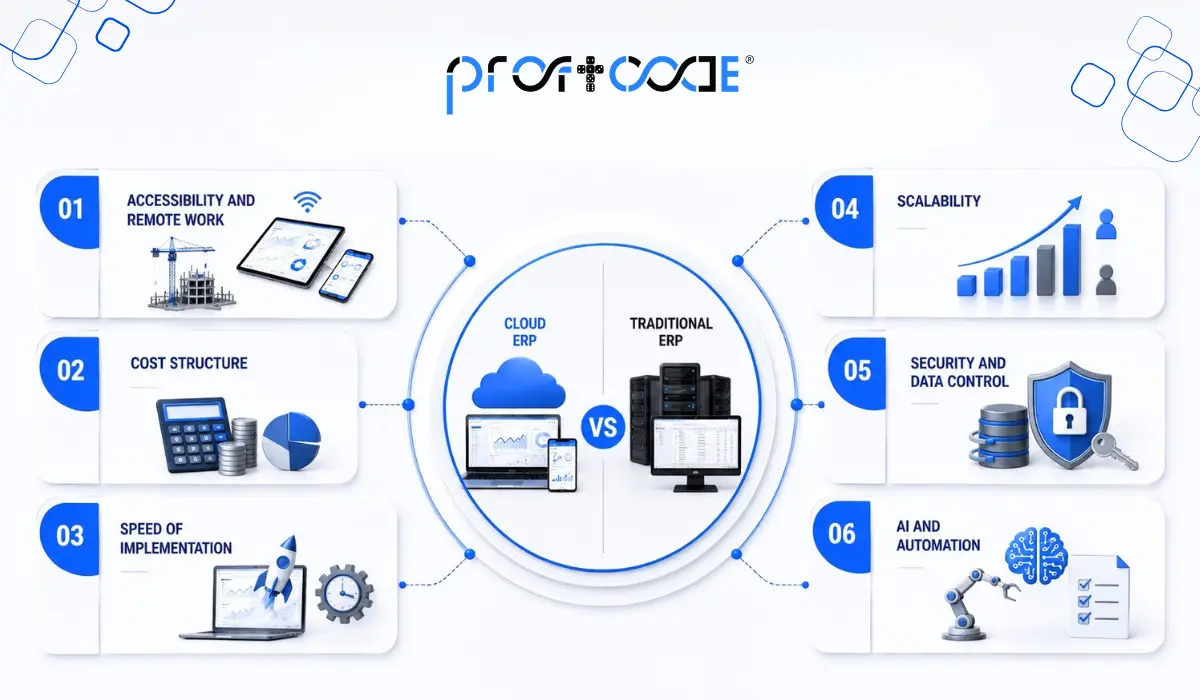
Let’s break this down the way it actually plays out on the ground.
1. Accessibility and Remote Work
Construction projects rarely happen inside a single building. You’ve got site offices, warehouses, vendor locations, and a head office, often scattered across cities.
- Cloud ERP lets your project managers update progress from the site itself, using a phone or tablet.
- Traditional ERP usually needs a desktop connection inside the office network, sometimes through a VPN that half the team forgets the password to.
If your work happens in the field (and in construction, it almost always does), cloud wins this round without much of a fight.
2. Cost Structure
This one surprises a lot of business owners.
Traditional ERP:
- Higher upfront cost for servers, licenses, and installation
- Ongoing maintenance and IT staff costs
- Hardware needs replacement every few years
Cloud ERP:
- Lower entry cost, usually subscription-based
- No server hardware to maintain
- Updates and security patches handled by the provider
That said, cloud ERP isn’t automatically cheaper in the long run for very large enterprises with massive, stable data needs. It’s more predictable, though, and predictability matters a lot when you’re budgeting for a construction project with tight margins.
3. Speed of Implementation
Ask anyone who has been through a traditional ERP rollout. It’s not a quick process.
- Traditional ERP implementation can take anywhere from 6 months to over a year, depending on complexity.
- Cloud ERP, especially when built through experienced ERP software development services, can go live in weeks rather than months.
This matters more than people realize. A construction company losing three months to ERP setup is a construction company losing three months of decisions made on spreadsheets and guesswork.
4. Scalability
Here’s a small tangent, but a relevant one. Imagine trying to add a new floor to a house that wasn’t designed to hold extra weight. That’s what scaling a traditional ERP feels like sometimes. You need new servers, new licenses, and more IT hours.
Cloud ERP scales differently:
- Add users or new project sites without buying new hardware
- Expand storage and processing power on demand
- Integrate new tools (accounting, HR, procurement) without a complete system overhaul
For a growing ERP development company or a construction firm bidding for bigger projects every year, this flexibility isn’t a luxury. It’s survival.
5. Security and Data Control
This is where traditional ERP still holds ground for a specific type of business.
- Traditional ERP gives you full physical control over your data. Some government contractors and highly regulated industries still prefer this.
- Cloud ERP relies on the provider’s security infrastructure, which today is often stronger than what most mid-sized companies can build in-house on their own.
Modern cloud providers use encryption, regular audits, and multi-layer authentication that a lot of traditional setups simply don’t have the budget to match. So while “cloud feels less secure” is a common worry, the numbers usually tell a different story.
6. AI and Automation
This is really the deciding factor for most businesses today.
Traditional ERP systems were not built with AI in mind. Adding automation later feels like fitting a new engine into an old car. Possible, but clunky.
Cloud ERP with AI can:
- Predict material and inventory shortages before they cause delays
- Flag budget overruns in real time instead of at the month’s end
- Automate repetitive tasks like invoice matching and approval routing
- Generate reports instantly instead of waiting for someone to compile them manually
If you’re a construction business juggling multiple vendors, subcontractors, and shifting timelines, this level of automation isn’t a nice-to-have anymore. It’s what separates companies that stay on budget from those that don’t.
So, Which One Should You Actually Choose?
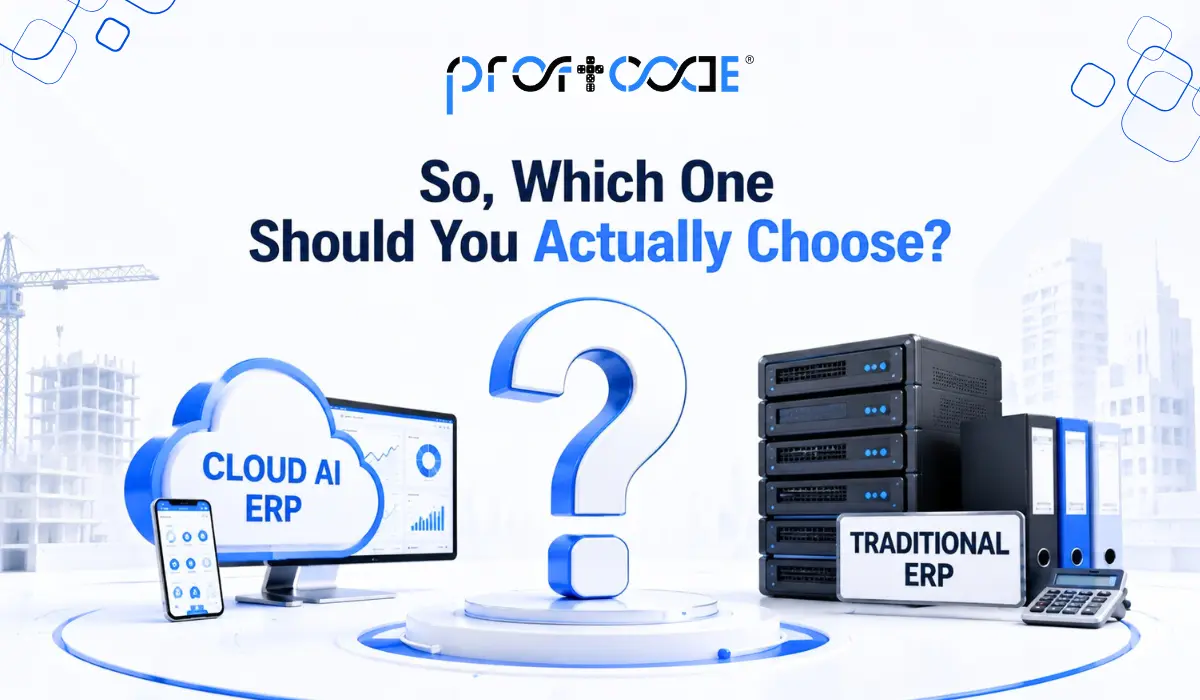
Honestly, it depends on where your business stands right now.
Choose traditional ERP if:
- You operate in a single, fixed location with limited remote access needs
- Your industry has strict regulatory requirements around data residency
- You already have a heavy investment in existing infrastructure that still works fine
Choose cloud AI ERP if:
- Your team works across multiple sites or moves frequently
- You want faster implementation and lower upfront investment
- You need real-time visibility into budgets, materials, and timelines
- You’re planning to scale operations in the next few years
For most growing construction and infrastructure companies, cloud wins simply because the industry itself demands mobility. Sites change, teams move, timelines shift. Software that can’t move with you becomes a bottleneck rather than a tool.
Why Custom ERP Development Matters More Than the Cloud vs Traditional Debate
Here’s something worth saying plainly. The cloud vs traditional question matters less than most people think if the ERP itself isn’t built around your actual workflow.
A lot of businesses buy an off-the-shelf system, cloud or otherwise, and then spend months trying to bend their processes to fit the software. That’s backwards.
Working with a custom ERP development company means the system is shaped around how your business actually runs, not the other way around. A good ERP software development company will map your existing processes first (procurement, site management, billing, vendor coordination) and then build or configure the platform to match.
This is exactly the gap that skilled ERP developers fill. Whether you’re comparing platforms or trying to decide between building custom ERP software development services versus buying a template solution, the right development partner makes the difference between a system your team actually uses and one that just sits there collecting dust, much like that old filing cabinet we mentioned earlier.
If you’re searching for an ERP software development company in India, or specifically an ERP software development company in Delhi, look for one with real construction or manufacturing project experience, not just generic software portfolios. Domain knowledge saves months of back and forth during requirement gathering.
A Quick Reality Check
Before you make the switch, ask yourself these questions honestly:
- How often do your teams need access from outside the office?
- What’s your realistic budget for the next 12 months, not just the setup cost?
- Do you need AI-driven forecasting or basic record keeping?
- How much downtime can your business actually tolerate during migration?
The answers usually point you in the right direction faster than any comparison chart ever could.
Transform Your Business with Custom ERP Solutions
Automate workflows and improve efficiency with smart ERP software.
Final Thought
There’s no universal winner in the cloud ERP vs. traditional ERP debate. But for businesses that need mobility, speed, and smarter decision-making, cloud AI ERP is quickly becoming the practical default rather than just a trend.
What actually decides success, though, isn’t the platform type. It’s whether the system was built to fit your business or whether your business is being forced to fit the system. That’s the real question worth asking before you sign any contract.
Frequently Asked Questions
Yes. Reputable cloud ERP providers use encryption, regular security audits, and role-based access control, which often makes them safer than in-house traditional setups with limited IT budgets.
It varies by scope, but most custom builds through experienced ERP development services take between 8 and 16 weeks for a functional first version, with ongoing refinement after launch.
Technically, yes, but it’s often expensive and complex. Most businesses find it more practical to migrate to a cloud-based system built with AI capabilities from the start.
Not usually. Cloud ERP avoids large upfront hardware costs and ongoing IT maintenance, making the total cost of ownership lower for most small and mid-sized businesses.
Look for proven experience in your industry, transparent development timelines, post-launch support, and the ability to customize workflows rather than forcing you into a fixed template.