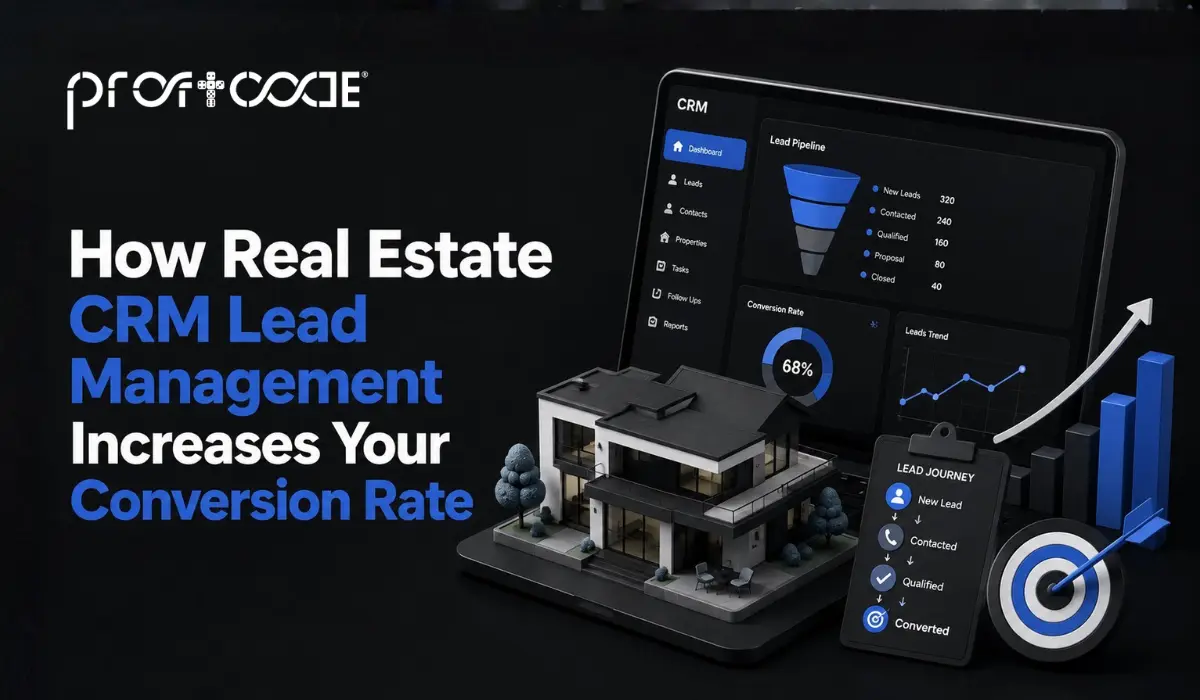
Key Takeaways
- Deals are lost not because of bad leads, but because of the gap between an inquiry coming in and someone actually following up.
- A lead that doesn’t hear back within a day or two has usually already moved on to another agent or property.
- Instant notifications and scheduled follow-up sequences remove the dependency on any one person remembering to call back.
- Lead scoring and AI-based insights direct the team’s time toward the highest-intent buyers.
- Pipeline visibility exposes exactly where deals are stalling, and marketing data shows which channels bring quality leads vs. volume.
- Most failures aren’t the CRM’s fault: teams under-use automation, skip training, or log leads inconsistently.
Conversion rate is the number every real estate agent quietly obsesses over. Not the number of leads generated, not the number of calls made, but how many of those leads actually turn into closed deals. And the truth is, most agencies aren’t losing deals because their leads are bad. They’re losing deals because good leads get mismanaged somewhere between the first inquiry and the follow-up that never quite happens on time.
this is exactly where real estate CRM lead management earns its place. Done properly, it doesn’t just organize your contacts; it directly improves how many of those contacts become paying clients. Let’s look at how and what to actually look for when choosing a system.
Why Conversion Rate Suffers Without Proper Lead Management
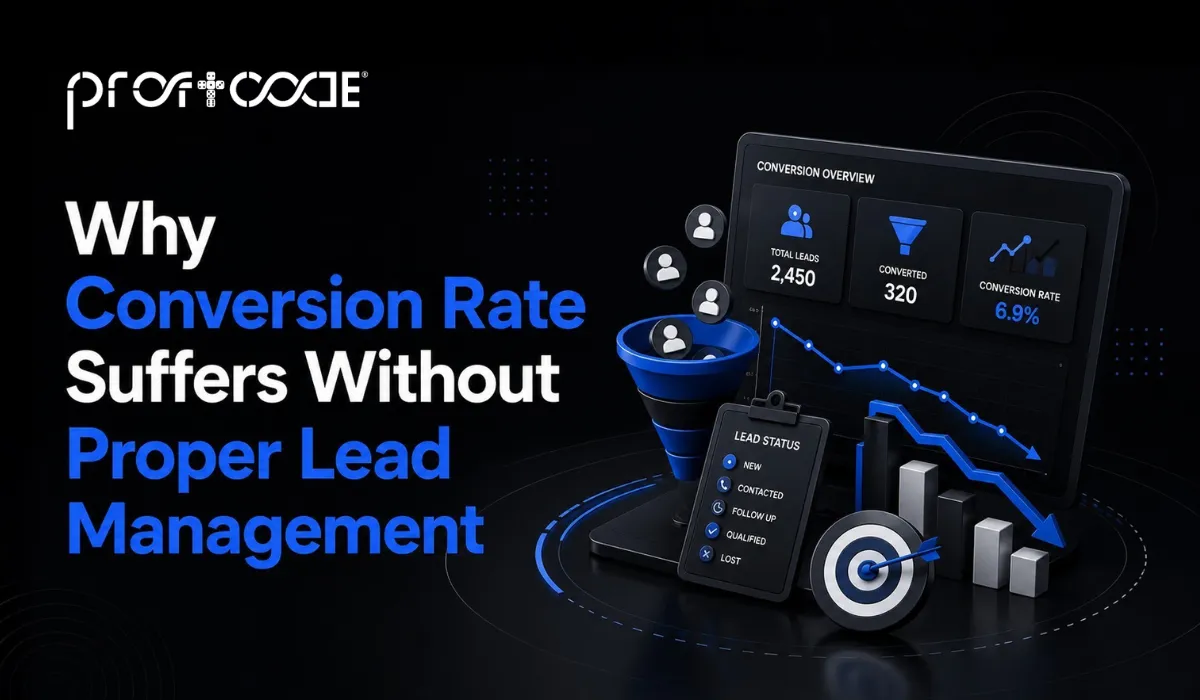
Before getting into solutions, it’s worth understanding where conversions typically leak away.
- Slow response times: A lead that inquires about a property today and doesn’t hear back for two days has often already moved on to another agent.
- No follow-up structure: Leads get contacted once, then forgotten, simply because there’s no system reminding anyone to check back in.
- Inconsistent communication: Different team members contact the same lead with conflicting details, which damages trust fast.
- No visibility into lead intent: Without proper scoring, agents spend equal time on serious buyers and casual browsers, wasting effort where it matters least.
- Data is scattered everywhere: Leads sitting across WhatsApp, email, spreadsheets, and sticky notes make it nearly impossible to track who needs attention next.
None of this happens because agents lack effort. It happens because manual systems simply can’t keep pace once lead volume grows past a handful of active conversations.
How Real Estate CRM Lead Management Directly Improves Conversions
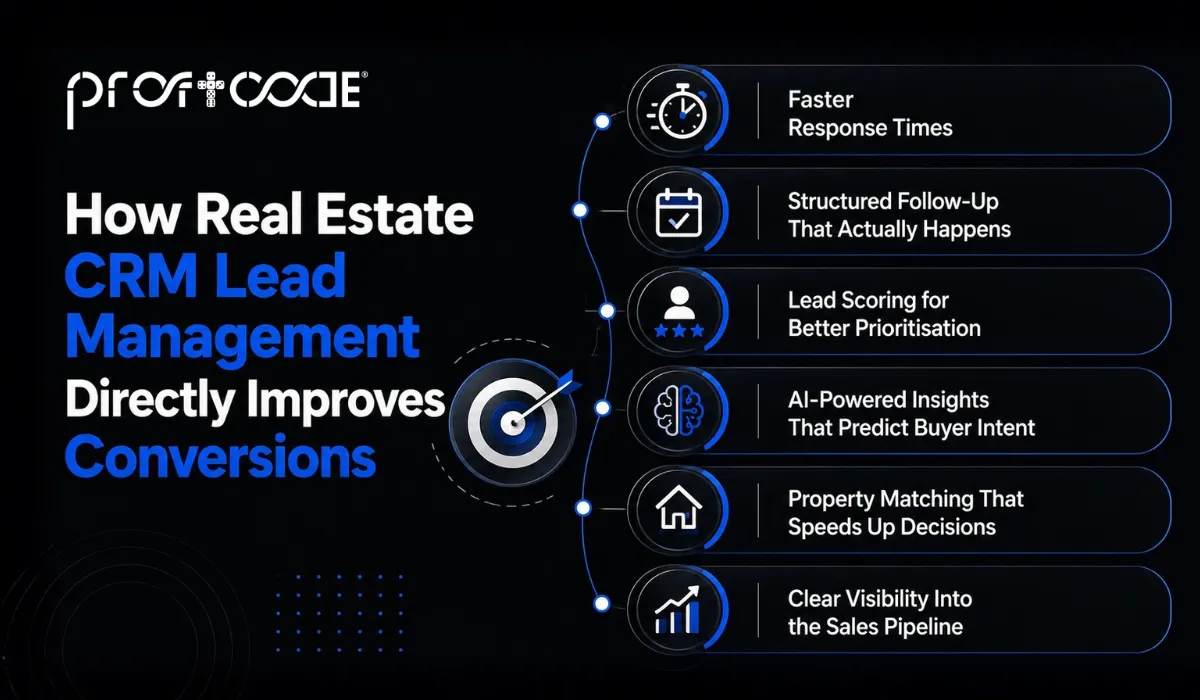
Here’s where the actual mechanics come in. A good CRM lead management system doesn’t just store data. It actively improves the process that turns inquiries into signed deals.
1. Faster Response Times
Speed matters more in real estate than in most industries. A lead generation CRM automatically logs and notifies agents the moment a new inquiry comes in, cutting down the gap between interest and contact.
- Automated notifications alert agents instantly when a new lead arrives.
- Pre-built templates allow for quick, professional first responses.
- Reduces the chances of a hot lead cooling off while waiting for a reply.
2. Structured Follow-Up That Actually Happens
A CRM lead manager keeps every lead on a scheduled follow-up path, so nothing depends purely on memory.
- Automated reminders ensure leads are contacted at the right intervals, not randomly.
- Follow-up sequences can be tailored based on where the lead is in their buying journey.
- Reduces lost opportunities from leads simply being forgotten during a busy week.
3. Lead Scoring for Better Prioritisation
Not every lead deserves equal attention right away. Lead management software that includes scoring helps agents focus where it counts.
- Identifies high-intent leads based on behavior, engagement, and stated preferences.
- Helps agents prioritize calls and visits with buyers closer to making a decision.
- Reduces wasted time chasing leads unlikely to convert in the near term.
4. AI-Powered Insights That Predict Buyer Intent
This is where things have genuinely evolved. an AI-powered real estate CRM goes beyond basic tracking. It analyzes patterns to predict which leads are most likely to convert soon.
- Flags leads showing strong buying signals, like repeated property views or quick response times.
- Suggests the best time to follow up based on previous engagement patterns.
- Helps agents work smarter by focusing energy on leads the system identifies as genuinely warm.
5. Property Matching That Speeds Up Decisions
The faster a lead sees relevant properties, the faster they move toward a decision.
- Matches leads automatically to listings based on budget, location, and preferences.
- Reduces the back-and-forth of manually cross-checking inventory.
- Improves the overall experience for the buyer, which builds trust and speeds up conversion.
6. Clear Visibility Into the Sales Pipeline
A CRM and lead management system gives a clear, visual sense of where every deal actually stands.
- Shows exactly how many leads are in each stage, from inquiry to closing.
- Helps identify bottlenecks where deals tend to stall.
- Supports better forecasting for both individual agents and agency management.
7. Data-Driven Decisions on Marketing Spend
Improving conversion rate isn’t just about following up faster. It’s also about knowing where your best leads actually come from.
- Tracks which marketing channels and campaigns generate leads that actually convert.
- Helps redirect budget toward sources delivering real results, not just volume.
- Reduces wasted spend on channels that generate high lead counts but low quality.
How to Measure Whether Your CRM Is Actually Improving Conversions Rate
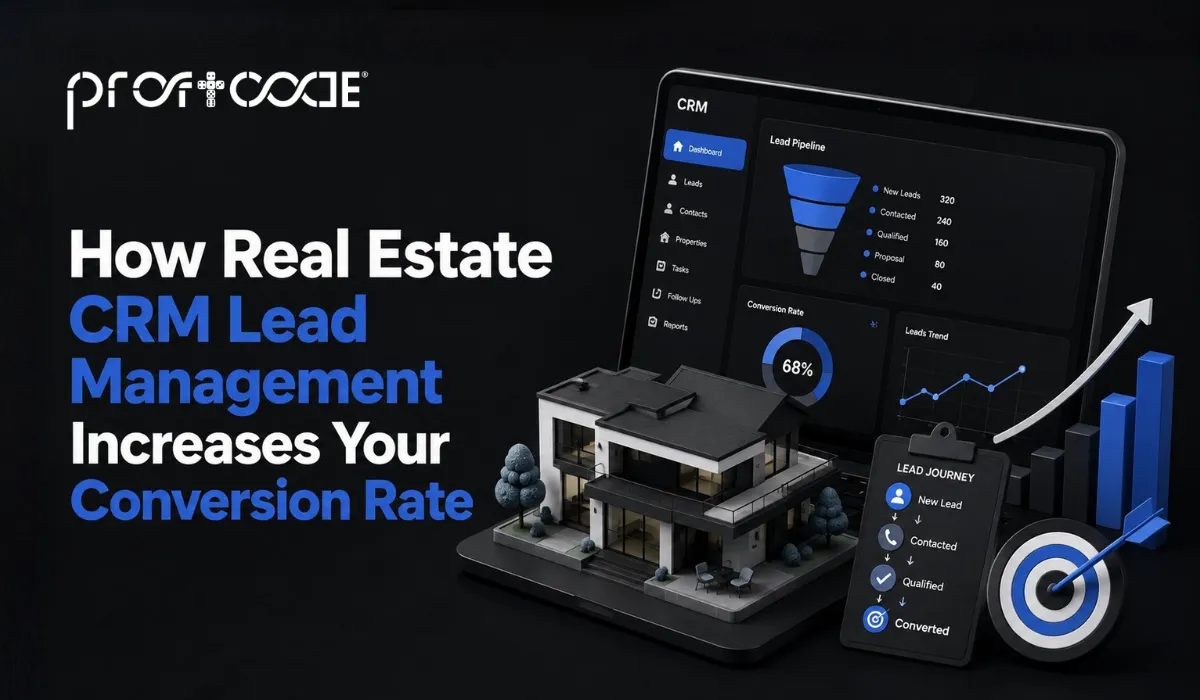
Adopting a system is only half the work. Tracking whether it’s actually moving the needle matters just as much.
- Track response time trends: Compare how quickly leads were contacted before and after adopting structured lead management.
- Monitor lead-to-deal ratio: Look at what percentage of total leads are converting into closed deals over time, not just total lead volume.
- Review follow-up consistency: Check whether leads are being contacted at the scheduled intervals or slipping through despite reminders.
- Compare source performance: See which lead sources show improved conversion after better tracking and prioritization.
- Ask your team directly: Sometimes the clearest signal is simply whether agents feel more organized and less overwhelmed day to day.
If these numbers are trending in the right direction a few months in, that’s a strong sign the system is doing its job beyond just looking good on a dashboard.
A Quick Self-Check Before You Decide

Before choosing or switching systems, it helps to ask a few honest questions.
- How many leads currently go untouched for more than a day or two?
- Do you have any way of knowing which marketing channels are actually generating quality leads?
- Would your team struggle to pick up a lead conversation if a colleague suddenly left?
- Is your current process capable of handling double the lead volume without falling apart?
If several of these point to real gaps, that’s usually a clear sign it’s time to invest in a proper real estate CRM lead management system rather than continuing to patch things together manually.
LeadHour: A Practical Example of AI-Powered Lead Management

To put this in a more concrete context, tools like LeadHour show what modern CRM lead management actually looks like in practice for growing teams. Rather than functioning as a static contact database, LeadHour is built around automated lead capture, structured follow-up scheduling, and clear pipeline visibility- the exact combination that directly supports higher conversion rates rather than just better record-keeping.
for agencies comparing the best CRM software for lead management, the key differentiator usually isn’t the size of the platform. It’s whether the system actively pushes agents toward timely, consistent follow-up, rather than simply storing information and leaving the rest up to memory.
Real Estate CRM vs General Business CRM Platforms
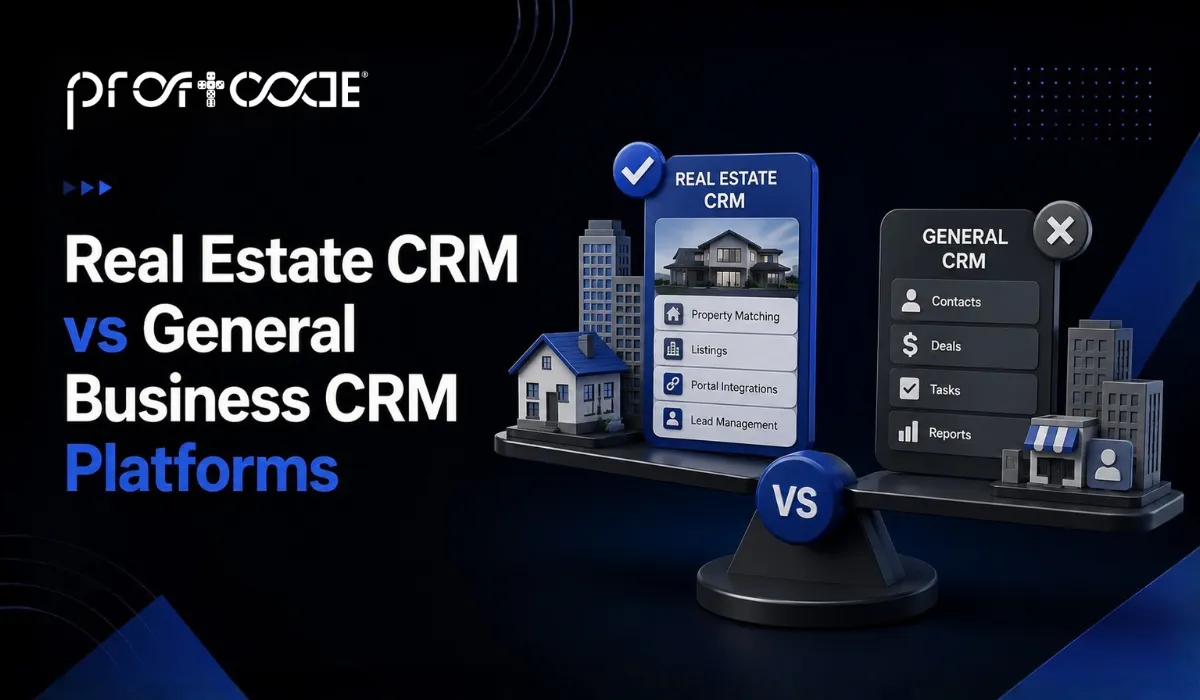
Many agencies start out using general-purpose tools, sometimes even enterprise platforms built for broader business use, like Salesforce-style lead management setups. These can work, but they’re often built for a much wider range of industries and require heavy customization to fit real estate workflows specifically.
General CRM platforms:
- Powerful and flexible, but often require significant setup and customization.
- May lack property-specific features like listing matching out of the box.
- Can involve a steeper learning curve for smaller teams.
Real estate-specific CRM and lead management tools:
- Built with property workflows already in mind, reducing setup time.
- Include features like property matching and portal integrations by default.
- Generally easier for agents to adopt quickly without extensive training.
For most independent agents and mid-sized agencies, a purpose-built real estate CRM tends to deliver faster time to value compared to adapting a broader, general-purpose platform.
What to Look for in the Best CRM Lead Management Software
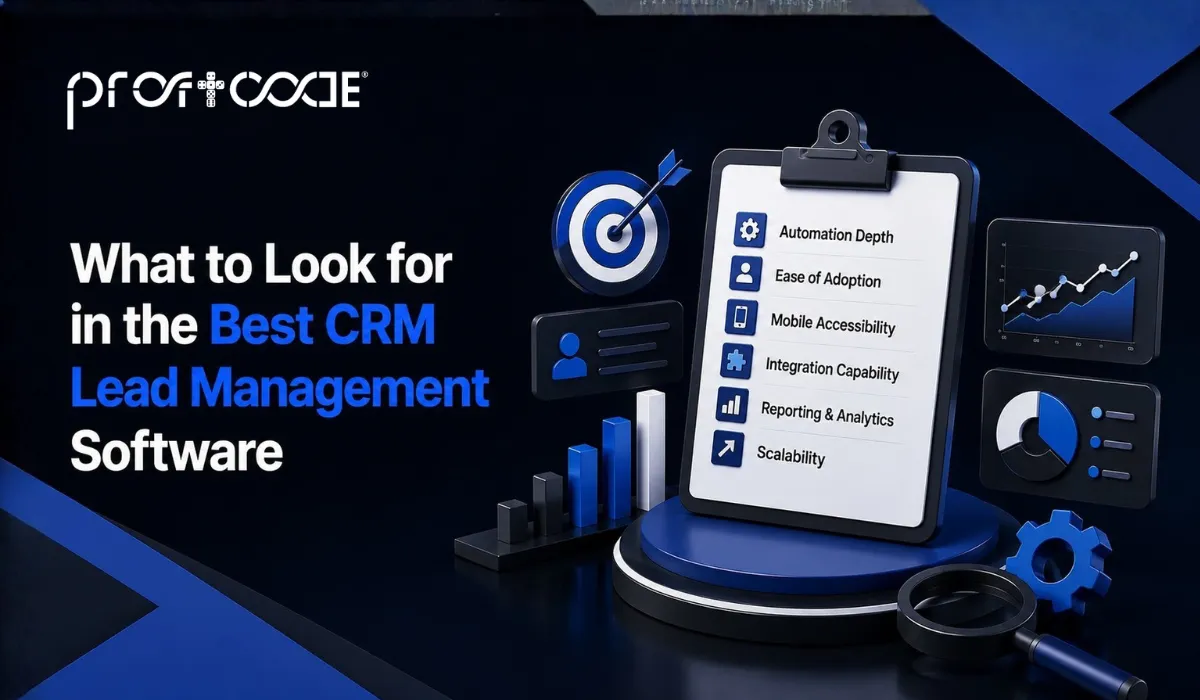
With plenty of options in the market, here’s a practical checklist to guide your decision.
- Automation depth: Look beyond basic reminders: check for lead scoring, AI-based prioritization, and automated follow-up sequences.
- Ease of adoption: If your team finds it complicated, consistent usage will drop off quickly, no matter how powerful the features are.
- Mobile accessibility: Agents are rarely at a desk, so mobile access to leads and updates is essential.
- Integration capability: Check compatibility with property portals, WhatsApp, and email systems your team already uses.
- Reporting and analytics: Choose a system that clearly shows which sources and strategies are actually driving conversions.
- Scalability: Ensure the software can handle growing lead volume without requiring a complete platform switch later.
Common Mistakes That Limit Conversion Improvements
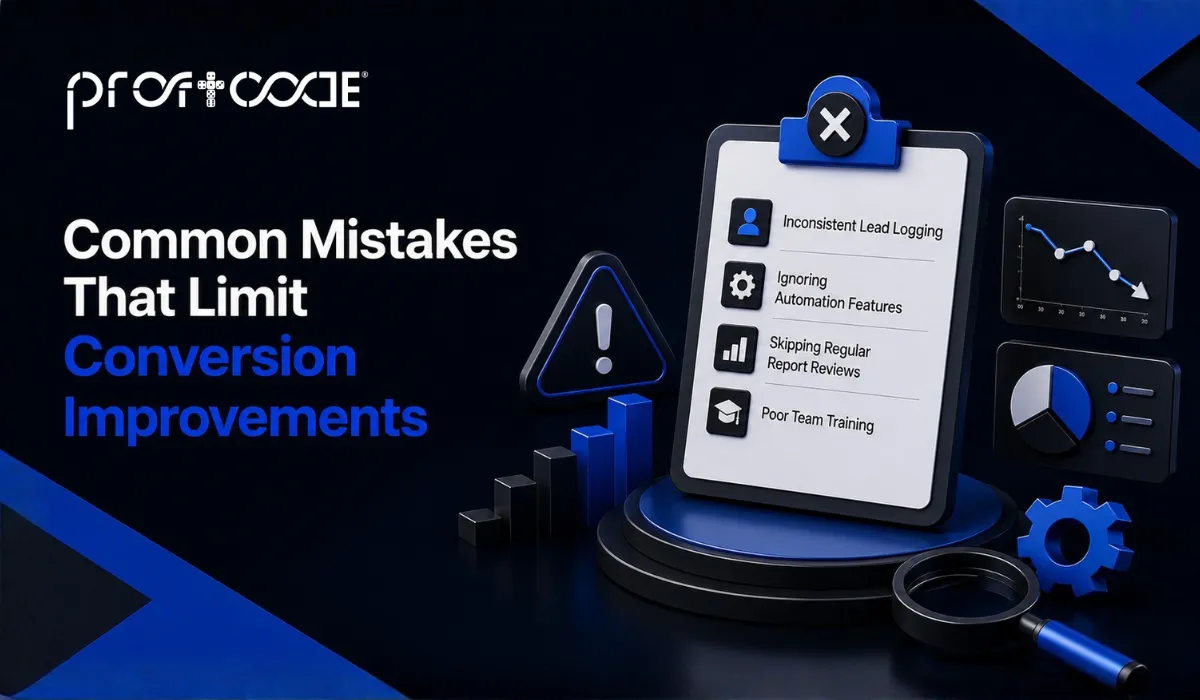
Even with good software in place, a few common mistakes can quietly undo its impact.
- Inconsistent lead logging: If leads aren’t entered promptly and accurately, the entire system loses reliability.
- Ignoring automation features: Many teams use their CRM as a basic contact list, missing out on scoring and automated sequences that actually drive results.
- Skipping regular report reviews: Data only helps if someone actually reviews it and adjusts the strategy accordingly.
- Poor team training: A powerful system rolled out without proper onboarding often gets underused within weeks.
Final Thought
Improving conversion rate in real estate rarely comes down to generating more leads. It usually comes down to managing the leads you already have more consistently and more intelligently. A well-implemented real estate CRM lead management system, especially one with AI-powered prioritization like LeadHour, closes the gap between initial interest and closed deal, turning the organization into a genuine competitive advantage rather than just administrative housekeeping.
Frequently Asked Questions
It improves conversions by ensuring faster response times, structured follow-up, better lead prioritization, and clearer visibility into which leads are most likely to close, all of which reduce lost opportunities.
An AI-powered system analyzes lead behavior and engagement patterns to predict buying intent, helping agents focus their time on the leads most likely to convert soon.
It depends on your team’s needs. General platforms offer flexibility but require more setup, while real estate-specific CRM lead management tools typically offer faster adoption with built-in property workflows.
Prioritize automated follow-up, lead scoring, property matching, mobile access, and clear reporting, since these features directly influence how many leads actually convert.