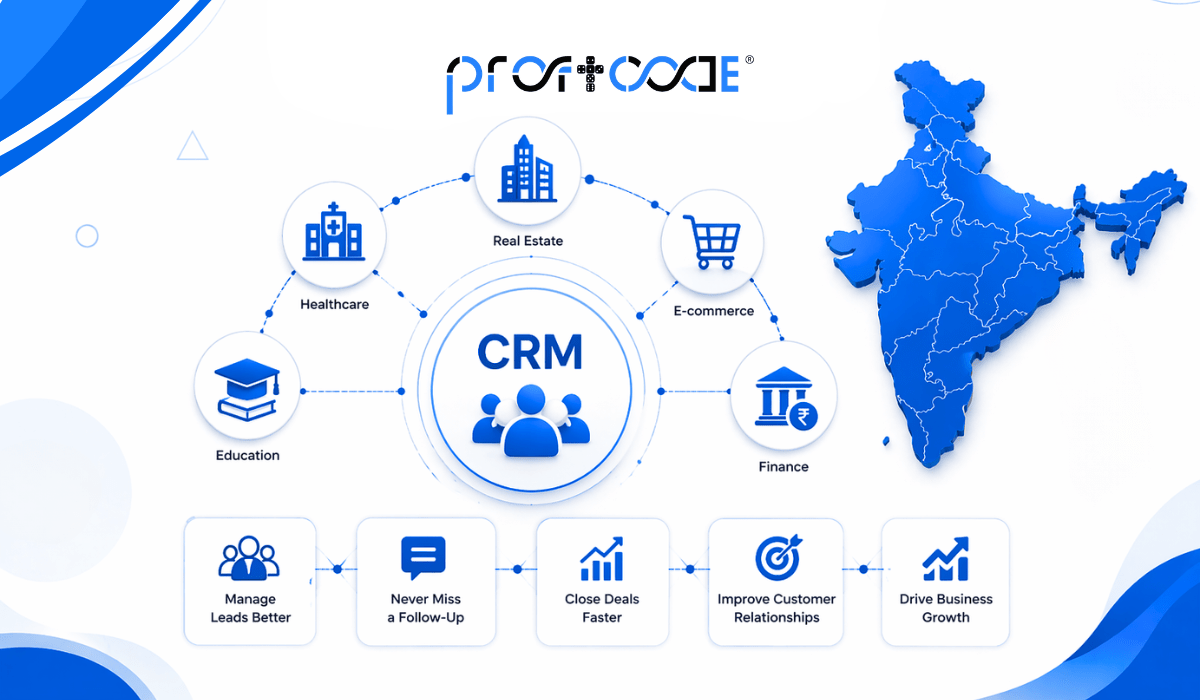
CRM stands for Customer Relationship Management. It is a software platform that centralizes everything related to your customers, including their contact details, purchase history, support queries, and communication records.
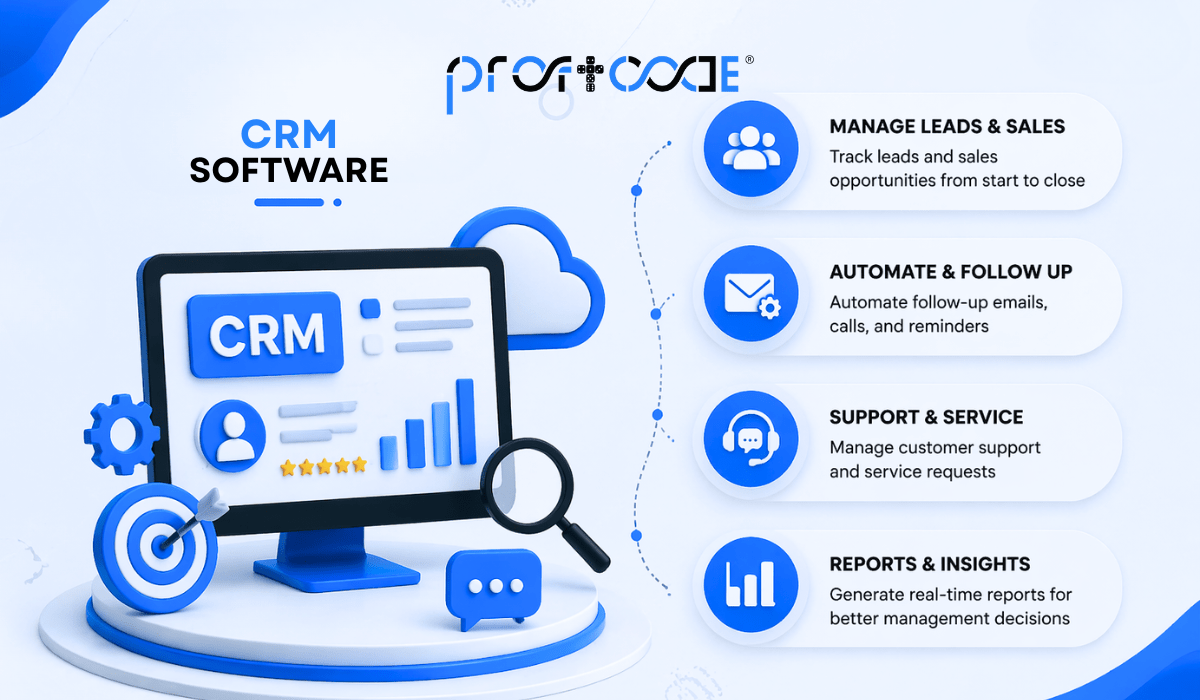
What is CRM software used for? Here are the core uses:
Most businesses today prefer cloud-based CRM software or online CRM software because it works on any device, updates automatically, and does not require expensive servers or IT infrastructure.
1. Real Estate
Real estate is one of the top industries using CRM software in India. Companies like Lodha Group, DLF, and Sobha Realty, along with thousands of local brokers and developers, depend on CRM to manage property inquiries and buyer journeys.
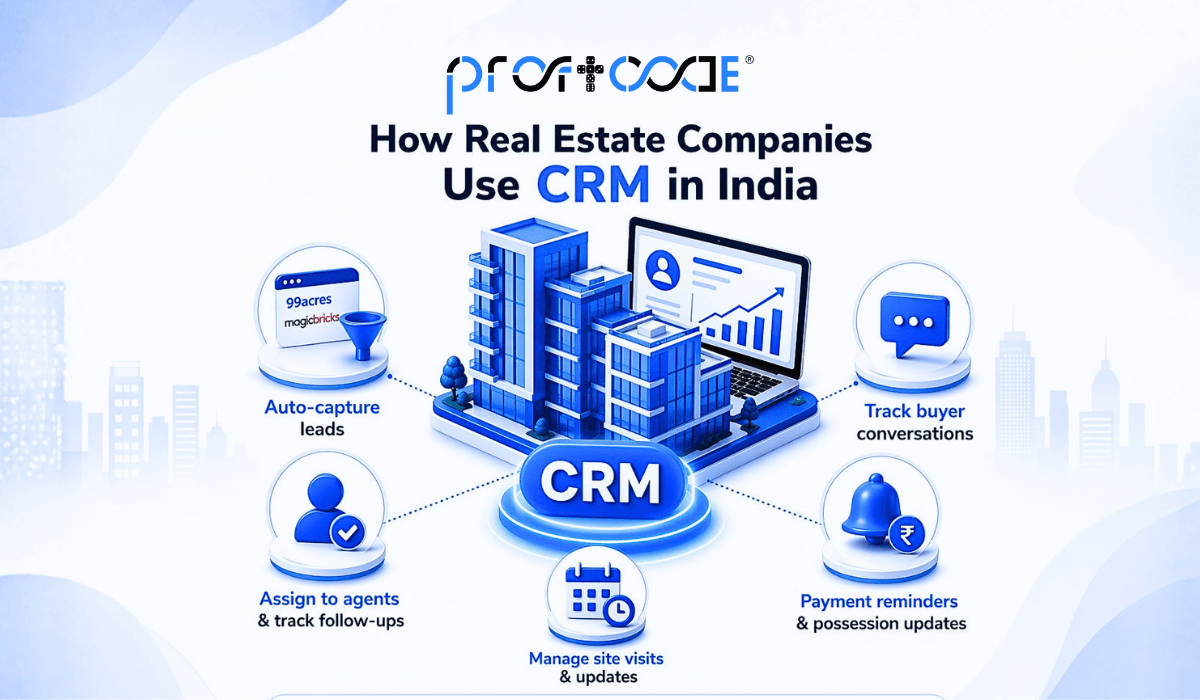
How CRM helps real estate businesses:
- Auto-captures leads from portals like 99acres and MagicBricks.
- Assigns inquiries to agents instantly and tracks follow-ups.
- Manages site visit scheduling and status updates.
- Tracks every buyer conversation from first inquiry to registration.
- Sends automated payment reminders and possession updates.
Many real estate firms in India now opt for custom CRM development services to build systems that connect with WhatsApp Business API, property portals, and payment tools specific to their workflow.
2. Healthcare and Hospitals
Hospitals, clinics, and healthcare chains like Apollo Hospitals, Fortis Healthcare, and Narayana Health use CRM software to deliver better patient experiences and manage large volumes of patient data.
Key uses of CRM software in healthcare:
- Appointment scheduling and automated reminders via SMS or WhatsApp.
- Patient history tracking and follow-up care management.
- Feedback collection after visits or treatments.
- Managing insurance queries and claim follow-ups.
- Tracking referral sources to understand which channels bring patients.
3. IT and Technology Companies
India’s IT giants like Infosys, TCS, Wipro, and HCL, along with thousands of startups and product companies, are heavy users of CRM software. Managing global client accounts, tracking project pipelines, and handling support tickets all require a centralized system.
How IT companies use CRM:
- Managing B2B client relationships and contract renewals.
- Tracking sales pipelines for software products and services.
- Integrating CRM with project tools like Jira and Slack.
- Running account-based marketing campaigns.
- Monitoring support tickets and SLA compliance.
4. E-Commerce and Retail
Platforms like Flipkart, Myntra, Nykaa, and D2C brands across India use online CRM software to personalize customer experiences, reduce cart abandonment, and build loyalty programs that actually work.
CRM use cases in e-commerce and retail:
- Segmenting customers by purchase behavior and spending patterns.
- Sending personalized offers via email, SMS, and WhatsApp.
- Tracking returns, complaints, and resolution timelines.
- Managing loyalty programs and reward point systems.
- Reducing churn by identifying inactive customers early.
5. Education and EdTech
EdTech companies like BYJU’S, Unacademy, upGrad, and Vedantu, along with colleges, coaching institutes, and schools, use CRM software to manage the entire student admission journey from first inquiry to enrollment.
How education institutions use CRM:
- Tracking student inquiries and counselor interactions.
- Automating follow-ups for fee payments and document submission.
- Managing admission pipelines with real-time conversion reports.
- Sending course updates and exam reminders to enrolled students.
- Managing parent communication and alumni relations.
6. Banking, Financial Services, and Insurance (BFSI)
Banks like HDFC, ICICI, and Axis Bank, insurance companies like LIC and HDFC Life, and fintech startups use CRM software to manage millions of customer relationships while staying compliant with RBI and IRDAI regulations.
CRM benefits for BFSI companies:
- Tracking policy renewals and alerting agents before expiry dates
- Identifying cross-sell and upsell opportunities based on customer data
- Managing KYC documentation and compliance workflows
- Reducing customer churn through proactive relationship management
- Providing a 360-degree view of each customer across all products
7. Manufacturing and B2B Industries
Manufacturing companies like Tata Motors, Mahindra, and Bajaj, along with distributors and suppliers across sectors like automotive, FMCG, and chemicals, use CRM software to manage complex dealer networks and B2B client relationships.
How manufacturing companies use CRM:
- Managing dealer and distributor relationships across territories.
- Tracking bulk orders and delivery schedules.
- Handling after-sales service and spare parts requests.
- Monitoring sales rep performance by region.
- Integrating CRM with ERP systems for end-to-end visibility
8. Travel and Hospitality
Hotel chains like Taj Hotels, OYO, and travel platforms like MakeMyTrip use CRM software to deliver personalized guest experiences, manage bookings, and build repeat business through targeted loyalty campaigns.
CRM use cases in travel and hospitality:
- Tracking guest preferences and booking history for personalized offers.
- Sending pre-arrival and post-stay follow-up messages.
- Managing travel package inquiries and itinerary coordination.
- Running seasonal promotions to past customers.
- Collecting and acting on guest feedback efficiently.