
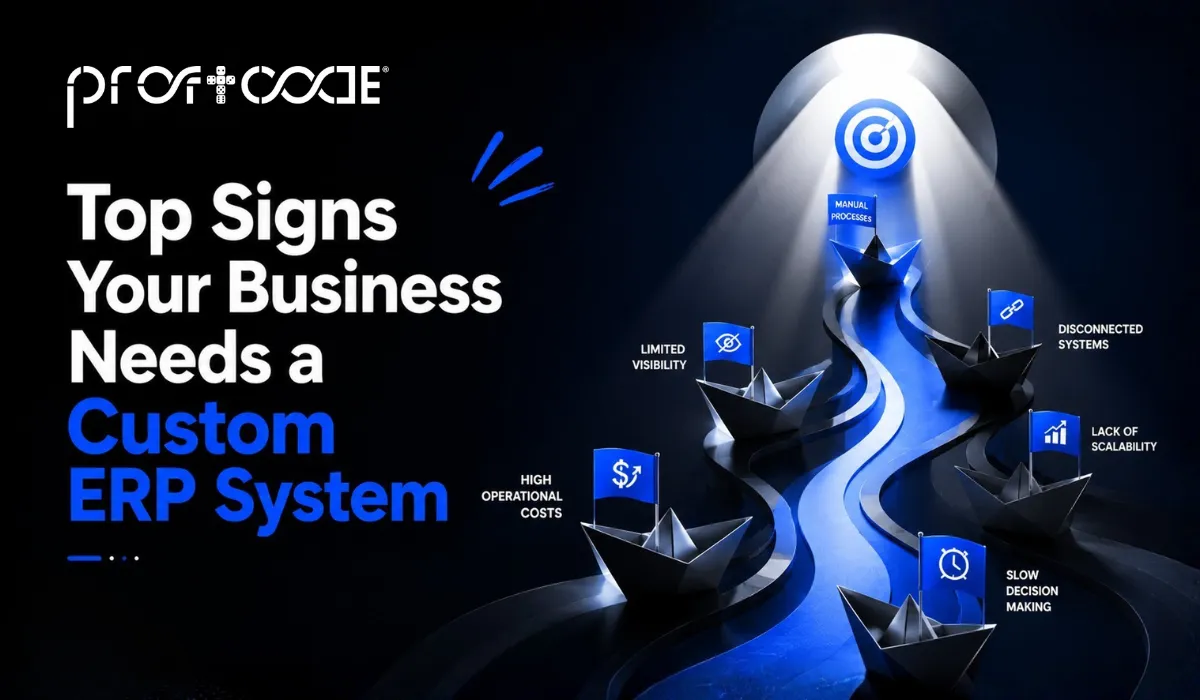
Every growing business hits a point where the tools that worked fine at a smaller scale start creaking under pressure. Spreadsheets get messier. Departments stop trusting each other’s numbers. Simple decisions take longer than they should. These aren’t random problems. There are usually signs your business needs an ERP, and specifically, a custom one built around how you actually operate.
This guide walks through the clearest indicators that it’s time to move past disconnected business systems and consider working with a proper custom ERP development company, along with what that decision actually involves.
Sign 1: You've Officially Outgrown Spreadsheets
Spreadsheets are great when you’re small. They’re flexible, cheap, and easy to set up. But there are clear signs you have outgrown spreadsheets, and most growing businesses hit them eventually.
- Multiple people are editing the same file and overwriting each other’s updates.
- Formulas are breaking because someone accidentally deleted a row.
- No real audit trail of who changed what and when.
- Version confusion: Is this the “final”, “final2” or “final_updated” file?
If your finance team is still emailing spreadsheets back and forth every week, that’s not a workflow anymore. That’s a warning sign.
Sign 2: Different Departments Have Different Numbers
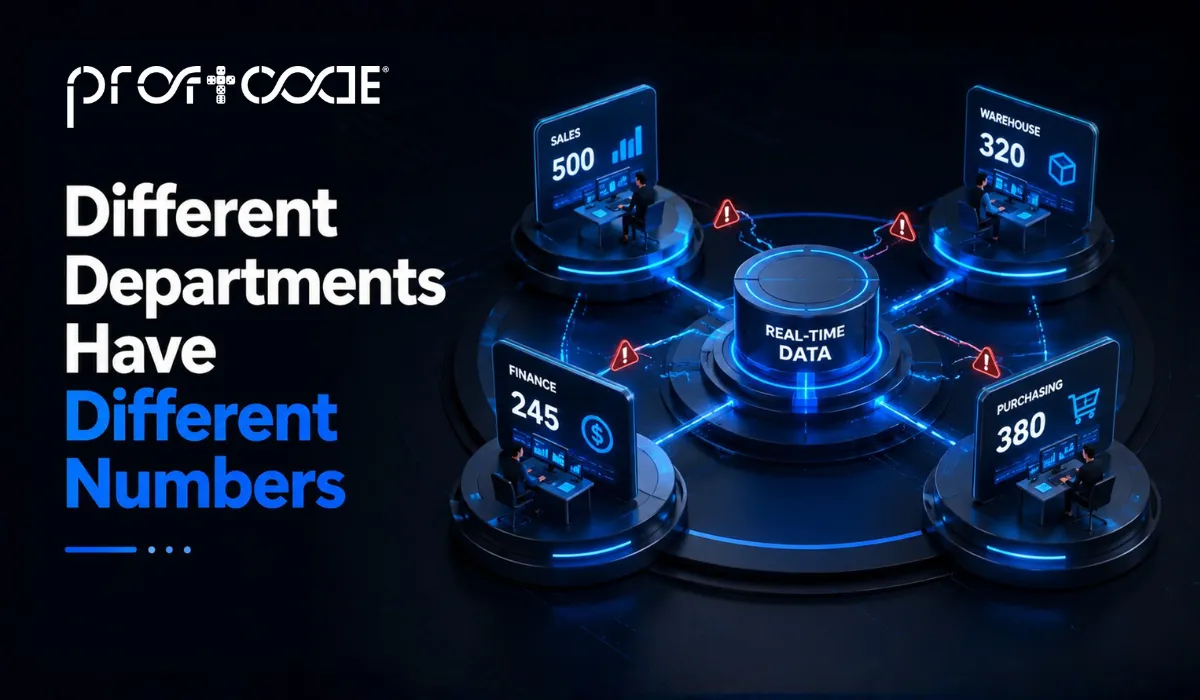
This one comes up constantly, and it’s a strong signal that disconnected business systems are actively hurting your operations.
Sales says 500 units are available. The warehouse says it’s actually 320. Finance has a completely different number because its last update was three days old. Nobody’s lying here; the systems just aren’t talking to each other.
A custom ERP system fixes this by giving every department access to the same real-time business data, updated the moment something changes. No more reconciling numbers before a Monday meeting just to figure out whose spreadsheet is actually correct.
Sign 3: Manual Data Entry Errors Are Becoming a Real Problem
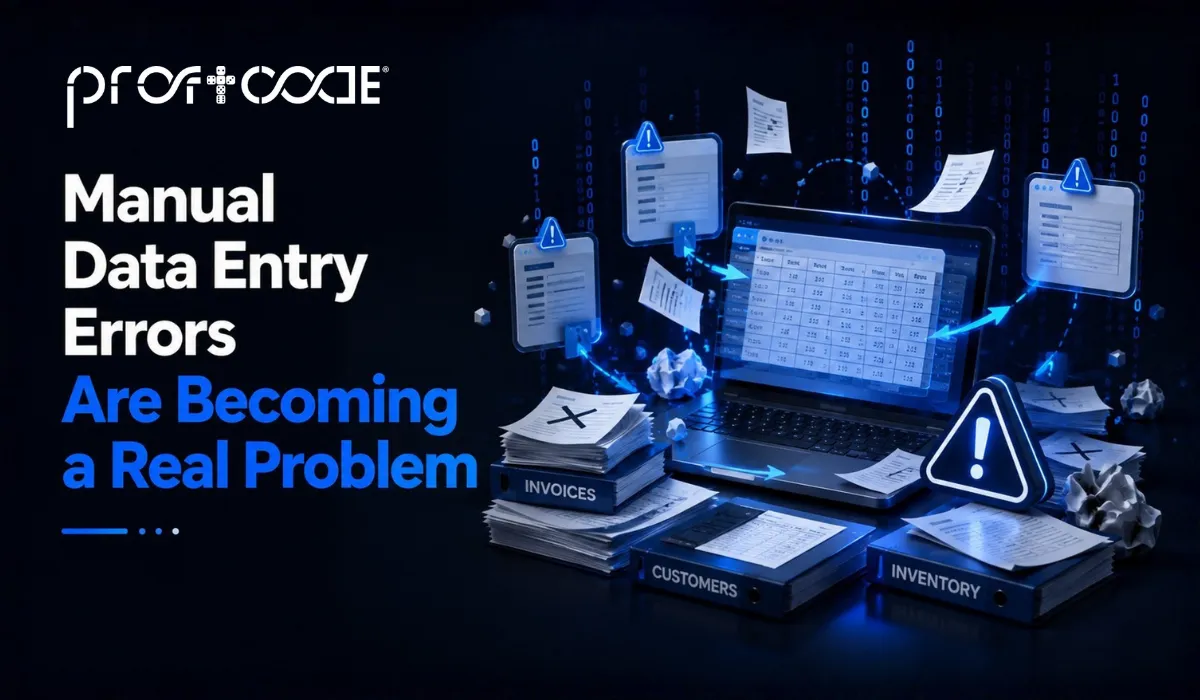
Every time someone manually retypes data from one system into another, there’s a chance of error. Multiply that across dozens of transactions a day, and manual data entry errors start adding up fast.
Common symptoms of this problem:
- Invoices with incorrect amounts due to typos.
- Duplicate customer records because of inconsistent data entry.
- Inventory counts that never quite match physical stock.
- Time wasted double-checking numbers that should have been accurate the first time.
An ERP system automates data flow between departments, so information entered once flows everywhere it needs to go, without a human retyping it five separate times.
Sign 4: You're Managing Multiple Locations or Teams
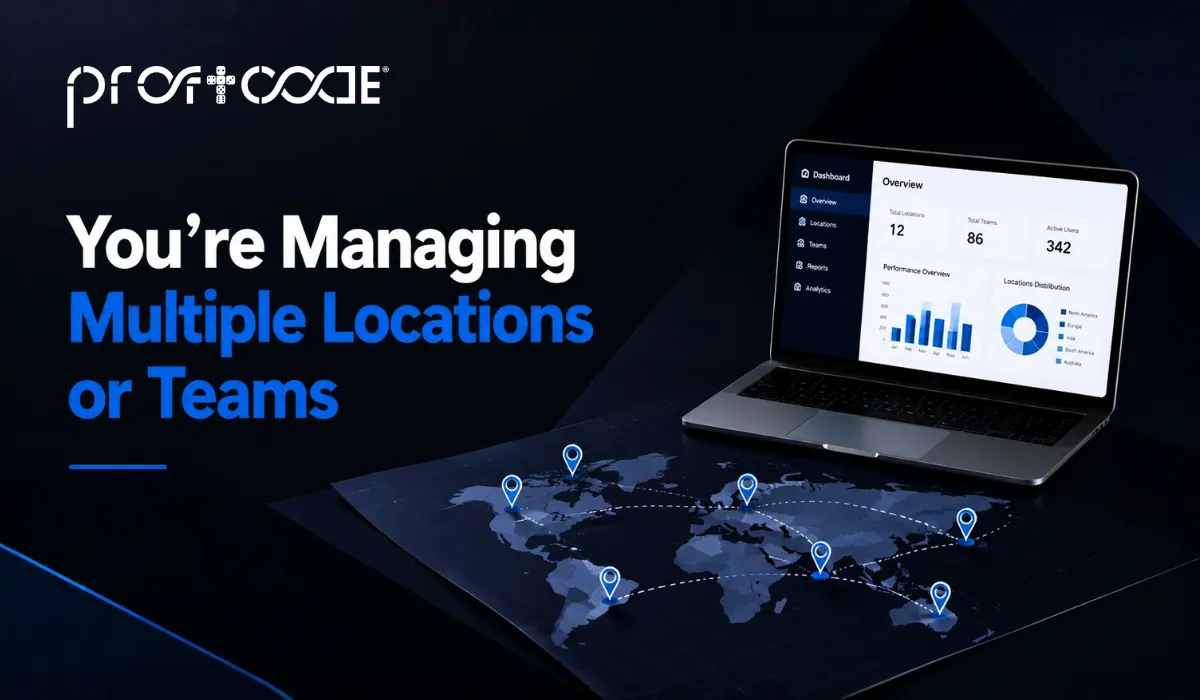
If your business has expanded to multiple branches, warehouses, or remote teams, disconnected tools become a genuine liability rather than a minor inconvenience.
ERP for multi-location business setups solves several problems at once:
- Centralized visibility across all locations from a single dashboard.
- Consistent processes so each branch isn’t inventing its own version of “how we do things”.
- Real-time stock and sales tracking across every site, not just headquarters.
- Easier reporting that combines data from all locations instead of manually merging separate files.
Without this, growth across locations tends to multiply chaos rather than multiply revenue.
Sign 5: Finance and Inventory Numbers Don't Match
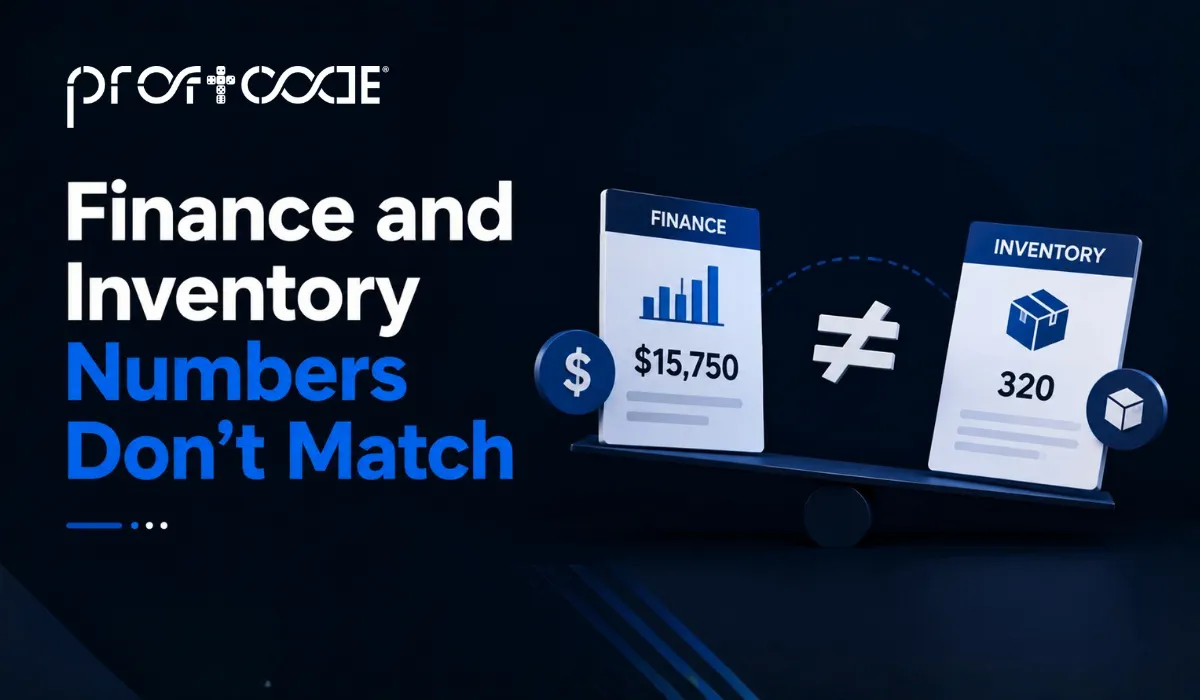
This is one of the most common and costly growing pains in business operations. An inventory and finance mismatch usually means your accounting system and your inventory system are working in isolation, updating on their own schedules, with nobody catching the gap until the end of the month.
A custom ERP system connects these functions directly. When a sale happens, inventory updates and finance records the transaction simultaneously. No lag, no guesswork, no surprises during month-end reconciliation.
Sign 6: You're Juggling Too Many Disconnected Software Tools
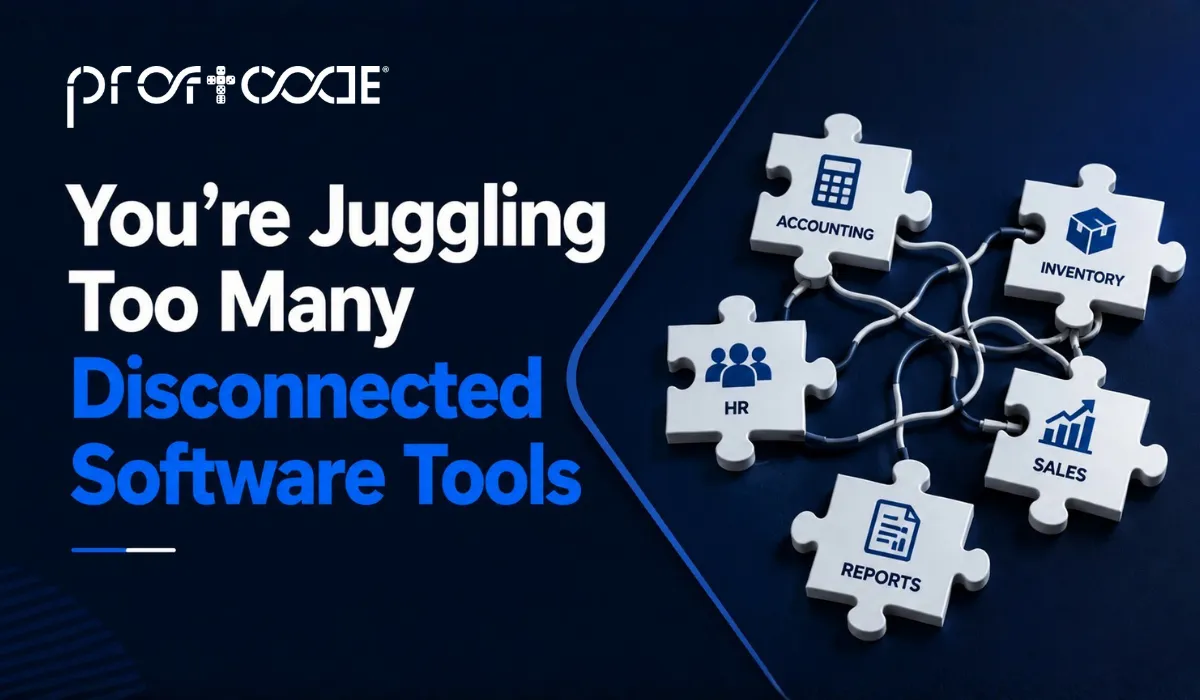
Using a separate tool for accounting, another for inventory, another for HR, and another for sales might feel manageable at first. But multiple software tool integrations become a genuine headache once your business scales.
Warning signs that this has become a problem:
- Staff are spending significant time switching between platforms just to complete one task.
- Data that has to be manually exported and imported between systems.
- Different tools are generating conflicting reports because they’re not synced.
- Rising subscription costs across five or six separate platforms, none of which talk to each other properly.
An ERP system replaces this patchwork setup with one connected platform, cutting down both the time wasted and the software costs piling up quietly in the background.
Sign 7: Reports Take Too Long to Generate
If getting a simple sales report requires someone to manually compile data from three different sources, that’s a productivity drain hiding in plain sight.
With a custom ERP system, reporting becomes close to instant. Real-time business data means managers can pull performance numbers whenever they need them, not just at the end of the month when someone finally has time to compile everything manually.
Sign 8: Your Business Processes Are Genuinely Unique
Not every business fits neatly into a generic software template. If your operations involve specific workflows, whether that’s project-based billing, multi-stage manufacturing, or industry-specific compliance requirements, off-the-shelf tools often force you to bend your process to fit their limitations.
This is exactly where custom ERP vs off-the-shelf ERP becomes an important comparison to make, honestly.
Off-the-shelf ERP works reasonably well when:
- Your processes are fairly standard across your industry.
- You need something running quickly with minimal setup.
- Budget constraints make a smaller upfront investment necessary.
Custom ERP system development makes more sense when:
- Your workflows have quirks specific to your business or industry.
- You need scalable ERP solutions built with future growth in mind.
- Long-term efficiency matters more than a fast initial rollout.
- Business process automation needs to reflect your exact operations, not a generic template.
Sign 9: You're Planning Significant Growth

If your business is preparing to scale, whether that means new locations, more staff, or expanded product lines, your current systems need to be able to grow with you.
Ask yourself honestly:
- Can your current setup handle double the transaction volume without slowing down?
- Will adding new users or departments require buying entirely new tools?
- Is your reporting structure flexible enough to handle a bigger, more complex business?
If the honest answer is no, that’s a strong signal to start looking into ERP implementation for growing companies before growth actually outpaces your systems.
Sign 10: Compliance and Security Are Becoming Bigger Concerns

As businesses grow, so does the amount of sensitive data they handle: customer records, financial details, vendor contracts, and employee information. Managing all of this across scattered spreadsheets and disconnected tools makes proper security and compliance genuinely difficult to maintain.
- No centralized access control, meaning too many people can view or edit sensitive data.
- Difficulty tracking who accessed what information and when.
- Compliance reporting becomes a manual, time-consuming scramble instead of a routine process.
- Data backup and recovery processes are inconsistent across different tools.
A custom ERP system allows for role-based access, proper audit trails, and centralized data protection, which becomes increasingly important as a business scales and takes on more regulatory responsibility.
A Quick Self-Check Before You Decide

Before jumping into a custom ERP project, it helps to honestly assess where your business currently stands.
- Are you spending more time reconciling numbers than actually using them to make decisions?
- Do different departments regularly report conflicting figures for the same thing?
- Has your team grown to a point where spreadsheets genuinely can’t keep up anymore?
- Are you paying for multiple disconnected tools that don’t share data properly?
- Do you have plans to scale significantly within the next one to two years?
If you’re nodding along to most of these, it’s a fairly clear signal that it’s time to have a serious conversation about custom ERP development, rather than continuing to patch over growing operational gaps.
What Custom ERP Development Actually Involves
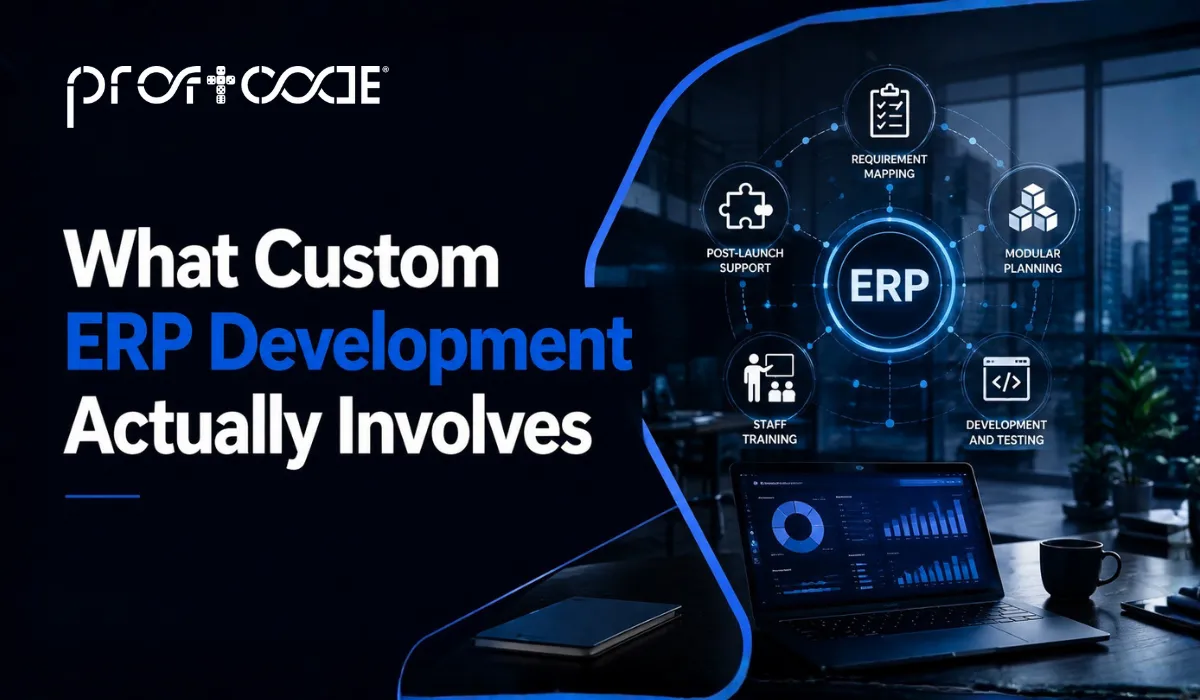
If several of these signs sound familiar, here’s a realistic picture of what working with an ERP development company in India typically looks like.
- Requirement mapping: A good ERP software development company studies your actual workflows before building anything.
- Modular planning: Deciding which functions (finance, inventory, HR, sales) need to be included based on your specific needs.
- Development and testing: Building the system in phases, with testing at each stage to catch issues early.
- Staff training: Ensuring your team actually knows how to use the new system, not just handed a login and left to figure it out.
- Post-launch support: Ongoing updates and fixes as your business continues to evolve.
Custom ERP development cost varies based on scope and complexity, but most experienced ERP software developers in India will provide a clear breakdown before starting the project rather than vague estimates that shift halfway through.
Is Custom ERP Development Worth the Investment?

This is really about ERP ROI for businesses, and it’s worth thinking through honestly.
- Time saved from automating manual processes adds up significantly over months and years.
- Reduced errors means fewer costly mistakes in billing, inventory, and reporting.
- Better decision-making from accurate, real-time data often leads to smarter resource allocation.
- Scalable ERP solutions reduce the need for expensive system overhauls every time the business grows.
For businesses experiencing several of the signs mentioned above, the investment usually pays for itself faster than expected, mostly through time saved and errors avoided.
Final Thought
Most businesses don’t wake up one day and suddenly decide they need an ERP system. It’s usually a slow buildup of small frustrations, mismatched numbers, manual errors, and disconnected tools until the cumulative cost becomes impossible to ignore. Recognizing these signs early, rather than waiting until the chaos becomes unmanageable, makes the eventual transition to a custom ERP system smoother, faster, and considerably less stressful.
Frequently Asked Questions
If you’re dealing with mismatched data between departments, manual data entry errors, disconnected software tools, or unique workflows that generic systems can’t handle, these are strong signs your business needs an ERP built around your actual processes.
Custom ERP development cost is typically higher upfront, but it often reduces long-term expenses since the system fits your business properly instead of requiring constant workarounds.
It depends on complexity, but most projects with an experienced ERP development company in India take a few months from requirement gathering to full deployment.
Yes, a good custom ERP software development company will typically build integrations with your existing accounting, CRM, or inventory tools rather than forcing you to abandon them entirely.
Look for a team with proven experience in your specific industry, transparent pricing, and strong post-launch support rather than just a long list of past clients.