
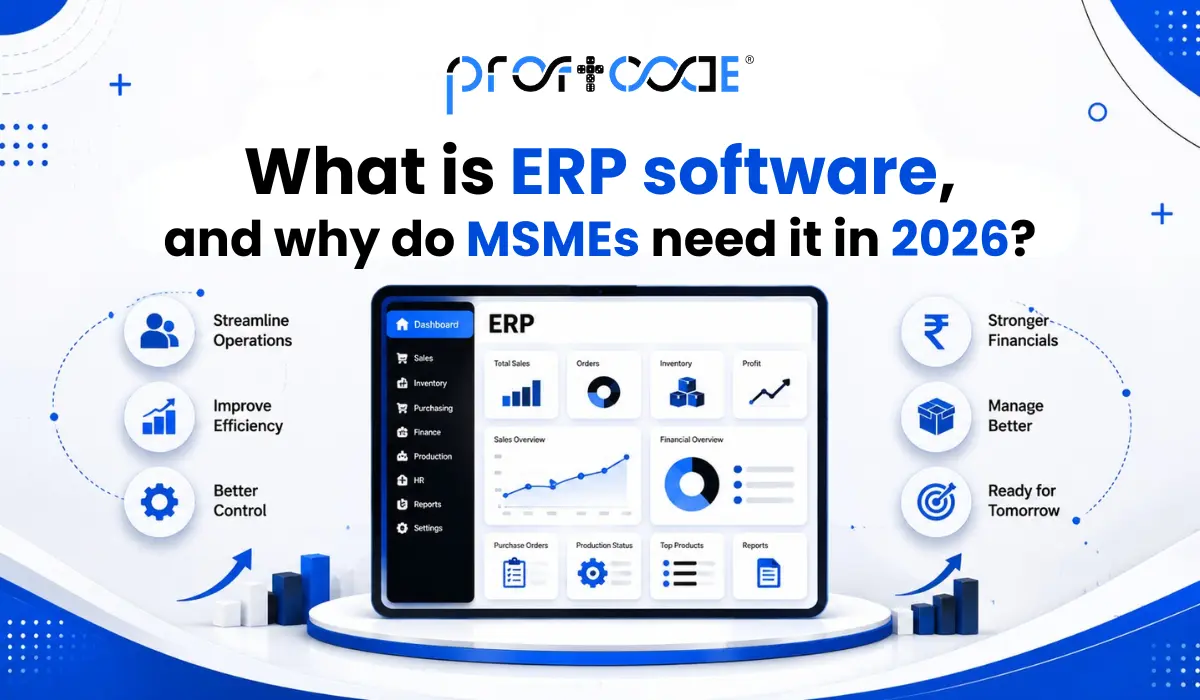
Running a small or medium-sized business today means juggling far more than most people realize. Sales on one spreadsheet, inventory in a register, GST filings handled separately, and payroll somewhere in between. It works until it doesn’t. And in 2026, with competition tighter and margins thinner, that kind of scattered setup is becoming a genuine liability rather than just an inconvenience.
This is exactly where ERP software for MSMEs comes in. Let’s break down what it actually is, why it matters this year specifically, and what to look for before investing in one.
What is ERP software?
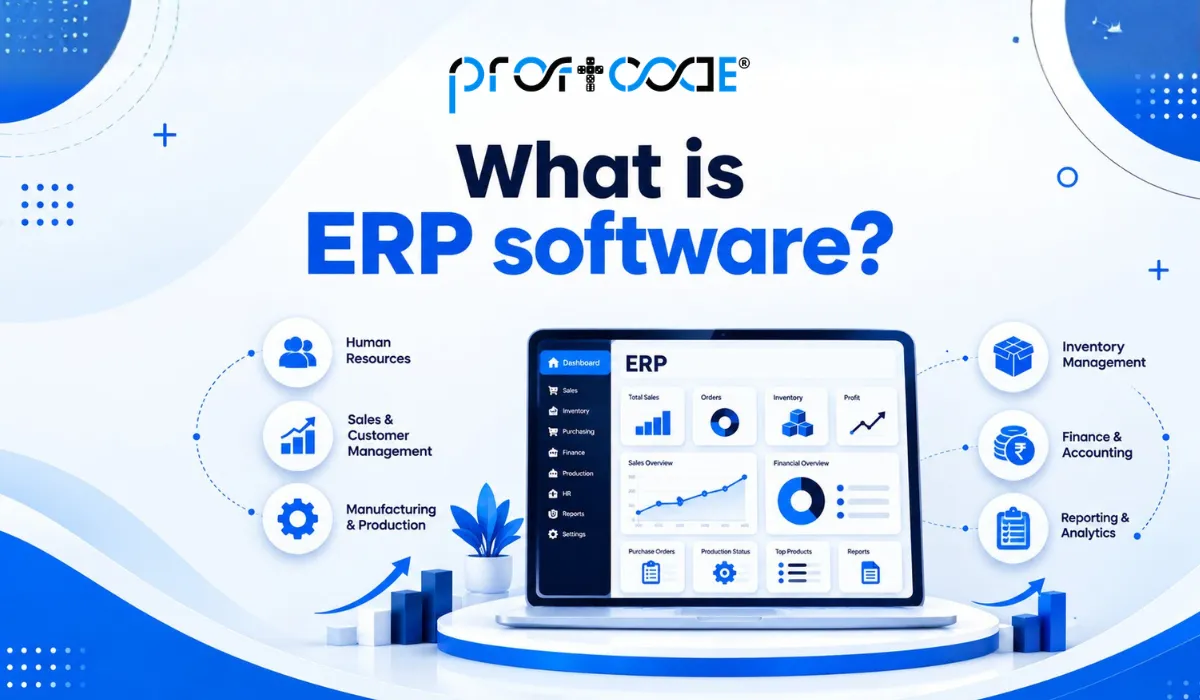
ERP stands for Enterprise Resource Planning. In plain terms, it’s a single connected system that brings together the different functions of a business, sales, inventory, accounting, HR, and procurement into one shared platform.
Instead of five departments working off five different files (and often five different numbers), everyone pulls from the same real-time business data. Stock updates, sales records, and financial figures stay in sync automatically, without someone manually copying numbers between tools every evening.
For a small or medium enterprise, this isn’t a luxury feature. It’s closer to basic infrastructure at this point, much like having a proper accounting system or a business bank account.
Why MSMEs Specifically Need ERP in 2026
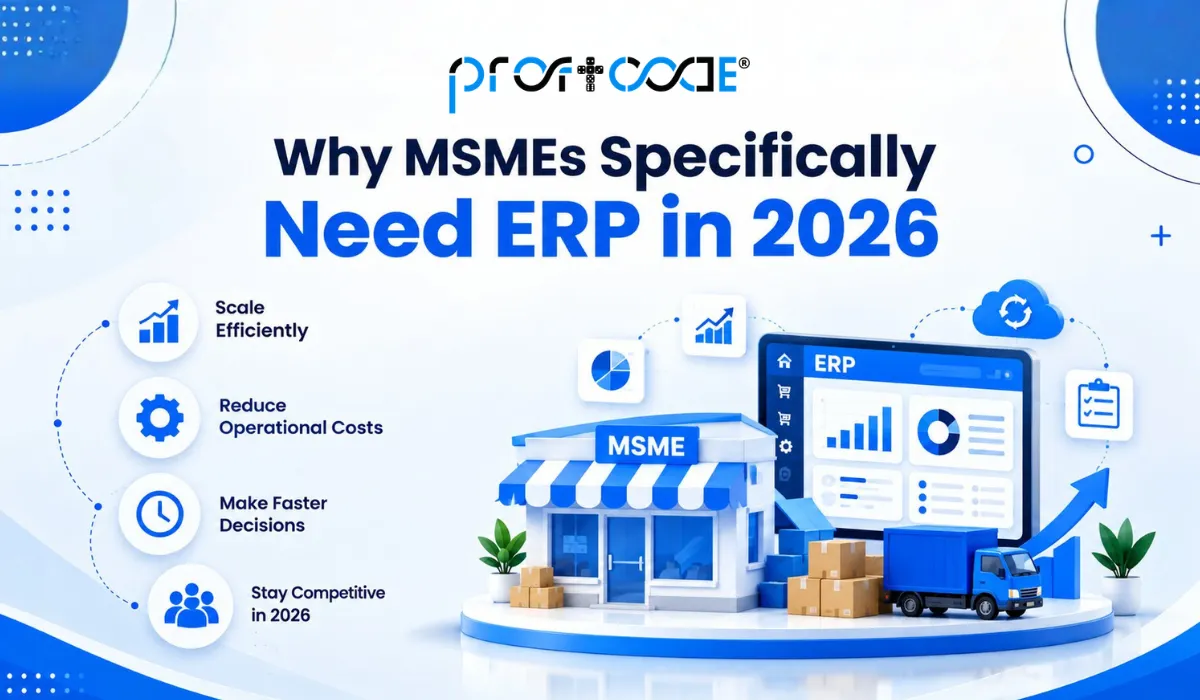
A few years back, ERP software felt like something only large corporations bothered with. That’s changed, and quite a bit.
Here’s what’s actually pushing MSMEs toward ERP systems this year.
- GST Compliance Has Gotten Stricter: Filing returns manually or through disconnected accounting tools increases the risk of mismatches and penalties. A GST-compliant ERP automatically generates accurate invoices and tax reports, reducing errors that used to eat up hours of an accountant’s time.
- Customers Expect Faster Turnaround: Whether it’s a manufacturing order or a retail delivery, customers today expect quick confirmations and accurate timelines. Without real-time business data, businesses end up overpromising and underdelivering, which damages trust fast.
- Manual Processes Don’t Scale: A business running on Excel and WhatsApp groups might survive at a small size. But growth exposes the cracks quickly. Duplicate orders, missed follow-ups, and inventory mismatches become far more frequent once the business starts scaling.
- Digital Transformation is No Longer Optional: Digital transformation for MSMEs is no longer a buzzword. Government initiatives, competitive pressure, and customer expectations are all nudging small businesses toward digitized, automated operations.
- Remote and Hybrid Work Needs Better Tools: With teams often working across locations, cloud ERP for small businesses allows owners and managers to check numbers, approve orders, and monitor stock from anywhere, not just from a desktop sitting in one office.
Key Benefits of ERP for MSMEs
Let’s get specific about what actually improves once an MSME adopts a proper ERP system.
- Better inventory control: Inventory management software within ERP tracks stock levels in real time, reducing both overstocking and embarrassing stockouts.
- Cleaner accounting: Accounting and ERP integration means invoices, expenses, and tax data stay synced automatically, cutting down manual reconciliation.
- Improved decision-making: Owners get access to real-time business data instead of waiting for a month-end report to understand how things are actually going.
- Reduced operational costs: Automating repetitive tasks (data entry, invoice generation, approval routing) frees up staff time for higher-value work.
- Stronger customer relationships: A connected CRM module means faster follow-ups and fewer missed opportunities.
- Easier scaling: Scalable ERP solutions grow with the business, so you’re not rebuilding your entire system every time you open a new branch or add a product line.
Honestly, most of these benefits sound obvious on paper. But the difference only becomes real once a business actually experiences the before and after.
Common ERP Software Features MSMEs Should Look For
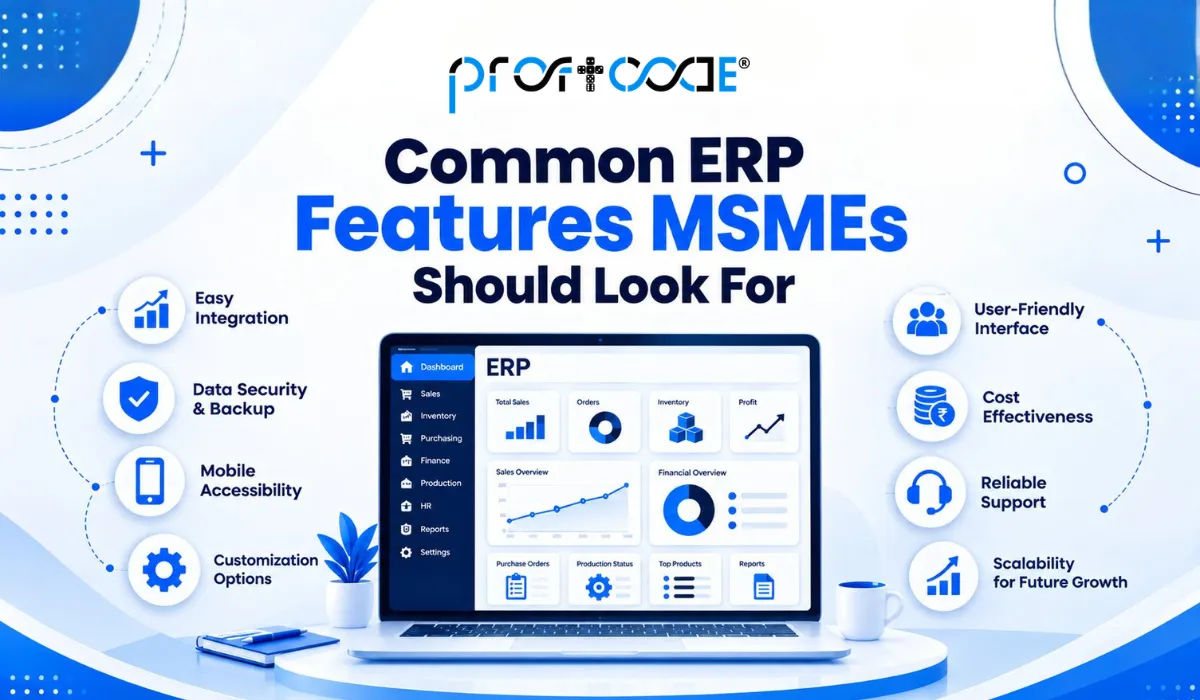
Not every ERP system needs to be complex. For most small and medium enterprises, a lean but well-built setup works better than an overloaded one.
Here are the core ERP software features worth prioritizing:
- Inventory and stock tracking across single or multiple locations.
- GST-compliant billing and tax reporting built directly into the system.
- Basic CRM functionality for managing leads and customer follow-ups.
- Payroll and HR management scaled appropriately for a smaller headcount.
- Real-time dashboards for quick, at-a-glance business visibility.
- Mobile access so approvals and updates don’t need to wait for someone to reach a desktop.
Anything beyond this, like heavy manufacturing modules or complex multi-warehouse logistics, is usually unnecessary for a typical MSME just starting its ERP journey. Add those later if and when the business genuinely needs them.
Which MSME Sectors Benefit the Most
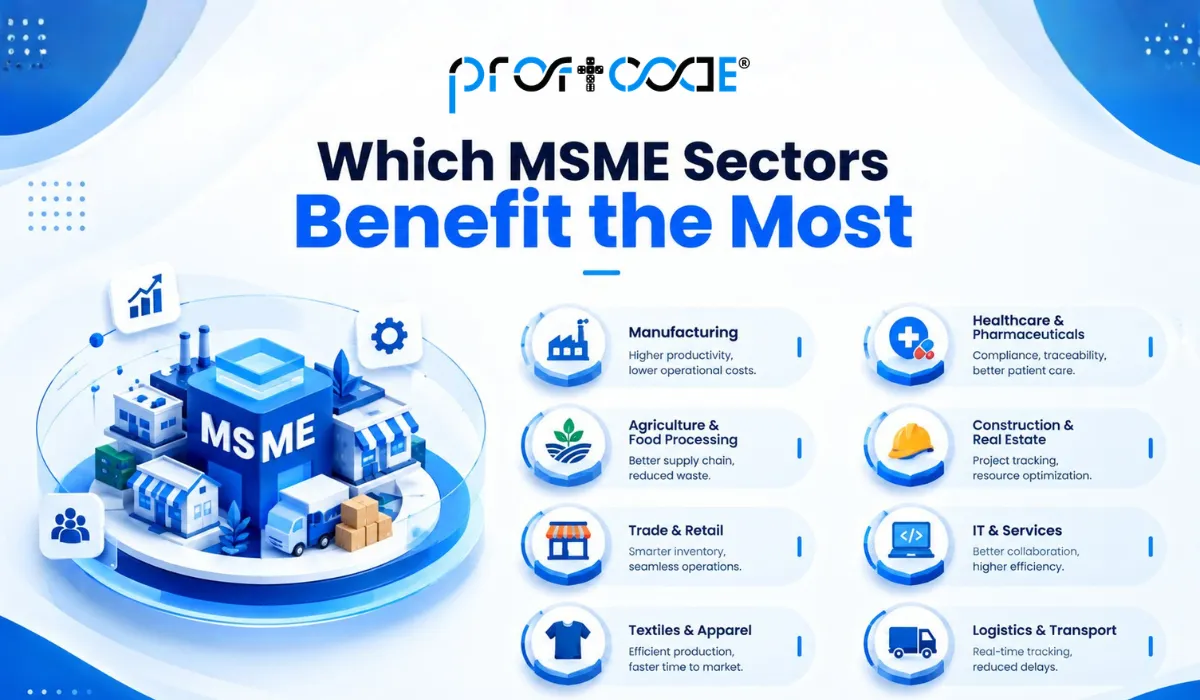
ERP software isn’t a one-size-fits-all tool, but certain MSME sectors tend to see faster, more visible returns from adopting it.
- Manufacturing units benefit from tighter production tracking and raw material visibility, reducing wastage and delays.
- Retail and distribution businesses gain from real-time inventory management software that prevents both overstocking and lost sales due to stockouts.
- Trading and wholesale businesses see faster order processing and cleaner accounts, which is especially useful when dealing with high transaction volumes.
- Service-based businesses like agencies and consultancies benefit from better project tracking and client billing accuracy.
- Export-orientated MSMEs find compliance and documentation significantly easier with automated ERP software India providers built to handle multi-currency and regulatory needs.
Not every business needs every module from day one. But understanding which functions matter most to your specific sector helps avoid overspending on features that won’t actually get used.
Common Mistakes MSMEs Make During ERP Implementation
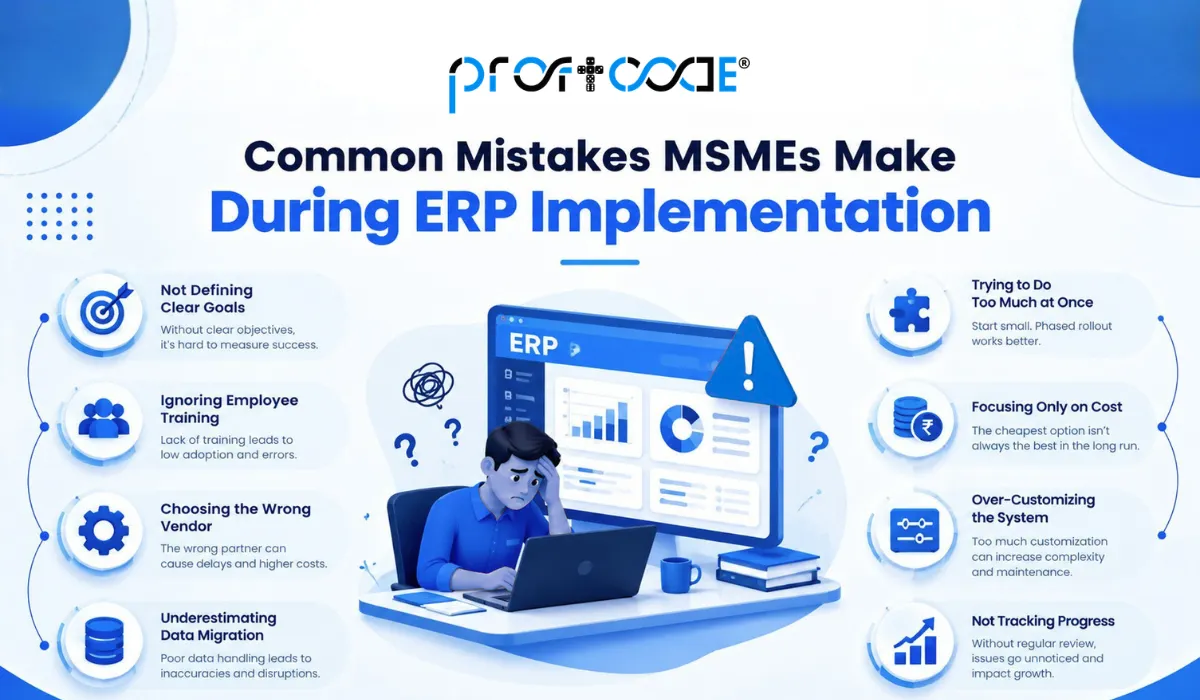
Even with the right intentions, plenty of small businesses stumble during the rollout phase. Worth being aware of these up front.
Rushing the implementation timeline: ERP implementation for small businesses needs proper planning. Skipping requirement gathering to save time usually backfires later, once the system doesn’t match actual workflows.
Choosing the cheapest vendor without checking experience: A lower quote often means fewer features, weaker support, or a team unfamiliar with MSME-specific needs like GST compliance.
Skipping staff training: Even the best system fails if employees don’t know how to use it properly. A short, focused training period saves months of frustration later.
Trying to digitize everything at once: Starting with core ERP modules like inventory and accounting, then expanding gradually, tends to work far better than attempting a complete overhaul in one go.
ERP Cost for Small Business: What to Actually Expect
This is usually the first question owners ask, and fair enough.
ERP cost for small business setups varies quite a bit depending on scope, but here’s a realistic breakdown of what affects pricing:
- Number of users and modules needed: More users and more functionality naturally increase cost.
- Cloud vs on-premise: Cloud ERP for small businesses usually has lower upfront costs, since there’s no server hardware to buy or maintain.
- Customization level: A fully custom ERP software development service costs more upfront than an off-the-shelf package but often saves money long-term by fitting the business properly from day one.
- Ongoing support and updates: Factor in maintenance costs, not just the initial build.
For most MSMEs, starting lean with core modules and expanding gradually tends to be the smarter financial approach, rather than overinvesting in features that won’t get used for another two years.
Cloud ERP vs Traditional Setup for MSMEs
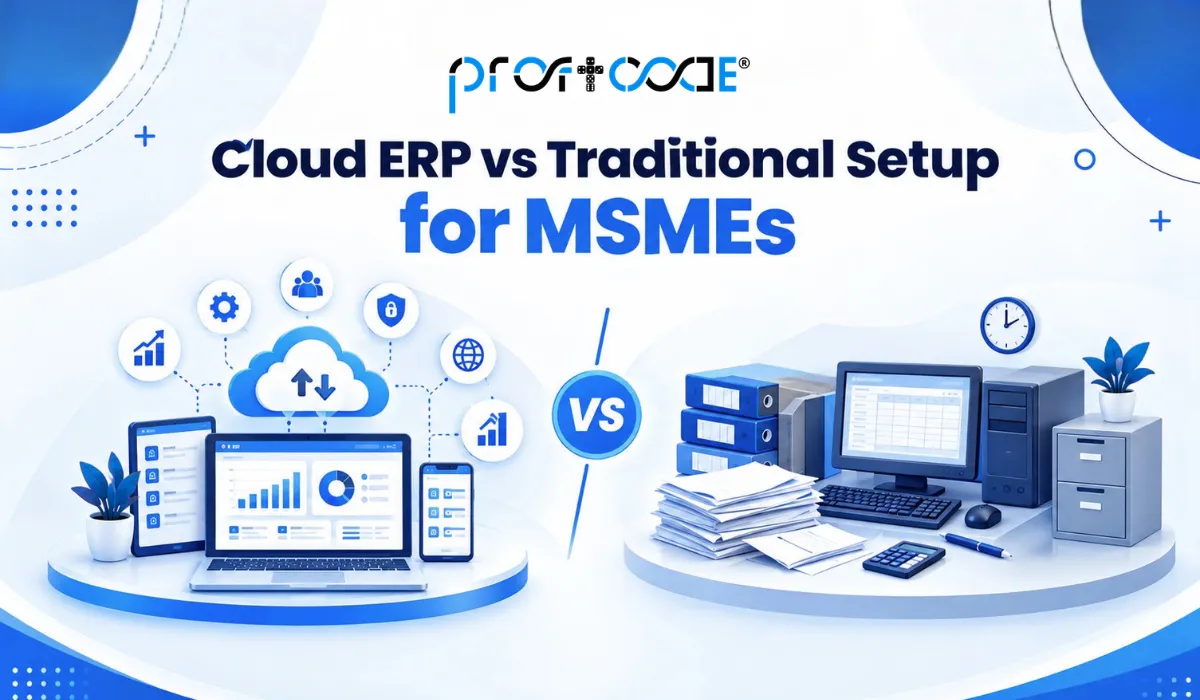
Given limited budgets and smaller IT teams, this decision matters a lot for small and medium businesses specifically.
Cloud ERP for small businesses:
- Lower upfront investment.
- No dedicated IT staff needed for server maintenance.
- Access from anywhere, useful for owners managing multiple locations or working remotely.
- Updates and security patches handled by the provider.
Traditional, on-premise setup:
- Higher upfront hardware and licensing cost.
- Requires in-house IT support.
- Offers more direct control over data, which some regulated industries still prefer.
For the vast majority of MSMEs, cloud ERP tends to be the more practical choice in 2026, mainly because it removes the burden of managing infrastructure that a small business often can’t afford to maintain properly anyway.
Choosing the Right ERP Software Development Company
Picking the right development partner matters as much as picking the right features. A poorly implemented ERP system can genuinely slow a business down instead of helping it.
When evaluating ERP software development services, here’s what to check:
- Experience with MSMEs specifically: A company used to working with large enterprises might overbuild a system that’s too complex for a small business’s actual needs.
- Local understanding: If you’re comparing ERP software development services in Delhi or elsewhere in India, local vendors often understand GST compliance and regional business practices better.
- Transparent pricing: Ask for a clear cost breakdown upfront, not vague estimates that change halfway through the project.
- Post-launch support: ERP systems need occasional updates and troubleshooting, not a one-time handover and silence afterwards.
- Willingness to customize: The best ERP software development services build around your actual workflow rather than forcing a rigid template onto your business.
If you’re specifically looking for a custom ERP software development service, prioritize vendors who ask detailed questions about your current processes before jumping into development. That upfront diligence usually predicts how smooth the rest of the project will be.
A Quick Self-Check for MSME Owners
Before deciding whether 2026 is the year to invest in ERP, ask yourself honestly:
- Are you still relying on spreadsheets or registers for core business functions?
- Do you often find mismatched numbers between sales, stock, and accounts?
- Is GST filing more stressful than it needs to be?
- Are decisions getting delayed because reports take too long to compile?
- Is your business planning to scale or open new locations soon?
If most of these sound familiar, it’s probably time to have a serious conversation about ERP implementation for small businesses, rather than pushing the decision another year.
Final Thought
ERP software isn’t just a large enterprise tool anymore. For MSMEs navigating tighter compliance requirements, rising customer expectations, and the constant push toward digital transformation, it’s becoming a practical necessity rather than an optional upgrade. The businesses that adopt it early in 2026 will likely spend less time firefighting operational chaos and more time actually growing.
Frequently Asked Questions
ERP software is a single connected system that brings together different business functions like sales, inventory, accounting, and HR, so all departments work from the same accurate, real-time data.
Stricter GST compliance, rising customer expectations, and the limits of manual processes are pushing more MSMEs toward ERP systems that automate routine tasks and reduce costly errors.
For most MSMEs, yes. Cloud ERP for small businesses lowers upfront costs, removes the need for in-house server maintenance, and allows access from anywhere.
Costs vary based on modules, users, and customization level, but starting with core features and scaling gradually is usually the most cost-effective approach for MSMEs.
Look for MSME-specific experience, transparent pricing, strong post-launch support, and a genuine willingness to customize the system around your actual business processes.