
Key Takeaways
- Weak default security, data breaches, and fragmented sensor data are the biggest risks in connected IoT setups.
- Most businesses have no real-time visibility into what their IoT devices are doing, problems surface only after damage is done.
- A compromised device controlling physical equipment can halt production or trigger safety incidents, not just a data leak.
- ERP systems fix this by centralizing device data, enabling real-time alerts, and applying structured, role-based access control.
- Standardizing data from different vendors’ devices into one system removes a major source of manual error.
- Businesses with unique IoT setups often need custom ERP development rather than a generic platform.
Connected devices have quietly become part of everyday business operations. Sensors tracking machine performance, smart inventory scanners, temperature monitors, and GPS trackers on delivery vehicles are all feeding data back in real time. It’s genuinely useful stuff. But every one of these devices is also a small, open door into your business network, and that’s a risk a lot of companies don’t think about until something goes wrong.
This blog looks at the real IoT device risks businesses are facing today, and more importantly, how a properly built ERP system actually helps manage and reduce them, rather than just adding another disconnected tool to the pile.
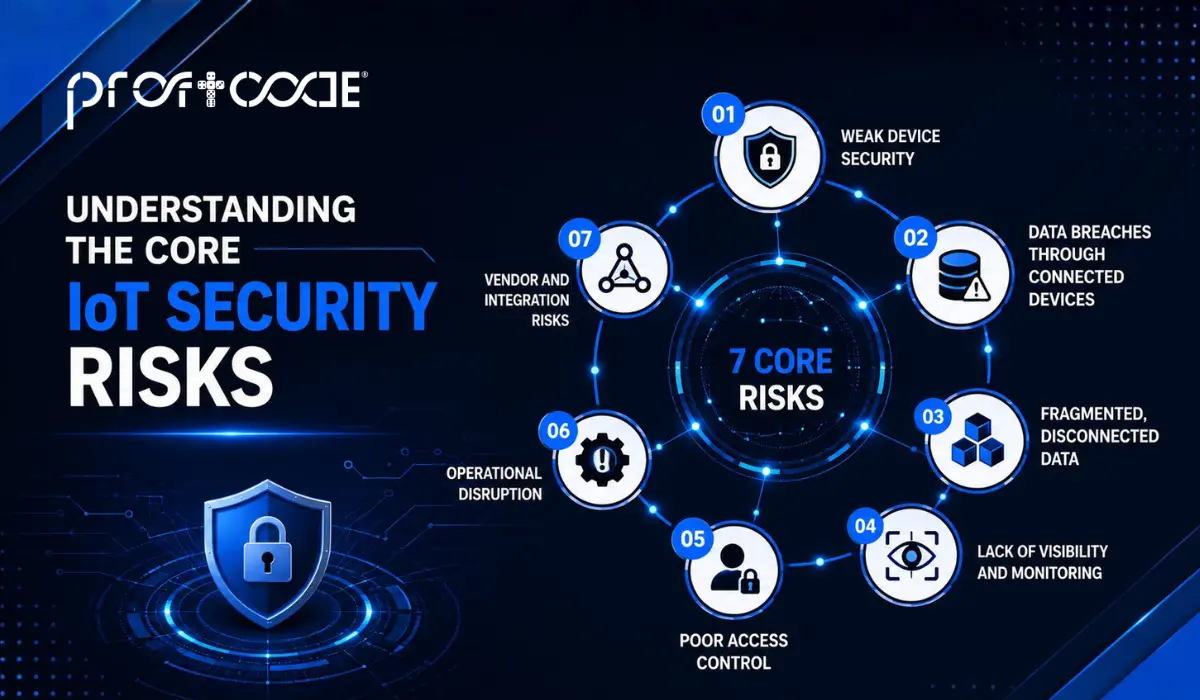
Understanding the Core IoT Security Risks
Before getting into solutions, it’s worth being clear-eyed about what’s actually at stake with unsecured IoT devices sitting on your network.
1. Weak Device Security
A lot of IoT devices ship with basic, sometimes default, security settings that never get properly configured after installation. This makes them an easy target compared to more heavily protected systems like servers or laptops.
2. Data Breaches Through Connected Devices
Data breaches through connected devices are becoming more common simply because there are more devices to exploit. A single compromised sensor can potentially become an entry point into your broader business network, exposing far more than just that device’s own data.
3. Fragmented, Disconnected Data
IoT devices often generate huge volumes of data, but without a proper system to organize it, that data just sits scattered across different platforms. Nobody’s actually using it to make decisions. It’s just accumulating.
4. Lack of Visibility and Monitoring
Many businesses simply don’t have real-time visibility into what their IoT devices are doing, how they’re behaving, or whether something unusual is happening. Problems often get noticed only after they’ve already caused damage.
5. Poor Access Control
Without proper access control and permissions, too many people, or worse, unauthorized outsiders, can potentially access sensitive device data and controls.
6. Operational Disruption
IoT vulnerabilities in business operations can go beyond data theft. A compromised device controlling physical equipment or processes can cause actual operational disruption, halted production lines, incorrect automated actions, or safety incidents.
7. Vendor and Integration Risks
Every IoT device often comes from a different manufacturer, runs different software, with different security standards. Managing all of this consistently becomes genuinely difficult without a centralized system pulling everything together.
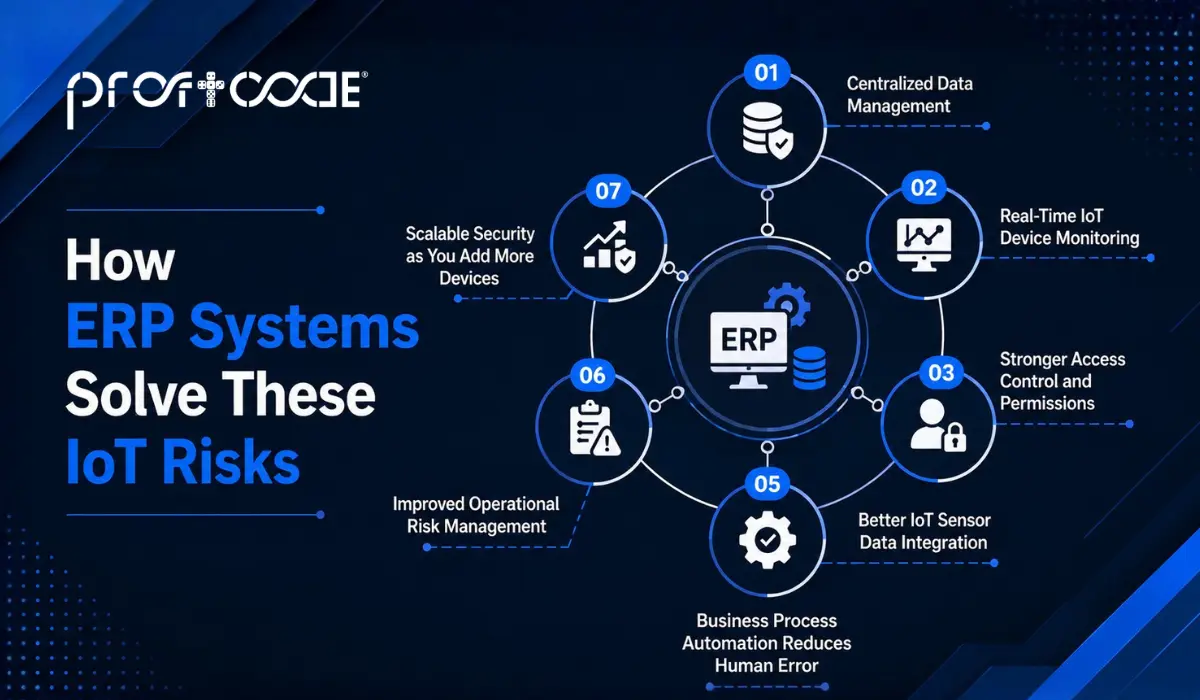
How ERP Systems Solve These IoT Risks
This is really where things get interesting. IoT and ERP integration isn’t just a technical nicety. It’s becoming one of the more practical ways businesses are actually managing these risks in 2026.
1. Centralized Data Management
Instead of IoT data scattered across a dozen different platforms and dashboards, ERP systems bring everything into centralized data management. All your sensor data, inventory updates, and operational metrics flow into one connected system.
- Reduces the risk of data sitting unprotected in disconnected, poorly secured platforms.
- Makes it far easier to apply consistent security policies across the board.
- Eliminates the confusion of chasing data across multiple disconnected tools.
2. Real-Time IoT Device Monitoring
Real-time IoT data monitoring with ERP means businesses aren’t waiting until something breaks to notice a problem.
- Automated alerts flag unusual device behavior immediately, not after the fact.
- Dashboards give operations teams live visibility into device status across the entire business.
- Faster detection generally means faster response, which limits how much damage a security issue can actually cause.
3. Stronger Access Control and Permissions
ERP systems allow for structured access control and permissions, something individual IoT devices often can’t manage on their own.
- Role-based access ensures only authorized staff can view or control specific devices and data.
- Every action within the system gets logged, creating a clear audit trail.
- Reduces the risk of unauthorized access, whether accidental or intentional.
4. Better IoT Sensor Data Integration
Rather than IoT sensor data integration happening haphazardly across separate tools, ERP systems standardize how data flows into the business.
- Data from different devices and manufacturers gets normalized into a consistent format.
- Removes the need for manual data transfers, which reduces both errors and security gaps.
- Supports better decision-making since data is accurate, current, and properly organized.
5. Business Process Automation Reduces Human Error
Business process automation through ERP reduces the number of manual steps where mistakes and security gaps can creep in.
- Automated workflows reduce reliance on manual data entry from IoT devices.
- Fewer manual touchpoints mean fewer opportunities for errors or oversights.
- Consistent, repeatable processes reduce the risk of inconsistent security practices across teams.
6. Improved Operational Risk Management
Operational risk management becomes far more structured when IoT data feeds directly into an ERP system rather than sitting in isolated device dashboards.
- Predictive alerts based on device data can flag potential equipment failures before they cause bigger problems.
- Historical data trends help identify patterns that indicate rising risk, not just isolated incidents.
- Cross-department visibility means risks get flagged and addressed faster, rather than staying siloed within one team.
7. Scalable Security as You Add More Devices
As businesses expand their IoT footprint, adding more sensors, more devices, and more data points, scalable ERP solutions ensure security measures scale right alongside them.
- New devices can be integrated into existing security and access frameworks without starting from scratch.
- Centralized management means adding devices doesn’t multiply the complexity of monitoring them.
- Businesses avoid the common trap of security becoming harder to manage simply because the system grew too fast without proper structure.
ERP Software for Manufacturing: A Closer Look
Manufacturing businesses tend to have the heaviest IoT footprint, sensors on machines, production line monitors, inventory trackers, and more. This makes ERP software for manufacturing particularly important when it comes to managing IoT-related risks.
Specific benefits for manufacturing environments:
- Real-time production data is integrated directly with inventory and finance modules.
- Predictive maintenance alerts based on machine sensor data, reducing unexpected downtime.
- Centralized monitoring across multiple production lines or facility locations.
- Reduced reliance on manual reporting from the shop floor, which cuts down on both errors and delays.
For manufacturers specifically, the connection between IoT devices and ERP isn’t optional anymore. It’s becoming a core part of how modern factories actually operate safely and efficiently.
Reducing IoT Risks With ERP Software: A Practical Checklist
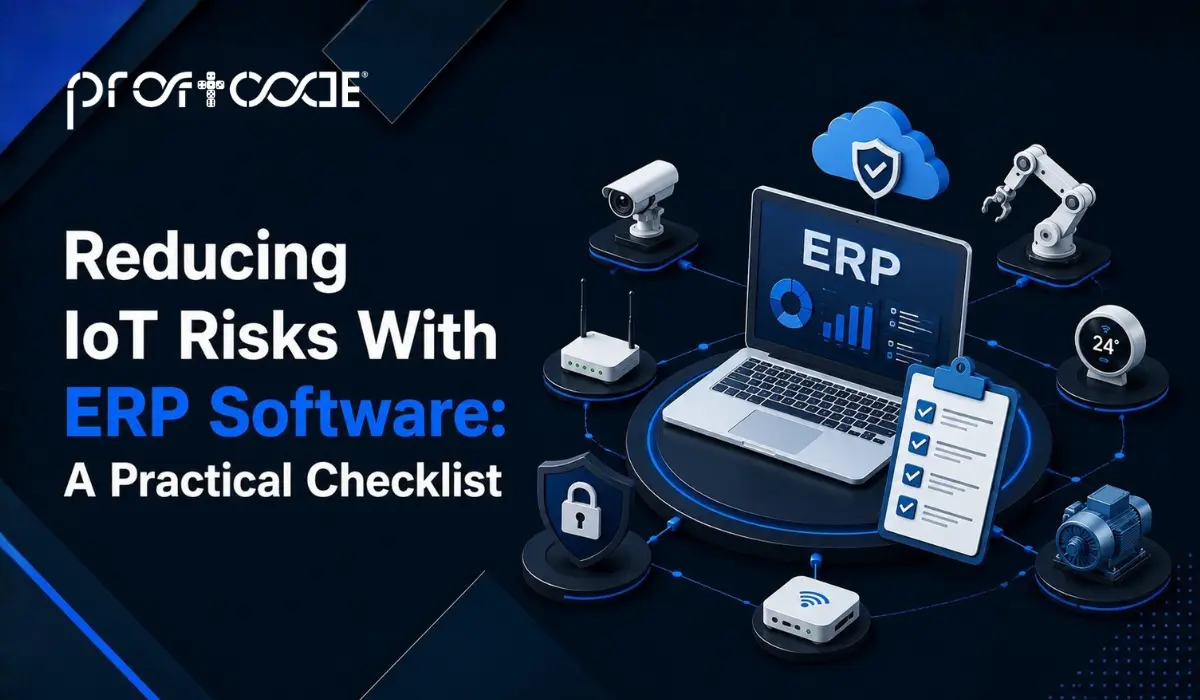
If you’re considering integrating IoT devices with an ERP system, here’s a practical starting point.
- Audit existing devices: Know exactly what IoT devices are currently connected to your network and what data they’re generating.
- Choose an ERP system built for integration: Not every ERP platform handles IoT data well, so this needs to be a specific requirement during selection.
- Set up structured access control: Define clearly who can access which devices and data, right from the start.
- Enable real-time monitoring: Don’t wait for scheduled reports; set up alerts for unusual activity as it happens.
- Plan for scalability: Choose scalable ERP solutions that can handle your IoT footprint growing over the next few years, not just what you have today.
Should You Build a Custom ERP System for IoT Integration?
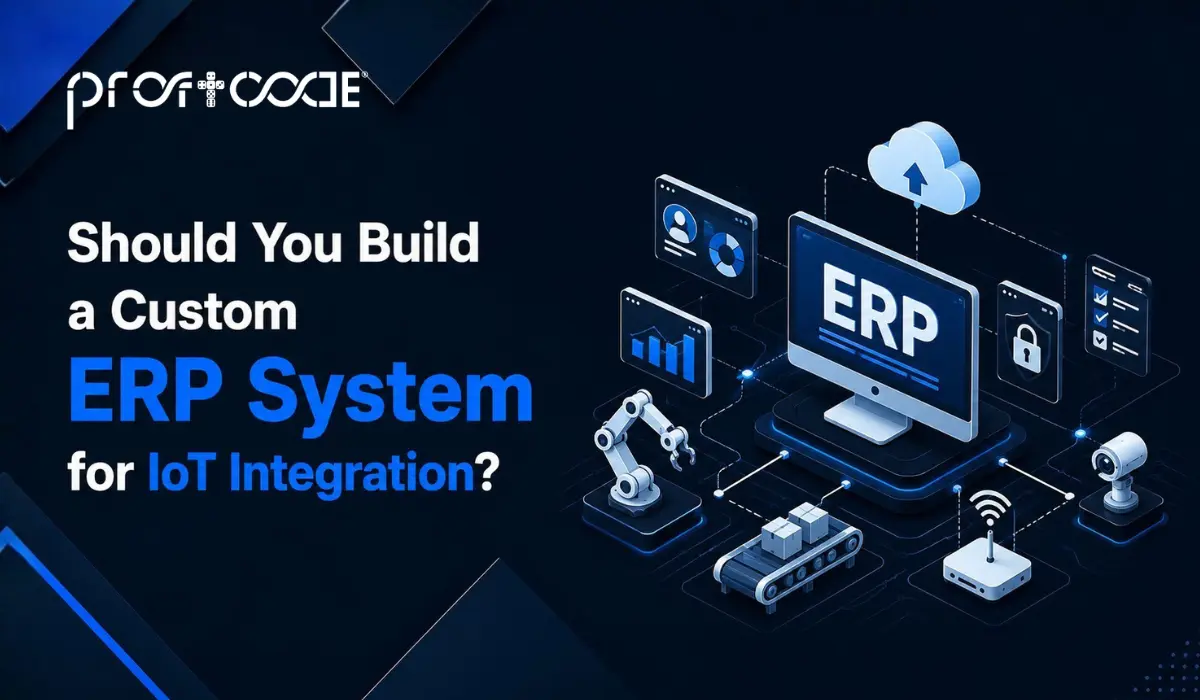
Off-the-shelf ERP platforms sometimes struggle to handle the specific requirements of IoT data, especially in industries with unique operational needs.
This is often where working with a custom ERP development company makes a real difference. A tailored approach allows for:
- ERP systems are built specifically around your device ecosystem and data flow.
- Integration with the exact IoT devices and sensors your business actually uses.
- Flexibility to expand the system as you add more devices or new operational needs.
If you’re evaluating ERP software development services for this kind of project, look for a partner with genuine experience in IoT and ERP integration, not just general ERP development. Working with an experienced ERP software development company in India that understands both sides of this equation tends to produce far more reliable, secure results than trying to bolt IoT data onto a generic system after the fact.
A Quick Self-Check for Your Business
Before assuming your current IoT setup is secure enough, consider these honestly.
- Do you have a clear inventory of every IoT device connected to your network?
- Is your IoT data centralized or scattered across multiple disconnected platforms?
- Can you detect unusual device behavior in real time or only after something has already gone wrong?
- Do you have structured access control over who can view or manage device data?
- Is your current system capable of scaling as you add more connected devices?
If several of these raise concerns, it’s a strong signal that connecting your IoT devices to a proper ERP system should move up your priority list.
Final Thought
IoT devices bring real operational value, but they also bring real risk if left unmanaged. Connecting them properly to an ERP system turns scattered, vulnerable data points into a centralized, monitored, and secure part of your business operations. As IoT adoption keeps growing in 2026, businesses that address this connection early will spend far less time firefighting security issues and far more time actually using their data to grow.
Frequently Asked Questions
Weak device security, data breaches through connected devices, lack of real-time visibility, and poor access control are among the most common IoT vulnerabilities in business operations today.
ERP systems centralize IoT data, enable real-time monitoring, enforce structured access control, and automate business processes, all of which reduce the gaps that unsecured IoT devices commonly create.
No, though manufacturing sees the most benefit due to heavy IoT usage. Retail, logistics, and healthcare businesses also benefit significantly from connecting IoT data with ERP systems.
It depends on your specific device ecosystem and operational needs. Businesses with unique workflows or a large IoT footprint often benefit more from a custom ERP development company approach.
Look for proven experience specifically in IoT and ERP integration, transparent implementation timelines, and strong ongoing support, rather than just general ERP development experience.