Key Takeaways
- Picking a vendor on demo polish alone is how businesses end up with a system that looks fine but doesn’t fit how they actually work.
- Look for real industry-specific experience; ask for case studies from comparable businesses, not generic ones.
- A good partner spends real time on requirement gathering; rushing this stage causes expensive corrections later.
- Demand transparent, itemized costs and realistic timelines, not a single lump-sum number or an “optimistic” delivery date.
- Red flags: unrealistically low pricing, pressure to commit fast, vague process explanations, and no post-launch support plan.
- Always talk to actual past clients directly, curated website testimonials don’t tell the real story.
Searching for an ERP development partner in India usually turns up dozens of companies claiming to be the best. Every website looks polished, every portfolio has a handful of impressive-sounding logos, and every pitch sounds confident. The problem is, choosing based on that surface presentation alone is exactly how businesses end up with a system that looks fine in a demo but doesn’t actually fit how they operate.
This guide breaks down what actually matters when evaluating ERP software development partners in India, the questions worth asking, the red flags worth noticing, and how to think about cost realistically before signing anything.
Why the Selection Process Deserves Real Time and Attention
ERP isn’t a quick purchase you can undo easily if it doesn’t work out. Once your business processes, data, and daily operations are built around a system, switching later becomes genuinely expensive and disruptive.
- A poorly matched development partner can lead to a system that technically works but doesn’t fit your actual workflows.
- Weak requirement gathering upfront often results in costly rework mid-project.
- Insufficient post-launch support leaves you stuck if issues come up after the team has moved on.
- Choosing based on price alone frequently means compromising on the depth of customization your business actually needs.
Given how much rides on this decision, it’s worth slowing down and evaluating properly rather than rushing to the cheapest or flashiest option available.
Key Factors to Look for in an ERP Development Company
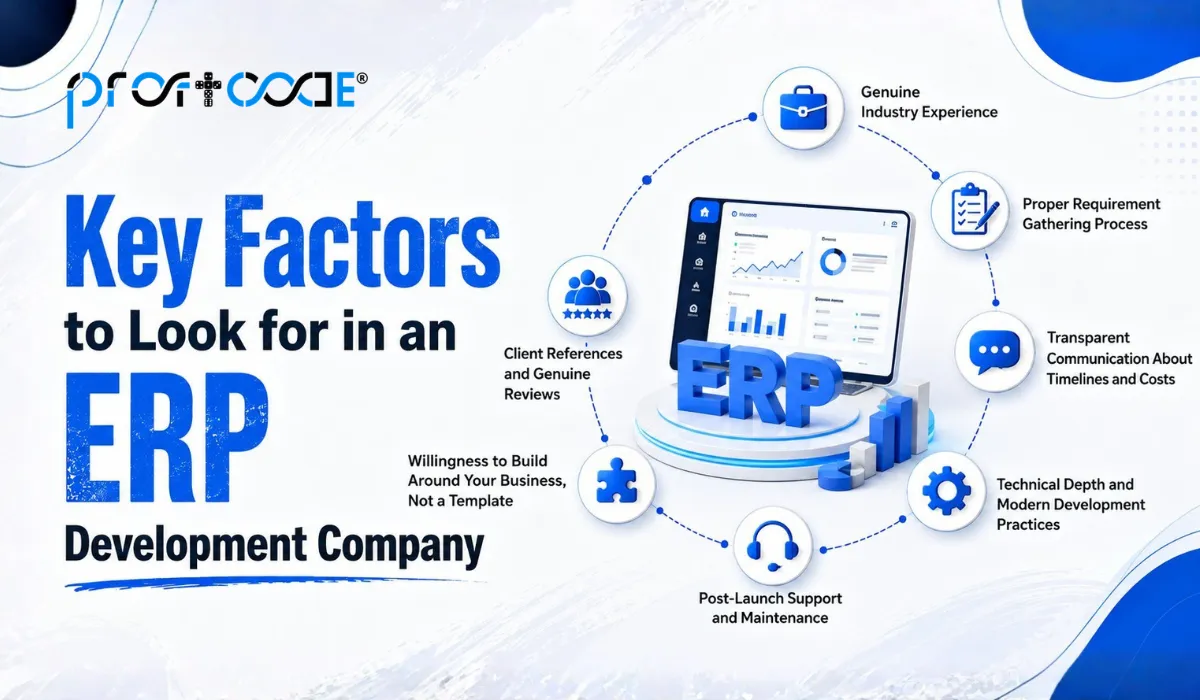
1. Genuine Industry Experience
A development company that’s built ERP systems for businesses similar to yours understands the specific challenges your industry faces, not just generic software concepts.
- Ask for case studies or examples from your specific sector, manufacturing, retail, construction, or whatever applies to you.
- A team unfamiliar with your industry may ask fewer relevant questions during requirement gathering, leading to gaps later.
- Sector experience often means fewer surprises during implementation, since they’ve likely encountered similar challenges before.
2. A Proper Requirement Gathering Process
This is where a lot of projects succeed or quietly fail from the very start.
- The right partner spends real time understanding your existing workflows before proposing solutions.
- They should be asking detailed questions, not just handing you a generic feature checklist.
- Rushing this stage to save time almost always leads to expensive corrections later in the project.
3. Transparent Communication About Timelines and Costs
Vague estimates that shift halfway through a project are one of the clearest warning signs to watch for.
- A trustworthy ERP software development company provides a clear breakdown of costs upfront, not just a single lump sum figure.
- Timelines should come with reasonable explanations, not just optimistic guesses meant to close the deal.
- Ask specifically what happens if the project timeline extends and how that affects overall cost.
4. Technical Depth and Modern Development Practices
The best teams stay current with modern development approaches rather than relying on outdated frameworks.
- Ask what technology stack they typically use and why it fits your specific project.
- Inquire about how they handle scalability as your business grows.
- Check whether they follow proper testing and quality assurance processes before deployment.
5. Post-Launch Support and Maintenance
ERP systems need ongoing attention long after the initial launch, updates, bug fixes, and occasional adjustments as your business evolves.
- Clarify what support is included after launch and for how long.
- Ask about response times for critical issues versus minor requests.
- Understand whether ongoing support comes at an additional cost and how that’s structured.
6. Willingness to Build Around Your Business, Not a Template
This distinguishes genuine custom development from a semi-customized generic platform dressed up to look tailored.
- A good partner should be comfortable explaining exactly how the system will reflect your specific processes.
- Be wary of teams that seem to be fitting your requirements into an existing rigid framework rather than building around them.
- Ask to see how previous clients’ systems differ from each other; similarity across projects can be a red flag.
7. Client References and Genuine Reviews
Portfolio pages are curated by definition. Actual client feedback tells a more honest story.
- Request direct references you can speak with, not just written testimonials on their website.
- Ask previous clients specifically about post-launch support experience, not just the initial build.
- Look for consistency between what the company claims and what actual clients report.
Red Flags to Watch Out For
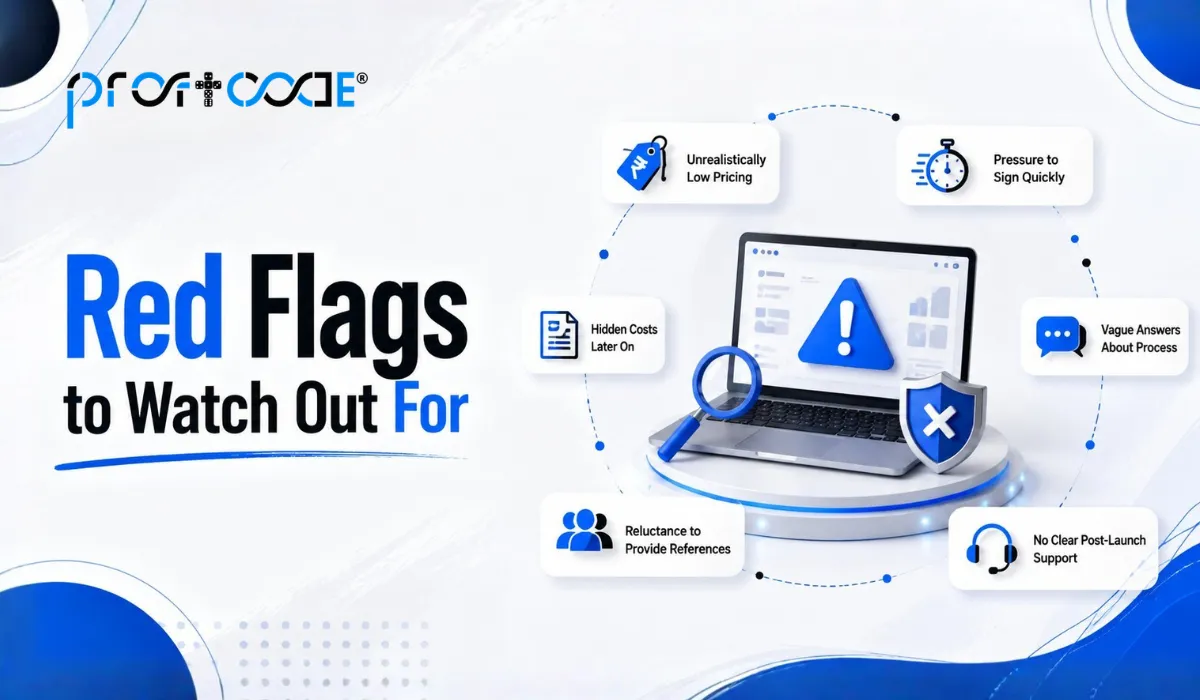
Beyond what to look for, it helps to know what should make you pause before committing.
- Unrealistically low pricing: If a quote seems significantly cheaper than every other option, ask what’s being cut to hit that number.
- Pressure to sign quickly: A legitimate partner allows time for proper evaluation rather than pushing urgency to close the deal.
- Vague answers about their process: If they can’t clearly explain how requirement gathering, development, and testing work, that’s a concerning sign.
- No clear post-launch support structure: This often means you’re on your own the moment the project officially wraps up.
- Reluctance to provide references: A company confident in its work usually has no issue connecting you with past clients.
Understanding ERP Implementation Cost Realistically
This is where a lot of businesses get caught off guard, not because pricing is hidden intentionally, but because the full ERP implementation cost rarely gets explained clearly upfront.
What typically affects the overall cost:
- Number of modules and features required.
- Level of customization needed for your specific workflows.
- Integration requirements with existing tools and systems.
- Data migration complexity from previous systems.
- Ongoing support and maintenance arrangements after launch.
A trustworthy development partner breaks these down clearly rather than presenting a single number that leaves you guessing what’s actually included.
Cloud ERP vs Traditional ERP Cost Analysis: A Factor Worth Discussing Early
Before committing to a development partner, it’s worth having an honest cloud ERP vs. traditional ERP cost analysis conversation as part of the evaluation process itself.
- Cloud ERP typically involves lower upfront costs but ongoing subscription fees that can add up significantly over several years, especially as your user count grows.
- Traditional, on-premises ERP requires higher initial investment but may offer more predictable long-term costs, assuming your business doesn’t need frequent infrastructure upgrades.
- Custom-built systems often sit somewhere in between, with a higher upfront cost than a basic cloud subscription but without the recurring per-user fees that accumulate over time.
A good development partner should walk you through this comparison specifically for your business situation, rather than pushing whichever option is easiest for them to deliver.
Questions Worth Asking Before You Commit

Here’s a practical list to bring into initial conversations with any potential partner.
- Can you show me examples of ERP systems you’ve built for businesses similar to mine?
- How does your requirement-gathering process actually work, step by step?
- What does your post-launch support structure look like, and for how long?
- How do you handle scope changes or scaling needs mid-project?
- Can I speak directly with a few of your past clients?
Asking these questions early filters out companies that aren’t genuinely equipped to handle your specific project before you’ve invested significant time or money.
What Sets Genuinely Strong ERP Partners Apart
Beyond the checklist items, there’s usually a noticeable difference in how strong development partners approach conversations from the very first meeting.
- They ask more questions than they answer initially, genuinely trying to understand your business before proposing solutions
- They’re upfront about limitations or challenges specific to your project, rather than promising everything will be simple
- They explain technical decisions in plain language, without hiding behind jargon to sound more impressive
- They treat the relationship as ongoing, not just a one-time transaction that ends at launch
At Proftcode, ERP projects typically start exactly this way, with detailed discovery conversations focused on understanding the business first, since a system built without that foundation rarely ends up serving the business well, regardless of how polished the initial pitch sounded.
A Quick Self-Check Before Choosing a Partner
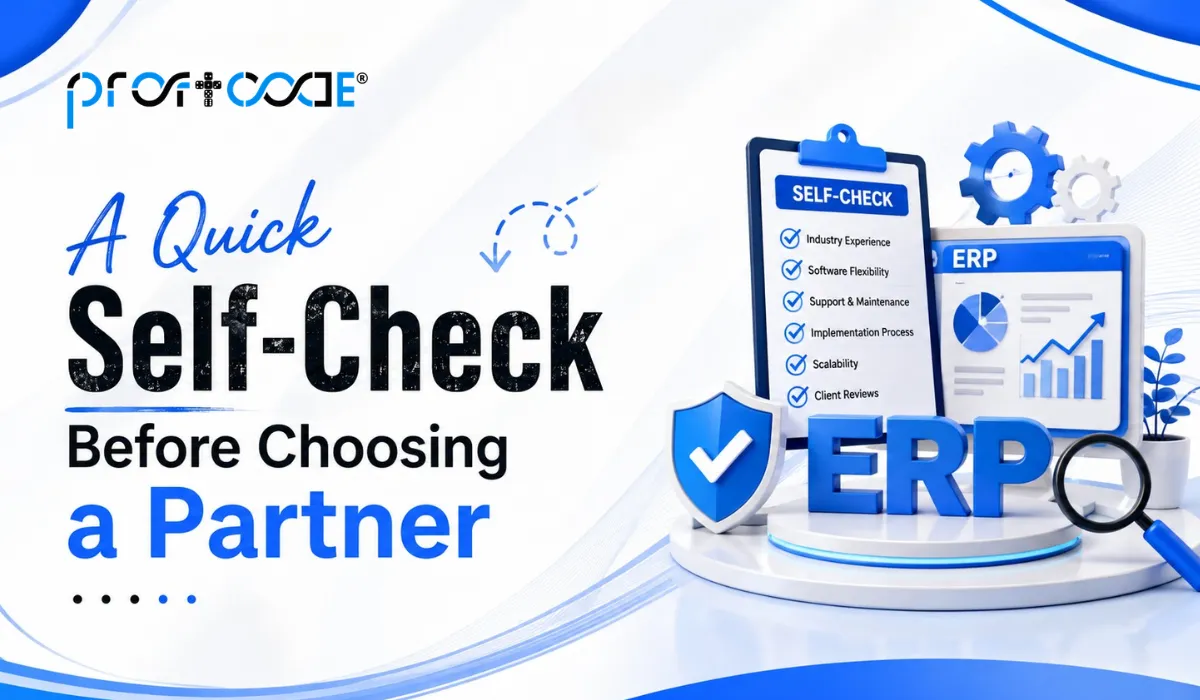
Before finalizing your decision, run through these honestly.
- Have they clearly explained their requirement-gathering process or just presented a generic proposal?
- Is the pricing breakdown transparent, or does it feel like a single number with unclear inclusions?
- Have you spoken with actual past clients, not just read testimonials on their website?
- Do they understand your industry specifically, or are they applying generic ERP concepts to your business?
- Is post-launch support clearly defined or left vague until after the contract is signed?
If any of these raise concerns, it’s worth continuing the search rather than settling based on price or timeline pressure alone.
Find the Right ERP Software Development Company
Get scalable ERP solutions tailored to your business needs.
Final Thought
Finding the best ERP software development company in India isn’t about picking whoever has the most polished website or the lowest quote. It’s about genuinely evaluating whether a partner understands your business, communicates transparently, and commits to supporting the system long after launch. Taking the time to ask the right questions upfront saves considerably more time, money, and frustration than rushing into a decision based on surface impressions alone.
Frequently Asked Questions
Genuine industry experience, a thorough requirement gathering process, transparent pricing, and clear post-launch support tend to matter more than flashy portfolios or aggressive sales pitches.
Costs vary significantly based on customization level, number of modules, integration complexity, and support arrangements, which is why a detailed breakdown upfront matters more than a single quoted number.
It depends on your specific business needs. Cloud ERP often has lower upfront costs but ongoing fees, while traditional or custom-built systems may offer more predictable long-term costs depending on your growth trajectory.
Ask for specific case studies from your sector, and request to speak directly with past clients rather than relying solely on written testimonials or portfolio pages.
Timelines vary based on project complexity, but most custom ERP projects take a few months from requirement gathering to full deployment, often rolled out in phases rather than all at once.