Key Takeaways
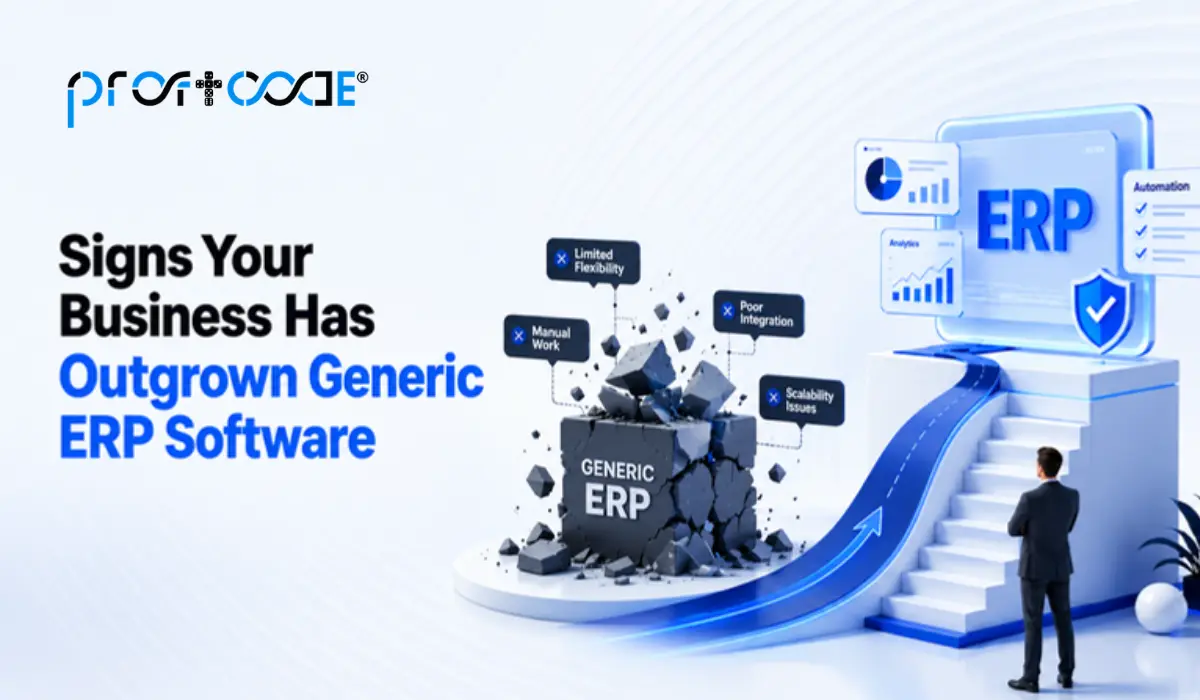
- Spreadsheets, manual approvals, and side tools popping up around your ERP mean the “single source of truth” is already broken.
- Reports taking longer instead of shorter is a clear signal the system can’t keep up with your data anymore.
- If your team follows steps just because “that’s how the software works,” the system is limiting the business, not supporting it.
- Hitting user, storage, or pricing-tier limits means you’ve simply outgrown the platform’s size.
- Integration headaches with other tools waste time and introduce errors that compound over time.
- Unique processes, custom billing, industry compliance, and complex production rarely fit generic templates well.
A specific kind of frustration shows up once a business grows past what its ERP system was originally built for. It’s not that the software is broken exactly. It technically still works. But everything feels slower, clunkier, and increasingly held together with workarounds nobody’s particularly proud of. If that sounds familiar, your business has likely outgrown its generic ERP setup, and it’s worth paying attention before the cracks get bigger.
This guide walks through the clearest signs of that shift and what moving toward custom ERP development actually looks like once you get there
Sign 1: Your Team Has Built a Web of Workarounds
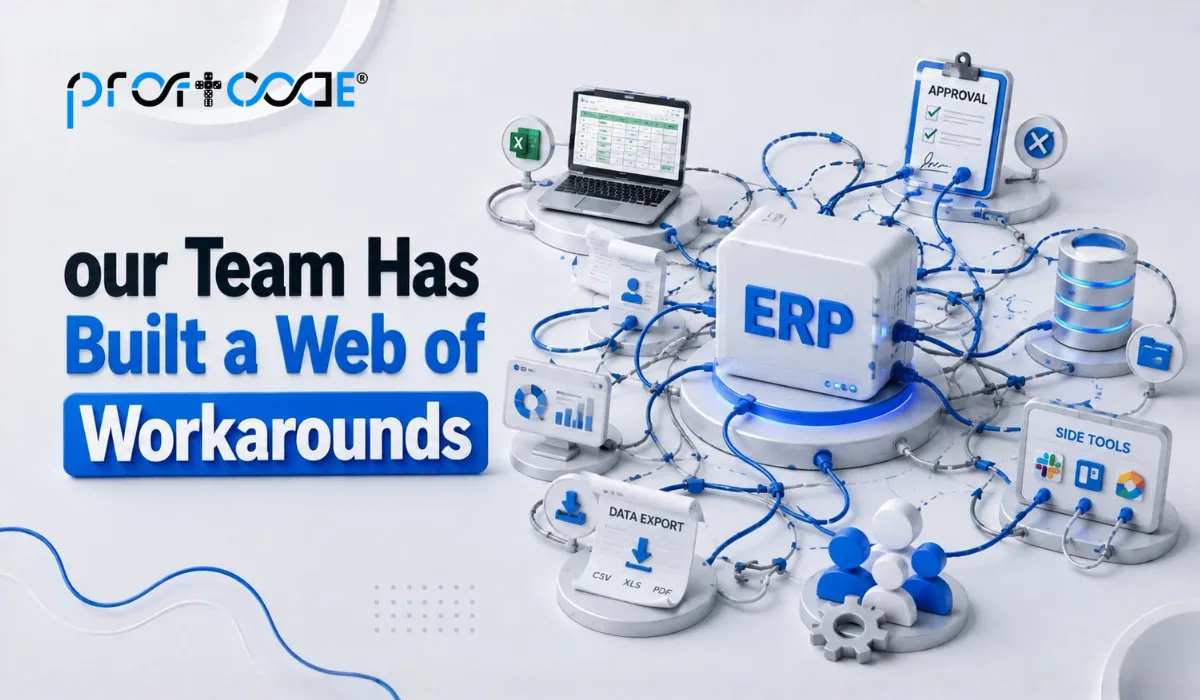
This is usually the first real clue. When a generic ERP no longer fits how the business actually runs, teams don’t complain loudly. They just quietly build patches around the gaps.
- Extra spreadsheets tracking things the ERP should already handle
- Manual approval processes running alongside the software instead of within it
- Staff exporting data out of the system just to reformat it somewhere else
- Entire departments relying on side tools because the ERP’s version of that function doesn’t fit their workflow
Individually, none of these feels like a big deal. Stacked together, they mean your “single source of truth” isn’t actually single anymore. It’s scattered across five workarounds held together by habit.
Sign 2: Reports Take Longer to Produce, Not Shorter
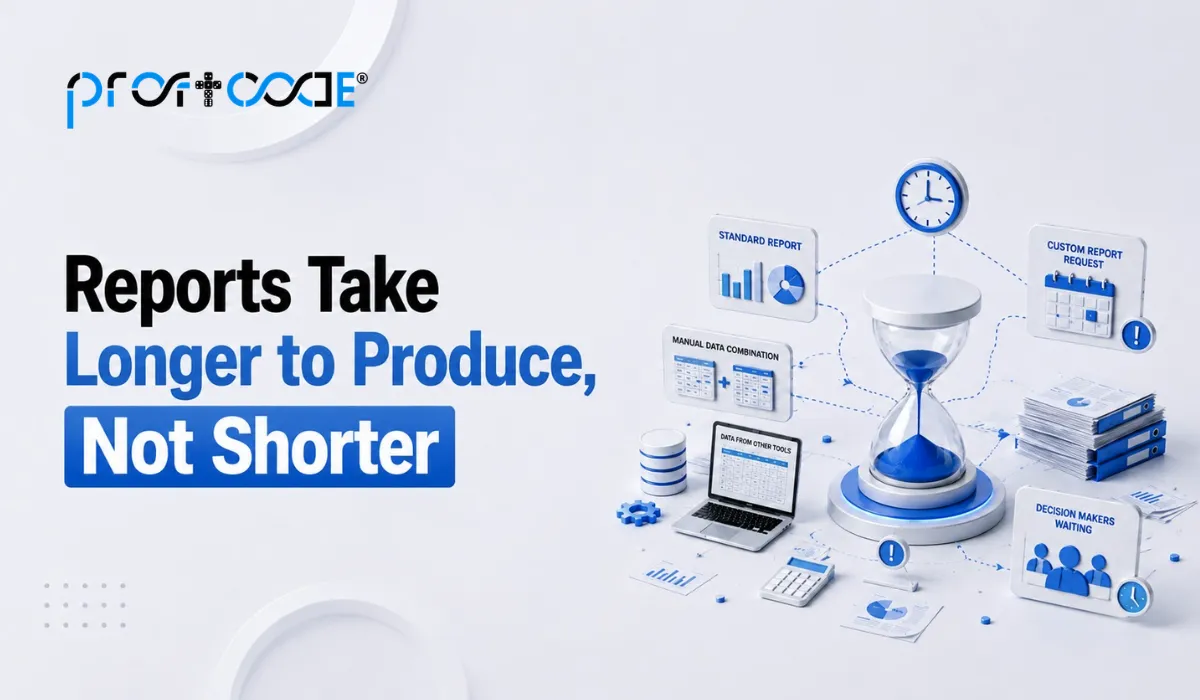
A generic system that once generated reports in minutes can start feeling painfully slow as data volume and complexity grow.
- Standard reports don’t capture the specific metrics your business actually needs anymore
- Someone has to manually combine data from the ERP with data from other tools to get the full picture
- Custom report requests take days because the generic system wasn’t built for that level of flexibility
- Decision makers wait longer for numbers that should be readily available
If getting a clear answer to “how are we actually doing this month” requires three people and half a day, that’s not a minor inconvenience. That’s a sign the system itself has become the bottleneck.
Sign 3: The Software Dictates Your Process, Not the Other Way Round
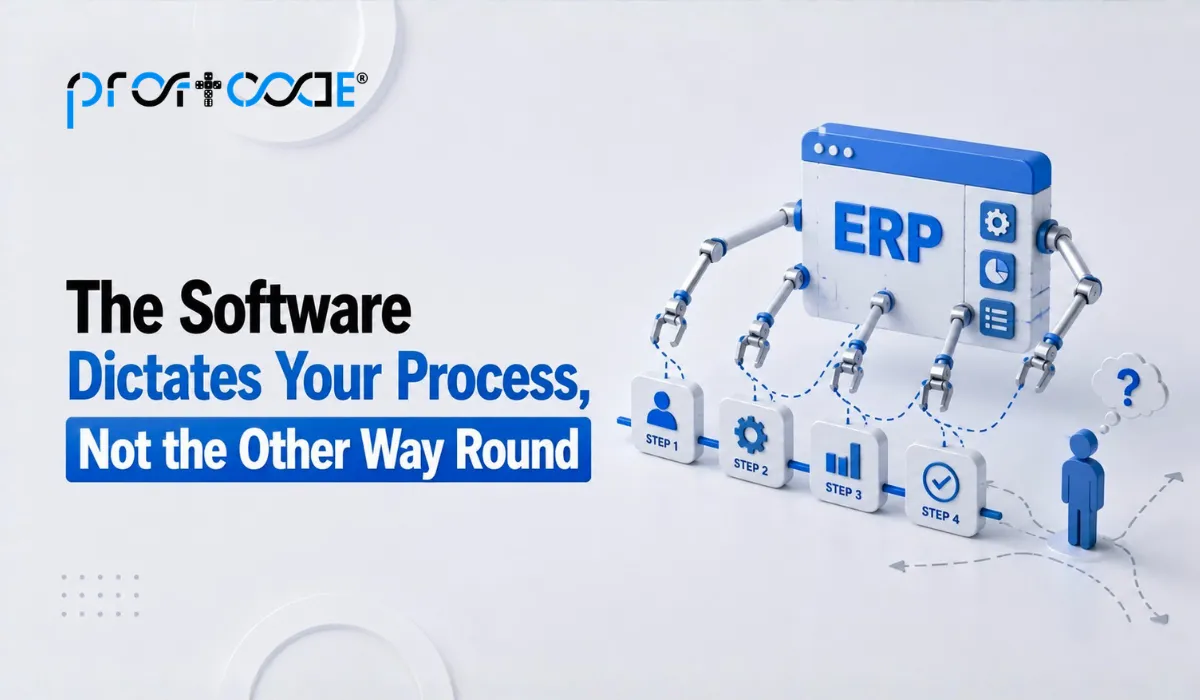
This one’s subtle, but it matters a lot. Early on, adjusting your workflow to fit a generic ERP felt reasonable. Now, it feels like the tail wagging the dog.
- Your team follows steps that exist purely because “that’s how the software does it,” not because it’s actually efficient
- New employees get confused trying to understand workflow logic that doesn’t match how the business actually operates
- Improvements to your actual process get blocked because the ERP can’t accommodate the change
- Leadership starts avoiding process improvements simply because implementing them within the current system feels too difficult
An ERP system for growth should support how your business wants to operate, not quietly constrain it.
Sign 4: You've Outgrown the System's User or Data Limits
Generic ERP platforms, especially subscription-based ones, often come with tiered limits on users, storage, or transaction volume.
- You’re paying for a higher tier just to unlock features that should be standard at your business size
- Adding new team members or locations keeps bumping into pricing walls
- Data storage limits force you to archive or delete records you’d genuinely prefer to keep accessible
- Performance noticeably slows down as your transaction volume increases past what the platform comfortably handles
None of this means the platform is bad. It just means it was built with a certain business size in mind, and you’ve moved past it.
Sign 5: Integration With Other Tools Feels Like a Constant Battle
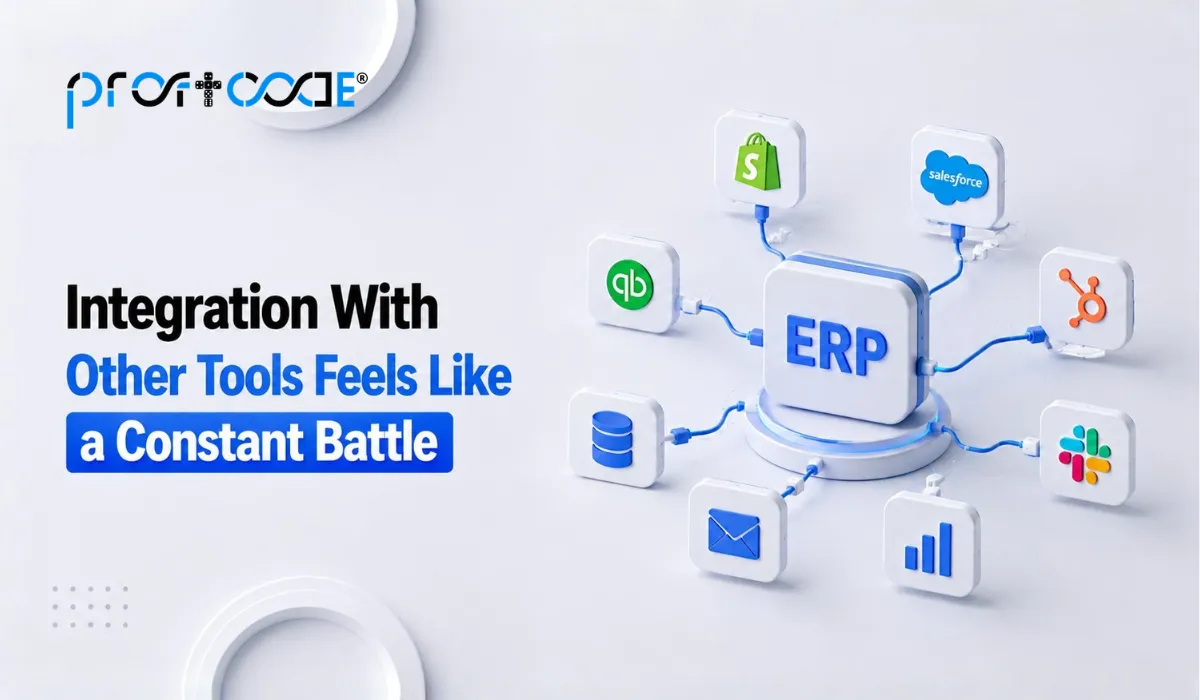
As businesses grow, they tend to add specialized tools, industry-specific software, better accounting platforms, and custom CRM setups. A generic ERP often struggles to keep up.
- Data has to be manually transferred between systems that should be talking to each other automatically
- Integrations that used to work smoothly start breaking as you add more tools to your stack
- IT staff spend increasing time troubleshooting connection issues rather than solving actual business problems
- New tools get avoided altogether simply because integrating them with the existing ERP feels too painful
This friction adds up quietly over months, until someone finally does the math and realizes how much time is being lost.
Sign 6: Growth Feels Harder Than It Should
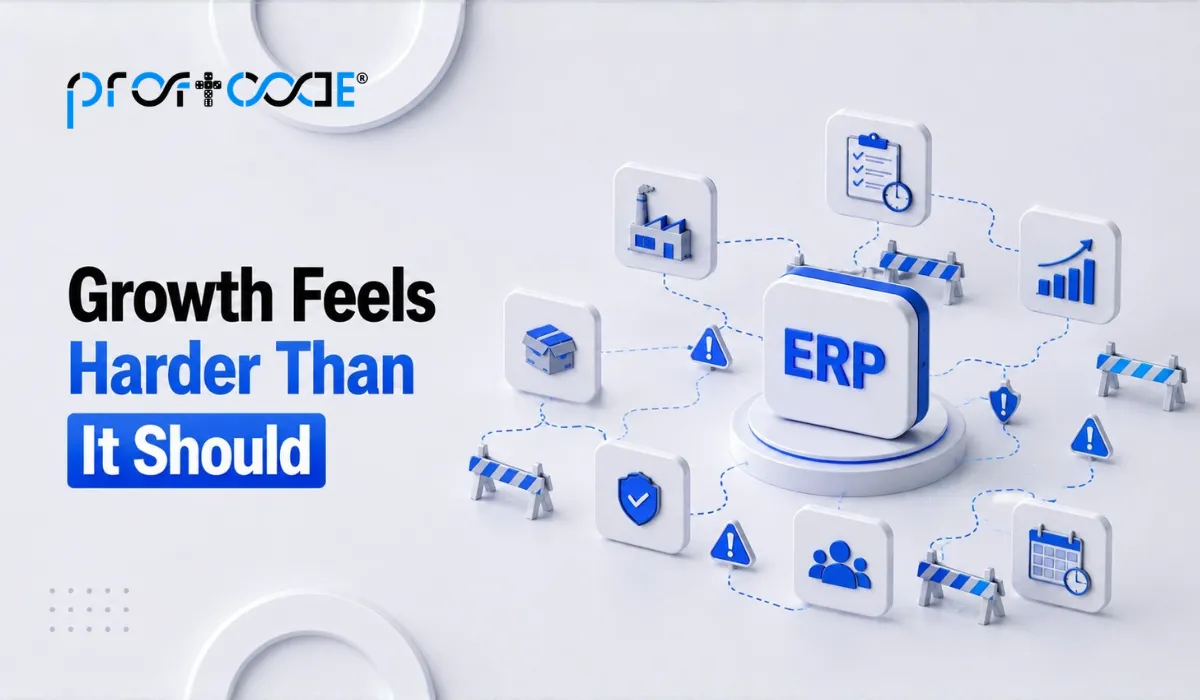
This is probably the clearest sign of all. Growth should feel like momentum. If it instead feels like fighting your own systems every step of the way, something’s off.
Common symptoms specific to ERP for growing manufacturers:
- Adding a new production line or facility requires convoluted workarounds within the existing system.
- Tracking materials and production across multiple sites becomes increasingly unreliable.
- Quality control data doesn’t flow properly between departments, causing delays in catching issues.
- Scaling up staff or shifts exposes gaps in how the system handles more complex scheduling and resource allocation.
For manufacturers specifically, this often shows up first on the production floor, long before it becomes obvious in the finance department.
Sign 7: Your Business Has Genuinely Unique Processes
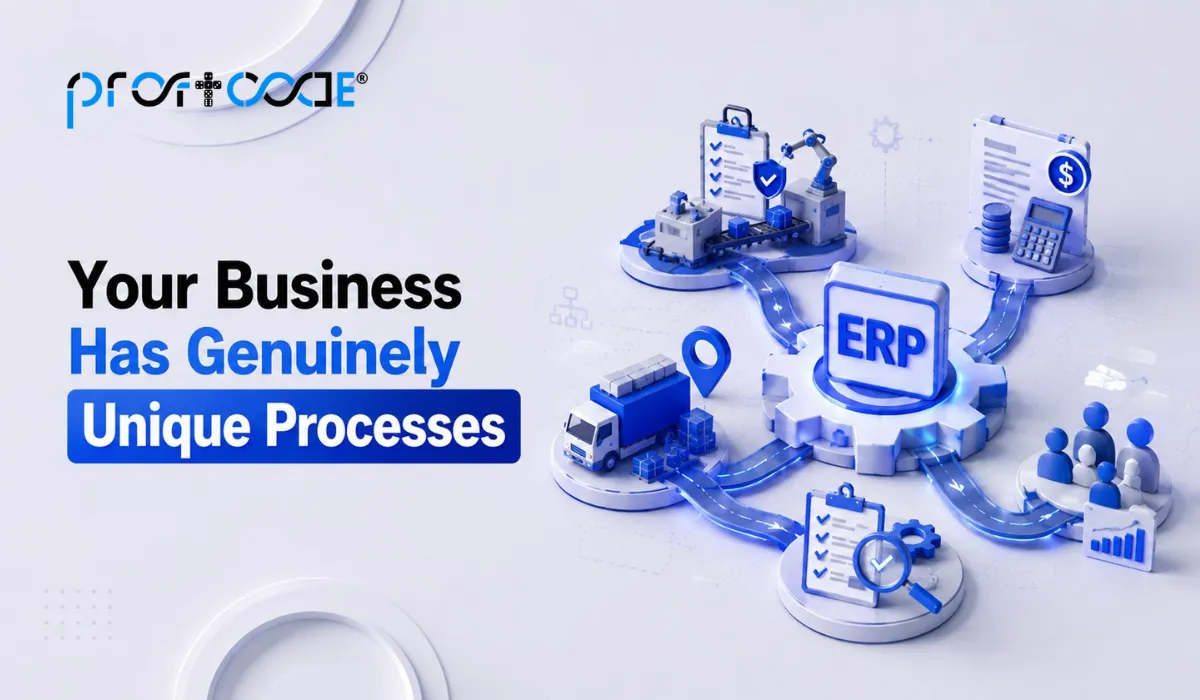
Some businesses simply don’t fit neatly into generic templates, no matter how well configured the software is.
- Multi-stage production processes with quality checkpoints that don’t map cleanly to standard ERP workflows.
- Project-based billing structures that generic systems handle awkwardly at best.
- Industry-specific compliance requirements that off-the-shelf configurations weren’t designed around.
- Complex vendor or subcontractor relationships that need more nuanced tracking than a standard system offers.
If your operations were unusual from the start, generic ERP was likely always going to be a temporary fit, not a permanent solution.
The Hidden Cost of Staying on a Generic System
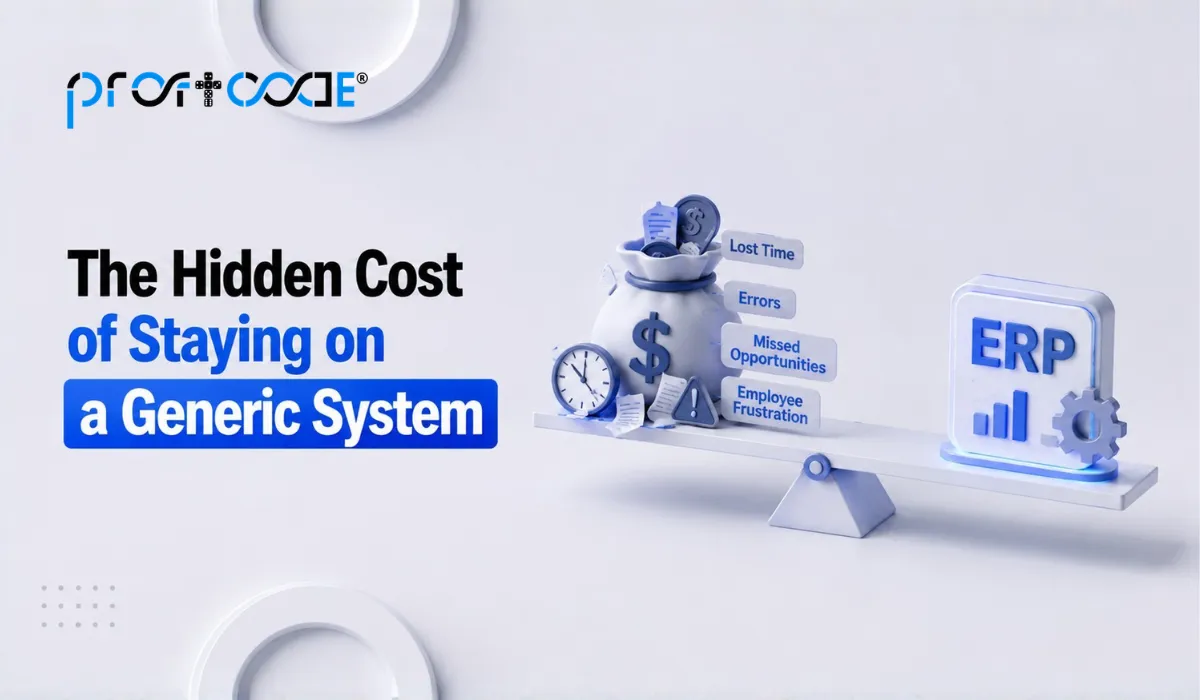
Businesses often hesitate on custom ERP development because of the upfront cost, without fully accounting for what staying on a generic system is already costing them.
- Time lost to manual workarounds rarely gets tracked as a real expense, but across a year, it adds up to significant hours that could go toward actual growth work.
- Errors from disconnected tools create rework and sometimes damaged client trust that’s harder to quantify but genuinely costly.
- Missed opportunities happen when decision makers wait too long for accurate reports, sometimes acting on outdated or incomplete numbers instead.
- Employee frustration from fighting the system daily can quietly contribute to turnover, which carries its own hidden recruitment and training costs.
None of these show up as a single line item on a budget sheet, which is exactly why they’re so easy to underestimate until someone finally adds it all up.
What Happens When You Move to Custom ERP Development
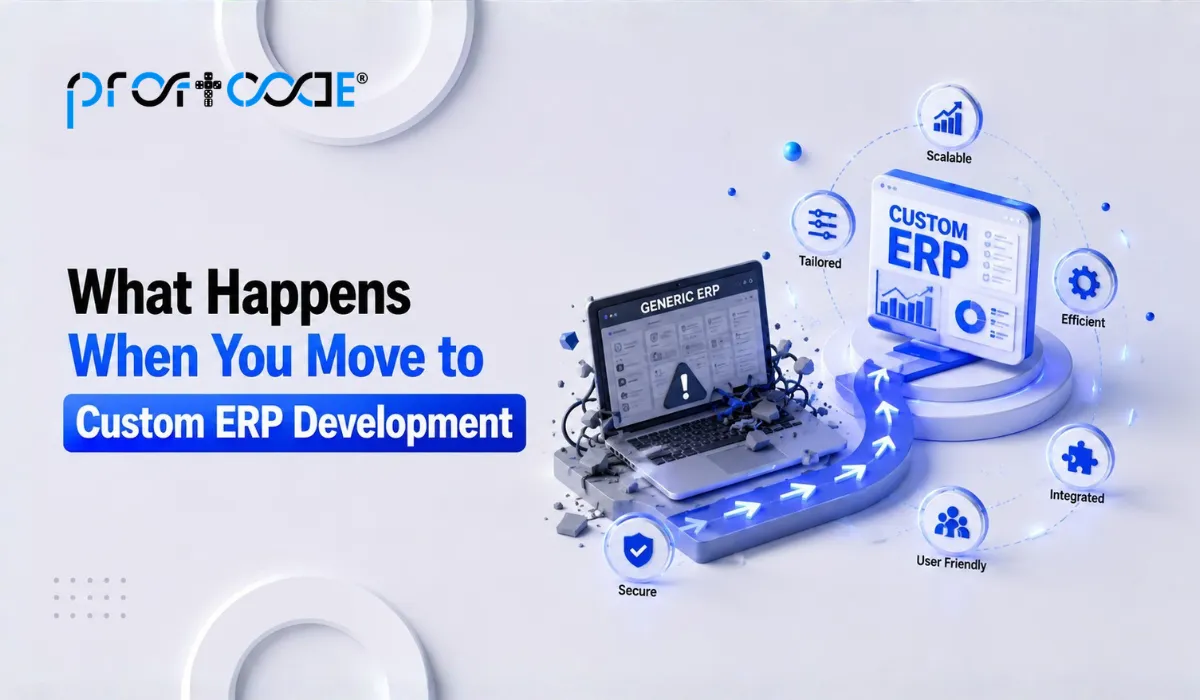
Once these signs pile up, the natural next step is exploring custom ERP development built specifically around your business.
Here’s what that transition typically involves.
- Requirement mapping: A proper development partner studies your actual workflows, not just your current software’s limitations, before designing anything.
- Modular planning: Deciding which functions need custom development versus which existing tools can stay integrated.
- Phased rollout: Most custom builds happen in stages, so your business isn’t disrupted by a sudden, complete system switch.
- Data migration: Carefully transferring existing records from the generic system without losing historical accuracy.
- Staff training: Ensuring your team actually understands the new system, rather than being handed new software and left to figure it out.
Is Custom ERP Development Worth the Investment?
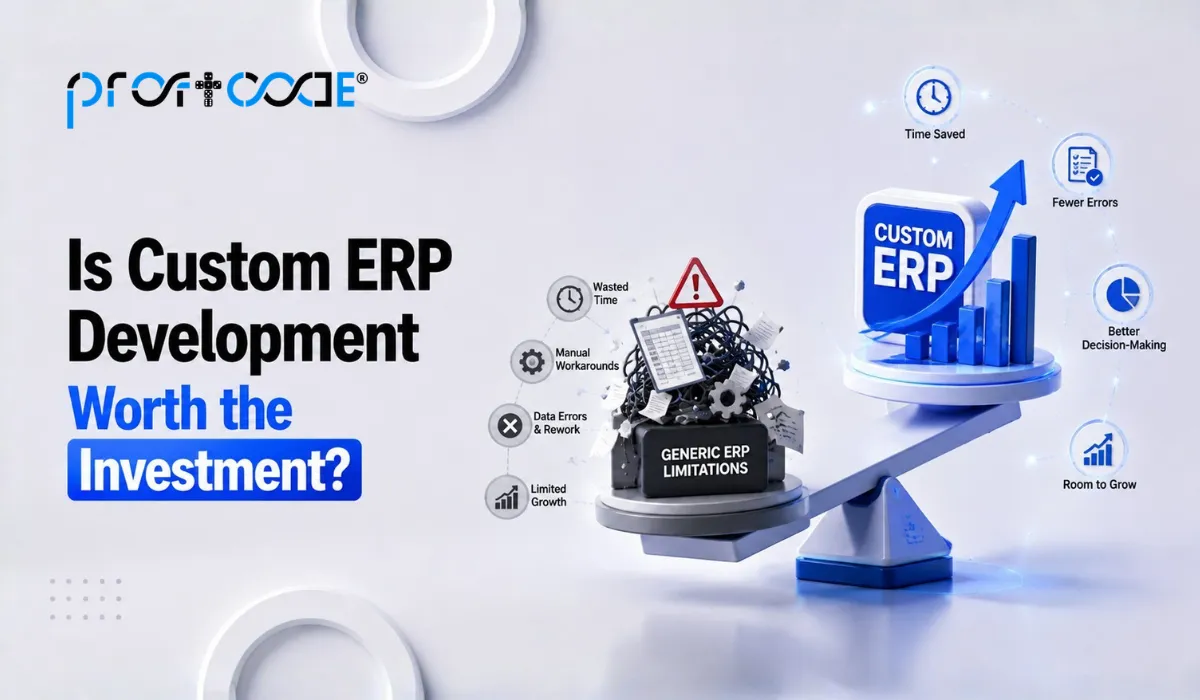
This is the question every business owner eventually asks, and it’s fair to ask it honestly.
- Time saved from eliminating workarounds adds up significantly once you stop counting the hours lost to manual patches
- Fewer errors from data no longer bouncing between disconnected tools and spreadsheets
- Better decision-making since reports actually reflect how your business runs, not a generic approximation of it
- Room to grow without hitting artificial limits tied to a pricing tier or platform ceiling
For businesses genuinely experiencing several of these signs, the cost of staying on an ill-fitting system, in wasted time, missed opportunities, and quiet frustration, often ends up higher than the investment in a proper custom build.
A Quick Self-Check Before You Decide
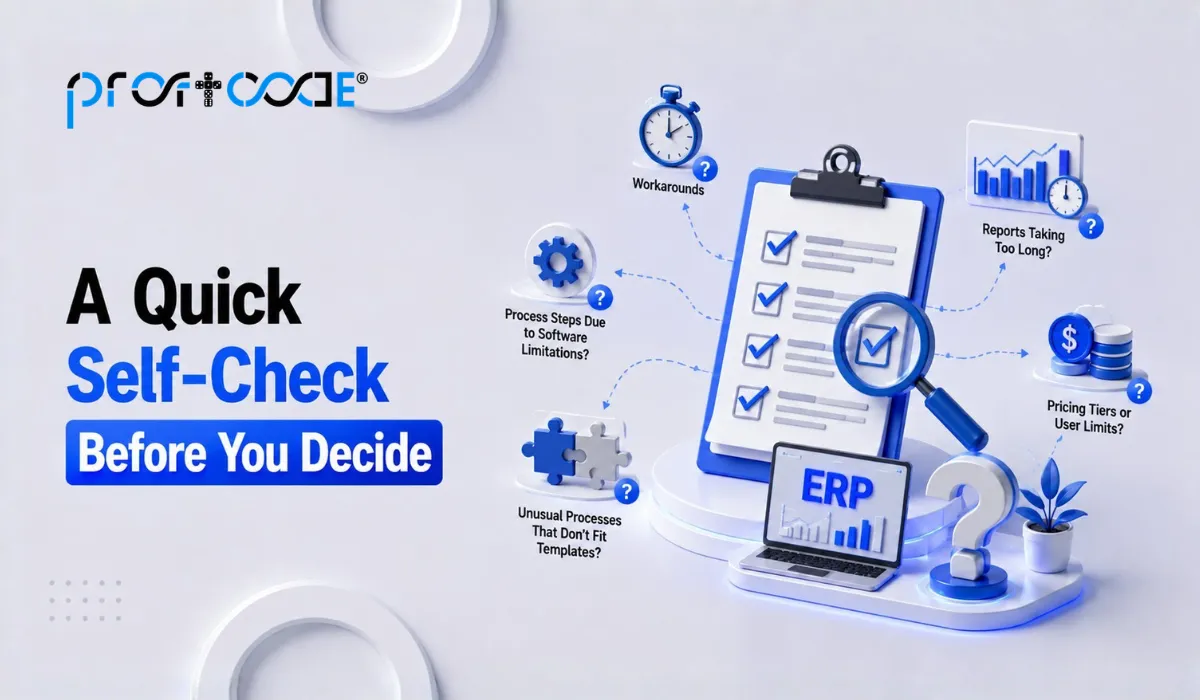
Before jumping into a custom ERP project, walk through these honestly.
- How many workarounds has your team quietly built around the current system?
- Are reports taking longer to produce than they did a year or two ago?
- Does your team follow steps that exist because of software limitations rather than actual efficiency?
- Have you hit pricing tiers or user limits that feel arbitrary given your business size?
- Are your business processes unusual enough that a generic template was always going to be a stretch?
If several of these sound familiar, that’s a fairly strong signal your business has outgrown its generic ERP setup, and it’s worth having a serious conversation about what comes next.
Why the Right Development Partner Matters
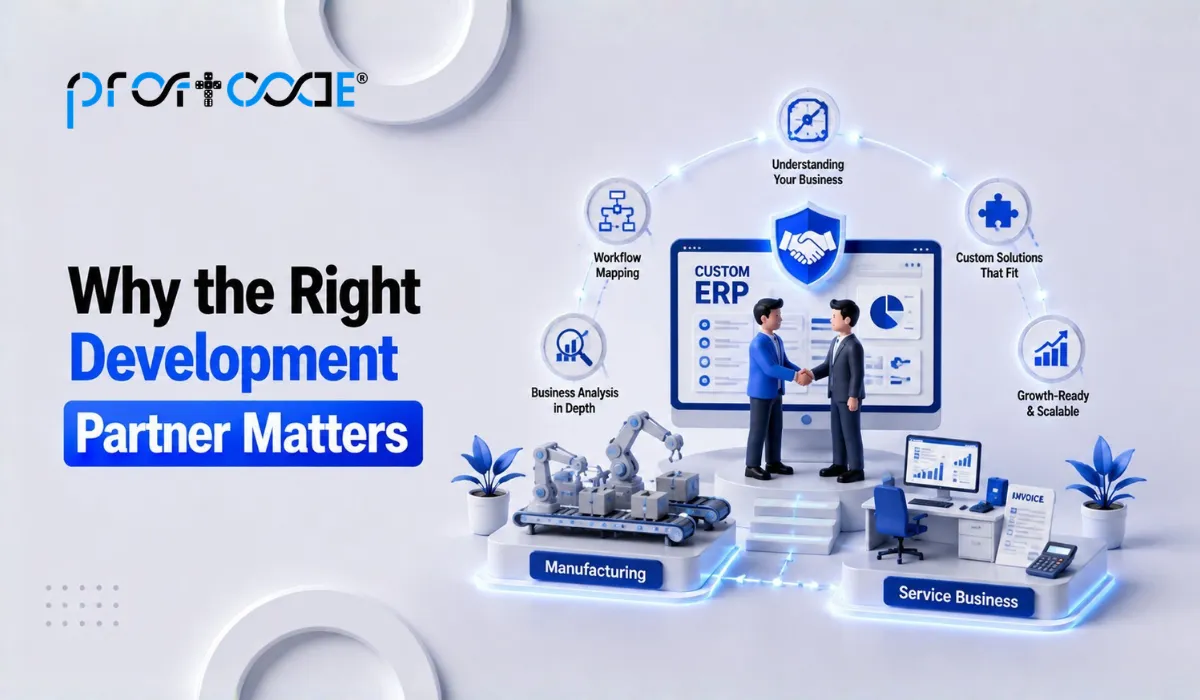
Moving from generic to custom ERP isn’t just about writing new software. It’s about genuinely understanding how your business operates before building anything.
At Proftcode, ERP projects typically begin with detailed workflow mapping specific to the business, whether that’s a growing manufacturer juggling multiple production lines or a service business with unusual billing structures, so the resulting system actually removes friction instead of just moving it somewhere else.
Find the Right ERP Software Development Company
Get scalable ERP solutions tailored to your business needs.
Final Thought
Outgrowing a generic ERP system rarely happens overnight. It builds slowly, through small workarounds, slightly slower reports, and processes that feel a bit more constrained each quarter, until one day the accumulated friction becomes impossible to ignore. Recognizing these signs early, rather than waiting for the frustration to peak, makes the eventual move to custom ERP development smoother and considerably less disruptive to a business that’s simply trying to grow.
Frequently Asked Questions
Common signs include growing workarounds, slower reporting, hitting user or data limits, and feeling like your processes are constrained by the software rather than supported by it.
No. Growing small and medium businesses, especially those with unique workflows or plans to scale significantly, often benefit just as much from custom ERP development as larger enterprises.
It varies by complexity, but most custom ERP development projects take a few months from requirement mapping to full deployment, often rolled out in phases to minimize disruption.
Manufacturing, especially ERP for growing manufacturers managing multiple production lines or facilities, along with businesses with unique compliance or billing requirements, tends to see the clearest benefits.
A well-planned transition, including phased rollout and proper data migration, minimizes disruption significantly compared to a sudden, complete system switch.