
For years, ERP systems were essentially glorified record keepers. You entered data, the system stored it, and someone had to manually check reports to actually make sense of anything. That’s changing fast. AI agents in ERP are shifting these systems from passive databases into something that actually acts, flags issues before they escalate, suggests next steps and in some cases, handles entire workflows without a human clicking through every single step.
This shift matters a lot for growing businesses, and it’s worth understanding what’s actually happening here, not just the buzzword version of it.
What Are AI Agents in ERP, Exactly?
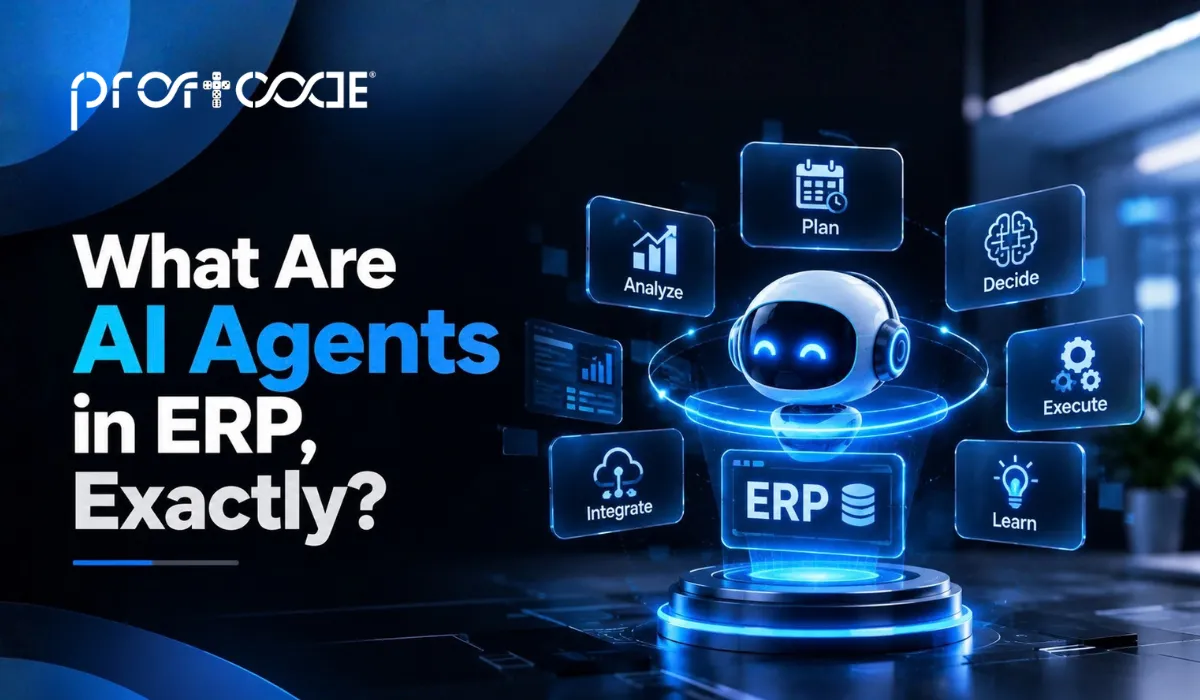
An AI agent within an ERP system isn’t just a chatbot bolted onto the interface. It’s a piece of software that can observe data, make decisions within defined boundaries, and take action, often without waiting for someone to manually trigger it.
- Traditional ERP waits for a human to input data, run a report, or manually flag an issue
- AI-powered ERP with agents can monitor data continuously, identify patterns, and act on them automatically, whether that’s flagging a stock shortage, adjusting a reorder point, or routing an approval to the right person
Think of it like the difference between a filing cabinet and an assistant who actually reads the files, notices when something looks off, and tells you before it becomes a real problem.
Why This Shift Is Happening Now
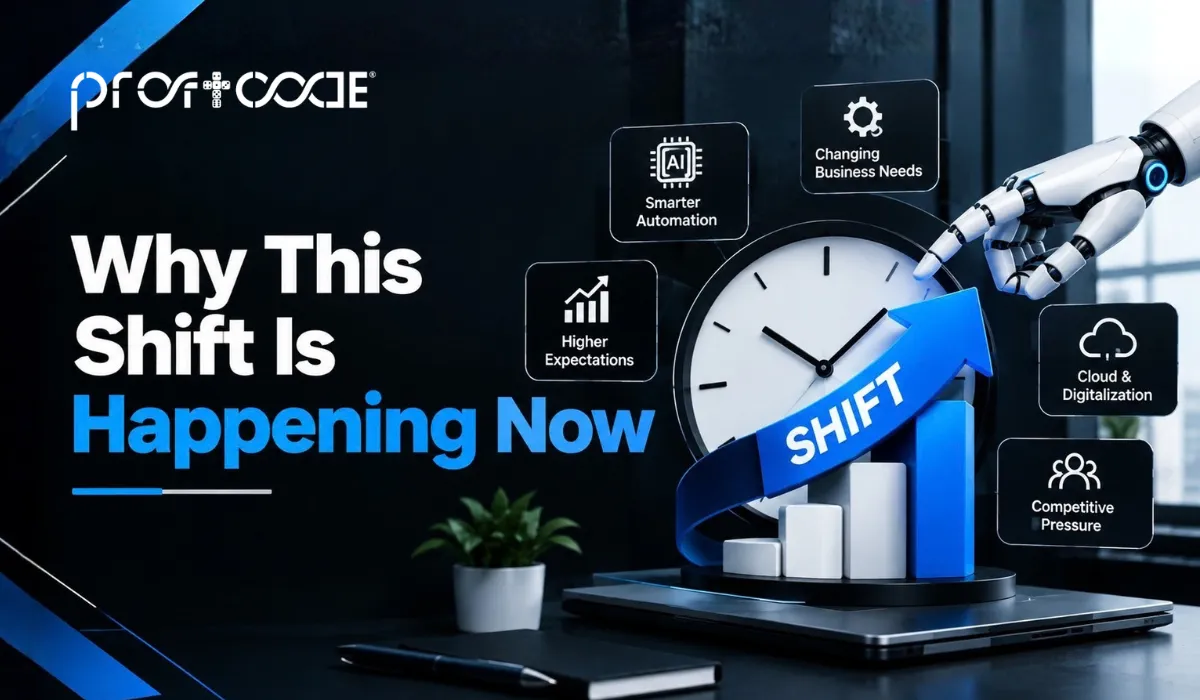
A few things have come together to make enterprise AI agent deployment genuinely practical rather than just a research project.
- Better underlying AI models that can reason through business context, not just process simple rules
- More affordable computing power, making it financially viable for mid-sized businesses to run these systems, not just large enterprises
- Growing data volumes that have made manual monitoring genuinely impractical, forcing businesses to look for smarter solutions
- Rising expectations around speed, where customers and stakeholders simply won’t tolerate the delays that manual processes used to be acceptable for
Put together, these factors have pushed AI agents from an interesting concept into something businesses are actually deploying in production systems today.
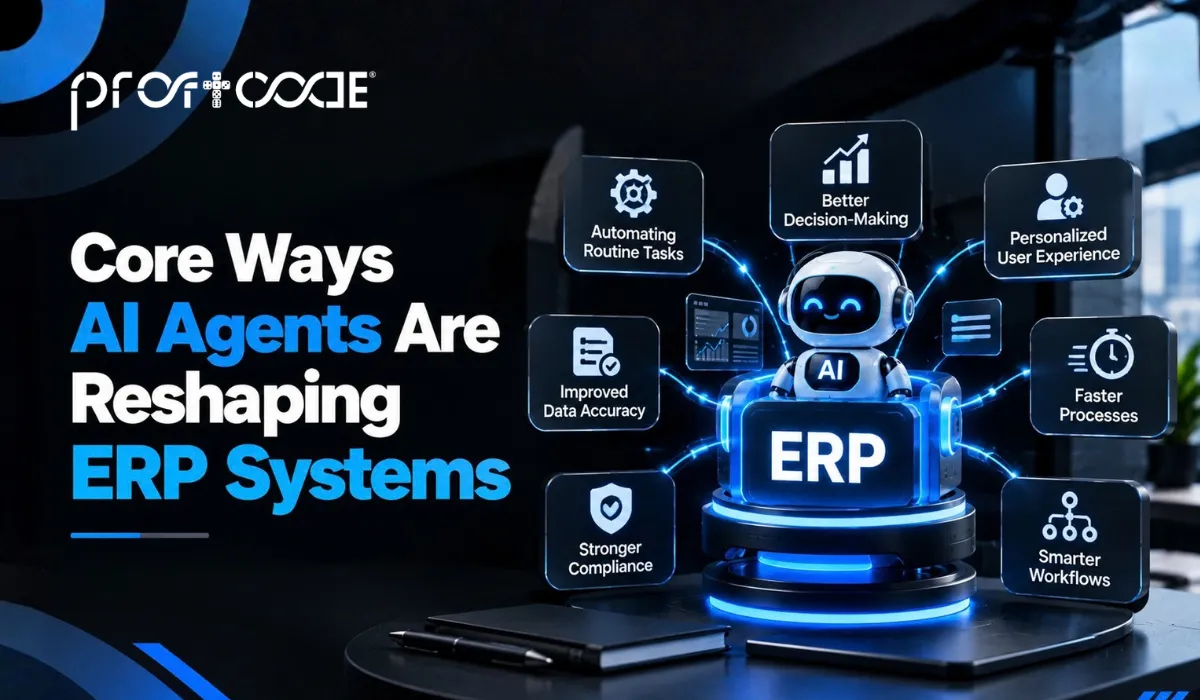
Core Ways AI Agents Are Reshaping ERP Systems
1. Predictive Inventory and Demand Forecasting
Rather than reacting to stockouts after they happen, AI agents analyze historical sales patterns, seasonal trends, and even external factors to predict demand before it becomes a problem.
- Automatically adjusts reorder points based on actual consumption patterns, not fixed static rules
- Flags unusual demand spikes early, giving procurement teams time to respond
- Reduces both overstocking and the lost sales that come from running out of popular items
2. Automated Approval Workflows
Manual approval chains are one of the biggest bottlenecks in traditional ERP systems. AI agents can handle a significant portion of this automatically.
- Routes approvals to the right person based on defined rules and current workload
- Automatically approves low-risk, routine transactions within pre-set boundaries
- Flags genuinely unusual requests for human review, rather than treating every transaction the same way
3. Anomaly Detection Across Financial Data
Instead of discovering discrepancies during a monthly audit, AI agents can flag unusual patterns in near real time.
- Identifies duplicate invoices or unusual spending patterns as they happen
- Flags transactions that deviate significantly from historical norms
- Reduces the time finance teams spend manually reconciling records
4. Intelligent Customer and Vendor Communication
Some AI agents within ERP systems now handle a meaningful chunk of routine communication automatically.
- Sends automated order confirmations, status updates, and follow-up reminders
- Answers common vendor or customer queries using data pulled directly from the ERP itself
- Escalates complex queries to human staff, rather than trying to force automation where it genuinely doesn’t fit
5. Predictive Maintenance for Manufacturing and Equipment-Heavy Businesses
For businesses running physical equipment & manufacturing, AI agents connected to IoT sensors and ERP data can predict maintenance needs before a breakdown happens.
- Analyses equipment performance data to flag early signs of wear or malfunction
- Schedules maintenance proactively, reducing unplanned downtime
- Reduces the cost of emergency repairs compared to reactive maintenance approaches
6. Smarter Reporting and Decision Support
Rather than waiting for someone to manually pull and interpret data, AI agents can surface relevant insights proactively.
- Generates plain language summaries of complex data trends for non-technical stakeholders
- Flags emerging risks or opportunities based on patterns across the business
- Reduces the time between data being generated and decisions actually being made
AI Construction ERP: A Sector Seeing Rapid Change
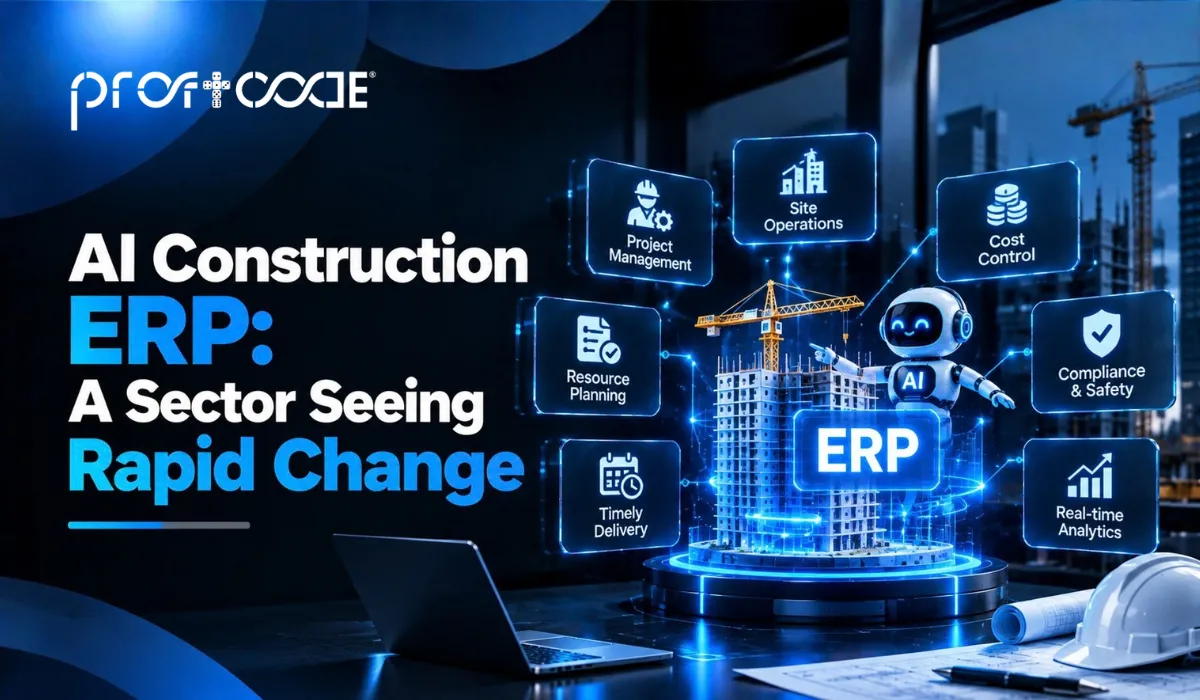
Construction is one of the industries where AI construction ERP systems are showing particularly clear benefits, largely because the sector deals with so many moving variables at once: multiple sites, shifting timelines, fluctuating material costs, and coordination across numerous subcontractors.
Specific applications in construction include:
- Predicting project delays based on patterns from similar past projects, weather data, and resource availability
- Automatically flagging budget overruns as they develop, rather than discovering them at project completion
- Coordinating material deliveries across multiple sites based on real-time progress data
- Assisting with subcontractor scheduling by analyzing availability and past performance data
For construction businesses specifically, where a single delay can cascade across an entire project timeline, having an AI agent flag issues early rather than after the fact can genuinely save significant time and cost.
Enterprise AI Agent Deployment: What It Actually Involves
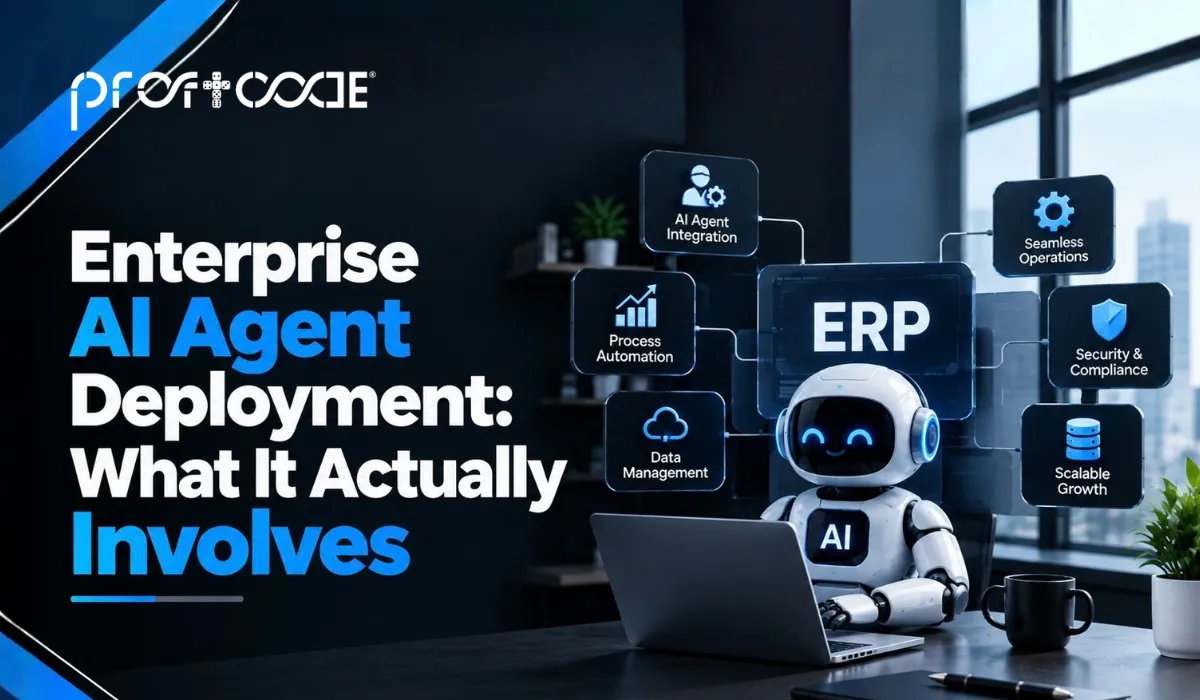
Moving from a traditional ERP to one incorporating AI agents isn’t a simple software update. It requires proper planning to work well.
- Data quality assessment. AI agents are only as good as the data they’re working with, so cleaning up existing data is usually a necessary first step
- Defining clear boundaries. Businesses need to decide exactly what agents are allowed to do autonomously versus what still requires human approval
- Gradual rollout. Most successful enterprise AI agent deployment happens in phases, starting with lower-risk automation before expanding to more critical processes
- Ongoing monitoring and adjustment. AI agents need to be reviewed periodically to ensure they’re performing accurately as business conditions change
- Staff training and change management. Employees need to understand how to work alongside AI agents, not feel replaced or confused by them
How This Changes the Role of ERP Teams Internally
Beyond the technology itself, it’s worth thinking about how internal teams actually work once AI agents become part of the daily ERP experience.
- Finance teams shift from manually reconciling every transaction to reviewing flagged anomalies and exceptions, spending time where it actually matters
- Procurement staff move from constantly checking stock levels manually to acting on automated alerts, focusing energy on vendor negotiations and strategic sourcing instead
- Operations managers get earlier visibility into potential issues, allowing for proactive decisions rather than reactive firefighting once a problem has already escalated
- IT teams take on a slightly different role too, spending less time on routine troubleshooting and more on monitoring agent performance and refining automation boundaries over time
This shift doesn’t happen overnight, and it usually requires some adjustment in how teams are trained and how success gets measured internally. But businesses that manage this transition well tend to see staff genuinely appreciate having repetitive, low-value tasks lifted off their plate, rather than feeling threatened by the change.
Common Concerns Businesses Have About AI Agents in ERP
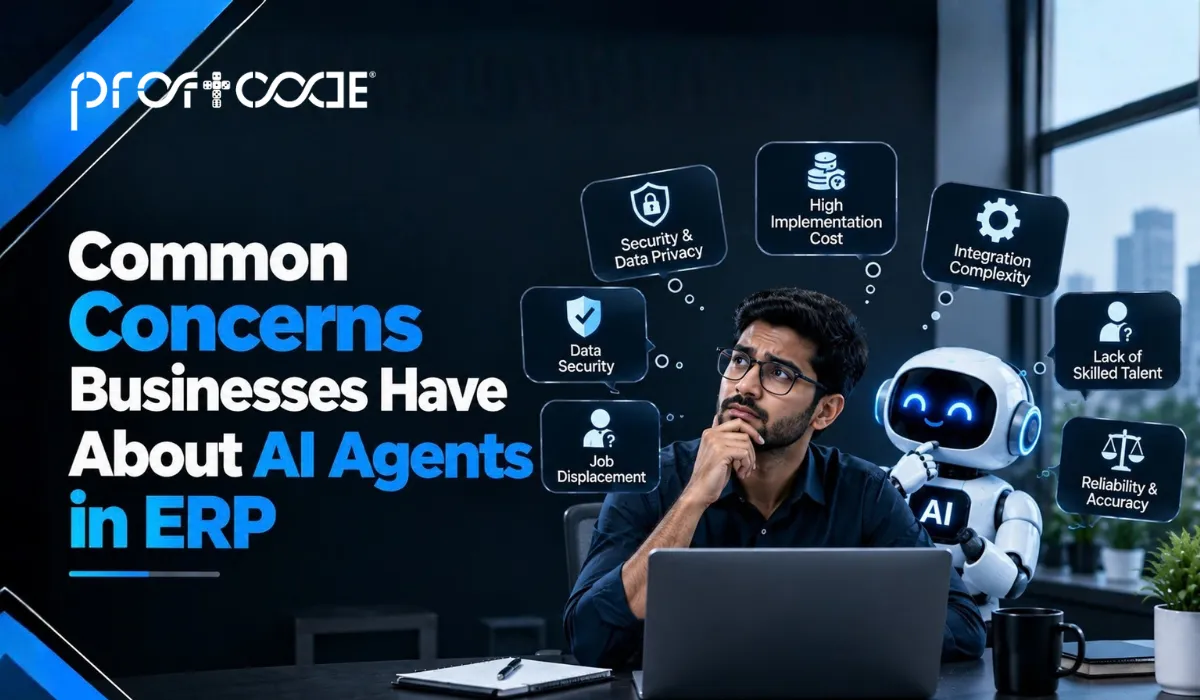
It’s worth addressing these honestly, since hesitation here is completely reasonable.
“Will AI agents make mistakes with important decisions?” Like any system, AI agents can make errors, which is exactly why defining clear boundaries and keeping human oversight on higher-risk decisions matters. Most businesses start agents on lower-stakes, repetitive tasks before expanding their scope.
“Will this replace our staff?” Generally, AI agents handle repetitive, time-consuming tasks, freeing staff to focus on judgment calls, relationship management, and strategic work that genuinely benefits from human input. It’s less about replacement and more about shifting where human attention goes.
“Is our data secure with AI agents accessing it?” This depends heavily on the specific system and provider. It’s worth asking any ERP development partner directly about data handling, access controls, and how agent decisions are logged and auditable.
“Is this only for large enterprises?” Not anymore. Falling costs and more accessible AI tools mean mid-sized businesses are increasingly able to adopt these capabilities, not just large corporations with massive IT budgets.
What to Look for When Choosing an ERP Partner for AI Integration
If you’re considering adding AI agents to your ERP system or building a new system with this capability from the start, a few things matter significantly.
- Genuine experience with AI integration, not just general ERP development
- A clear approach to data quality and governance, since poor data undermines AI agent performance entirely
- Transparent explanation of what agents can and cannot do autonomously within your specific system
- A phased implementation plan, rather than promising a complete AI-driven overhaul on day one
- Ongoing support for monitoring and adjusting agent behavior as your business evolves
At Proftcode, ERP projects incorporating AI agents typically start with a careful assessment of which processes genuinely benefit from automation, rather than adding AI capabilities simply because it sounds impressive in a proposal.
A Quick Self-Check Before You Decide
Before jumping into AI agent integration, consider these honestly.
- Which repetitive tasks in your current ERP workflow consume the most staff time?
- Is your existing data clean and reliable enough to support meaningful automation?
- Are there specific decisions in your business where earlier detection would genuinely reduce risk or cost?
- Do you have a clear sense of which processes should remain under direct human control?
If you can answer these clearly, you’re in a good position to start exploring where AI agents could genuinely add value, rather than adopting the technology just because it’s trending.
Final Thought
AI agents in ERP represent a genuine shift, not just a marketing trend layered onto existing software. Businesses that approach this thoughtfully, starting with clean data, clear boundaries, and a gradual rollout, stand to gain real efficiency and faster decision-making. Those that rush in without proper planning often end up with automation that creates as much confusion as it solves. The technology is genuinely ready. What matters now is implementing it with the same care that any meaningful business process change deserves.
Frequently Asked Questions
AI agents monitor data continuously, identify patterns, and take defined actions automatically, such as flagging anomalies, adjusting inventory levels, or routing approvals, rather than waiting for manual human intervention.
Construction-specific AI ERP focuses on challenges unique to the industry, like project delay prediction, budget overrun detection, and multi-site coordination, built around construction workflows specifically.
Yes, increasingly so. Falling costs and more accessible AI tools have made this technology practical for mid-sized businesses, not just large enterprises with significant budgets.
Generally, they handle repetitive and data-heavy tasks, freeing staff for higher-value work requiring judgment and relationship management, rather than eliminating roles.
Starting with clean data, defining clear boundaries for agent autonomy, rolling out gradually, and maintaining ongoing monitoring are key factors in successful deployment.